
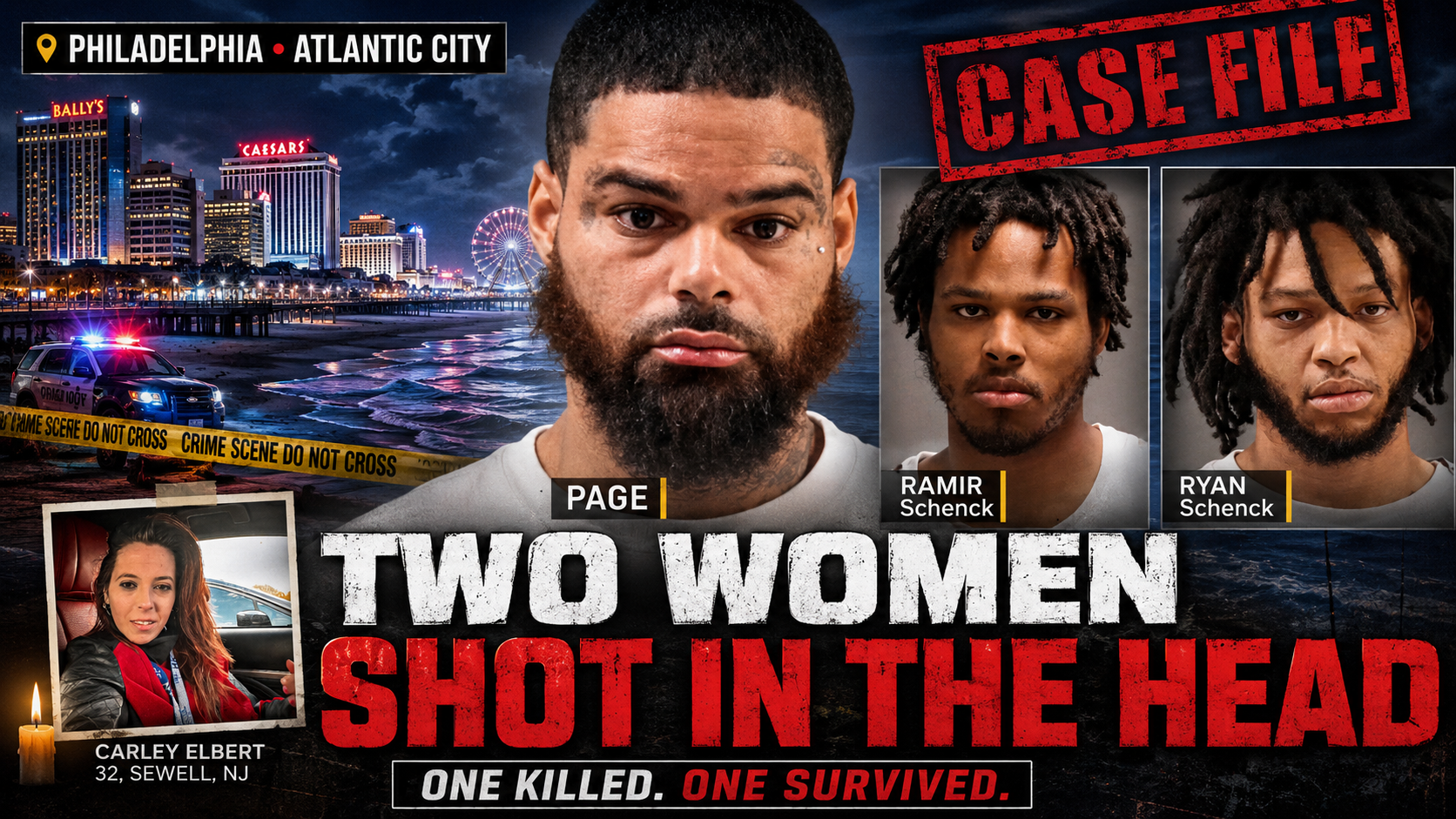
Reporting and analysis may discuss allegations and online theories. Allegations are not findings of guilt. Verify important details in the cited public record.
The Case File
In the early morning hours of August 1, 2024, police were alerted to two injured women near the jetty by Maine Avenue in the inlet section of Atlantic City. By the time the case reached court, one victim was dead, the other had survived a gunshot wound to the head, and investigators said the trail moved from the Atlantic City Boardwalk to Northeast Philadelphia in the same day. The defendant at the center of the file was Gregg Page, a Philadelphia man who later admitted in court that he shot both women.
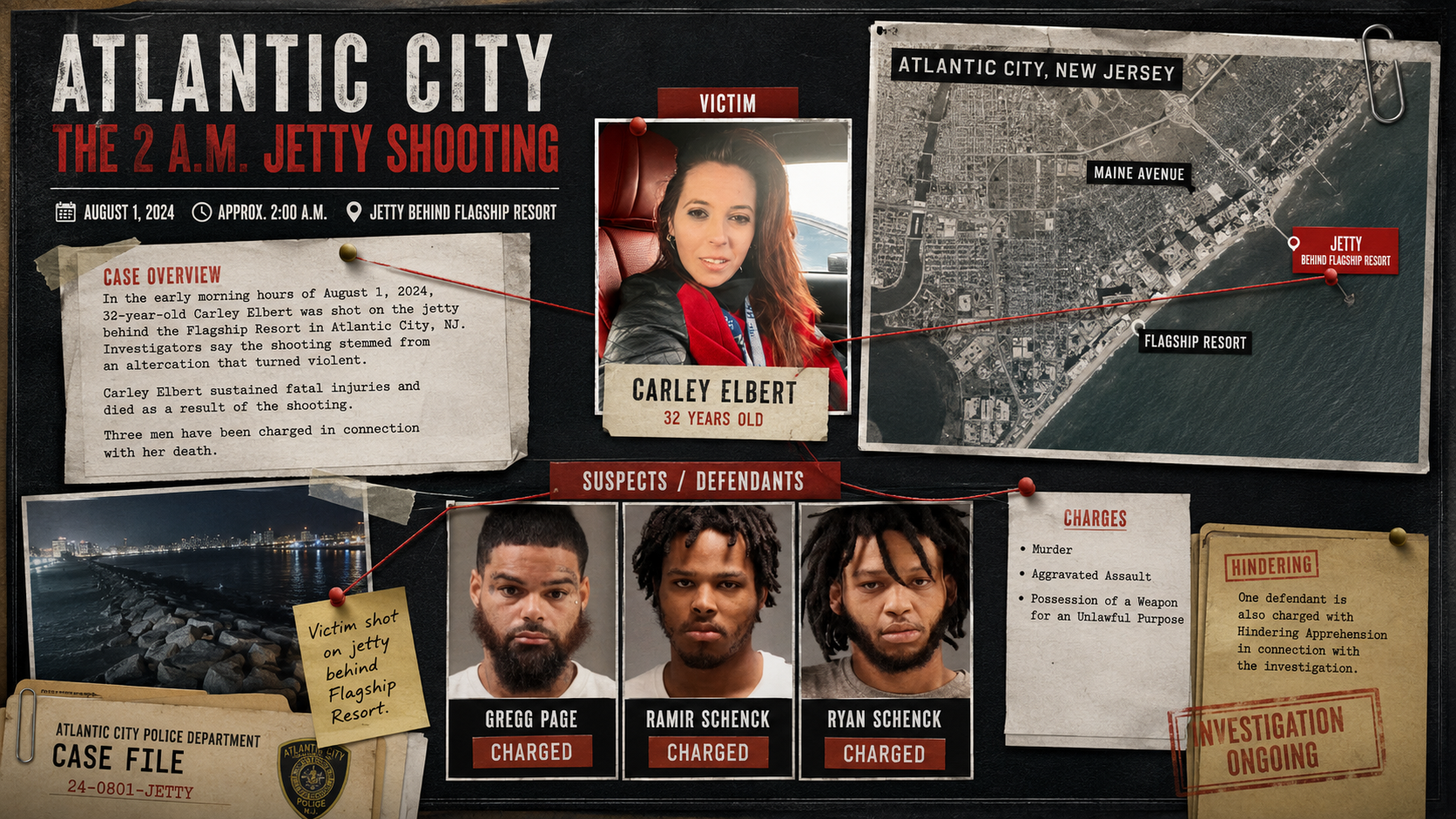
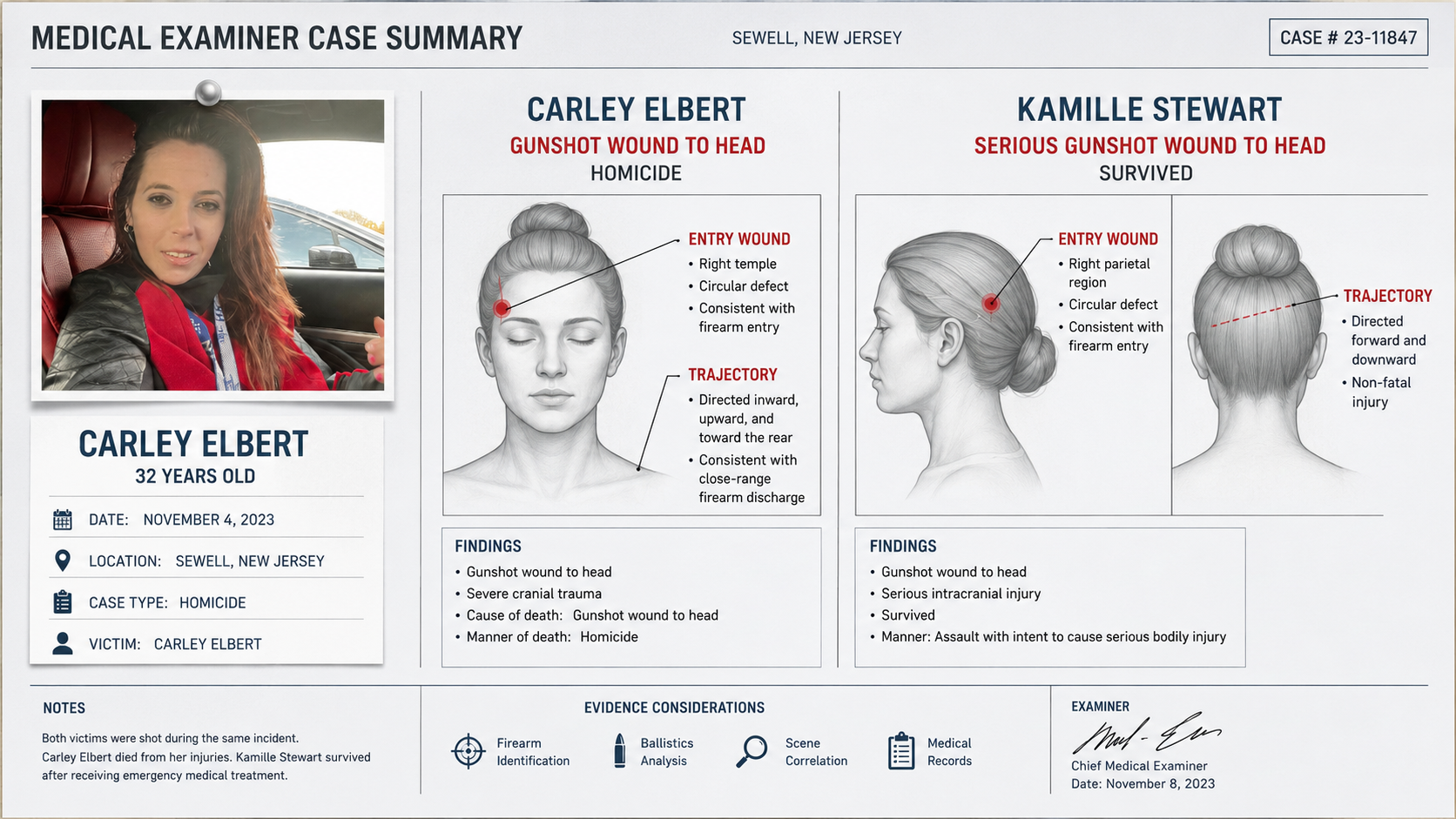
The victims were Carley Elbert, 32, of Sewell, New Jersey, and Kamille Stewart, identified in later prosecutor records as a 31-year-old woman from Pleasantville. Elbert was pronounced dead at the scene. Stewart was transported to AtlantiCare Regional Medical Center with serious injuries from a gunshot wound to the head, injuries prosecutors later said were still affecting her. An autopsy determined Elbert died from a gunshot wound to the head, and her death was ruled a homicide.
The Incident
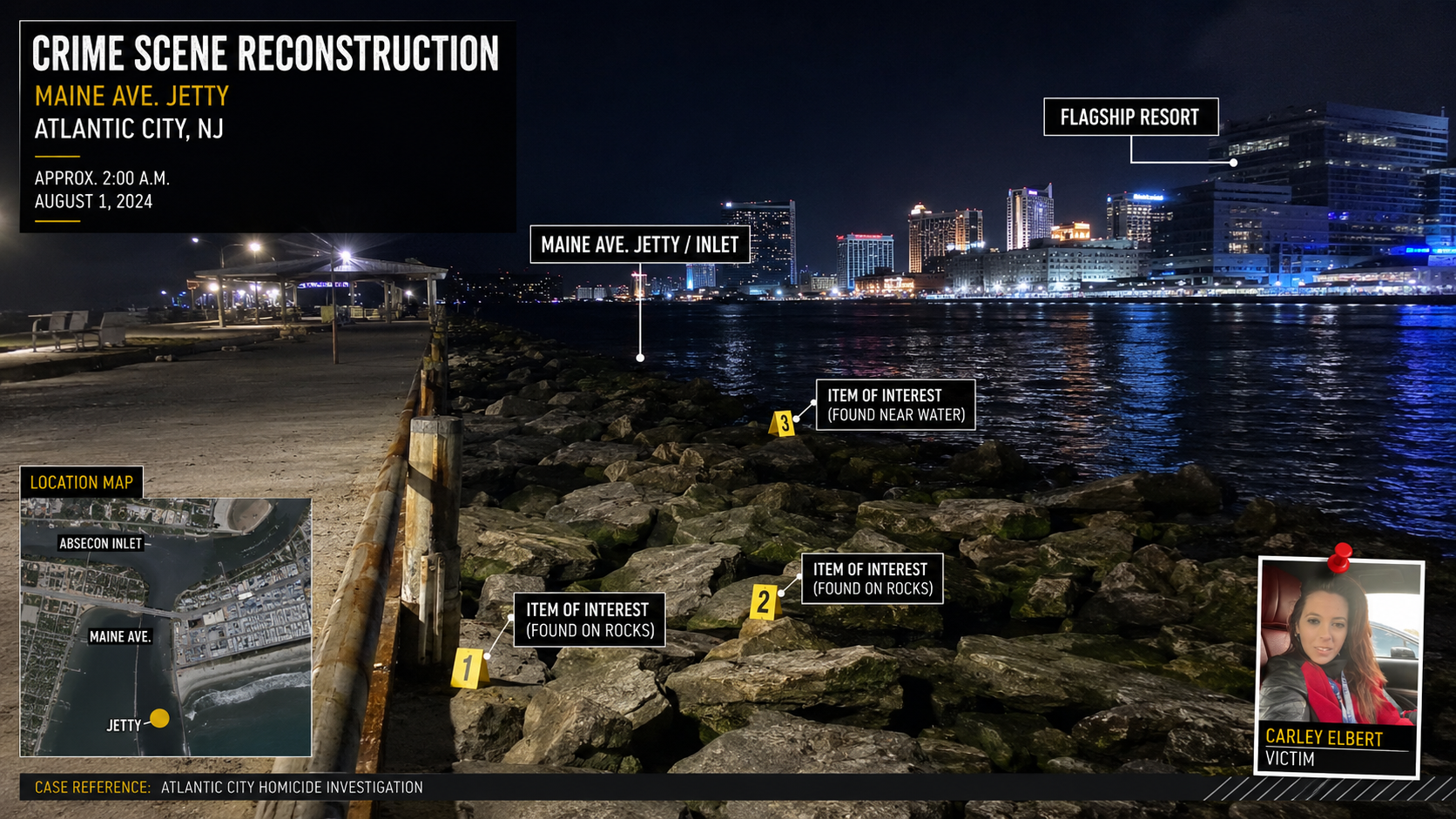
The shooting happened in the inlet section of Atlantic City, in the area of the jetty near Maine Avenue. Early coverage described the scene as behind the Flagship Resort near the Boardwalk, where both women were found shot in the head on August 1, 2024. Action News reported that Stewart was conscious when police responded, while Elbert was unresponsive and pronounced dead at the scene.
The strongest public detail from the early investigation came from resort surveillance. Security at the Flagship Resort reportedly turned over video to police.

According to Action News, resort security said the video showed a car pulling up just after 2 a.m., five people getting out, and the group walking the Boardwalk. About 20 minutes later, the footage reportedly showed only two men returning to the car before it drove away.
That 20-minute gap became one of the central pieces of the public case. The official prosecutor release confirms the shooting location, the two victims, the head wounds, and Page’s later admission, but the more detailed Boardwalk movement came from Action News’ reporting on the criminal complaint and surveillance descriptions.
The Victims
Carley Elbert was 32 years old and from Sewell, New Jersey. Action News reported that she had recently gone into remission from a chronic illness before she was killed. That detail does not explain the shooting, and the public record does not say it played any role in the motive. It stands in the file because it is one of the few personal details publicly reported about her life before the case became a homicide record.
Kamille Stewart survived. Prosecutors said she was taken to AtlantiCare Regional Medical Center with serious injuries from a gunshot wound to the head, and the injury was still impacting her by the time Page entered his guilty plea in 2026. At sentencing, local reporting said the court heard statements from Stewart, Elbert’s family, and Page himself before the judge imposed the full 50-year sentence.
The Surveillance Trail
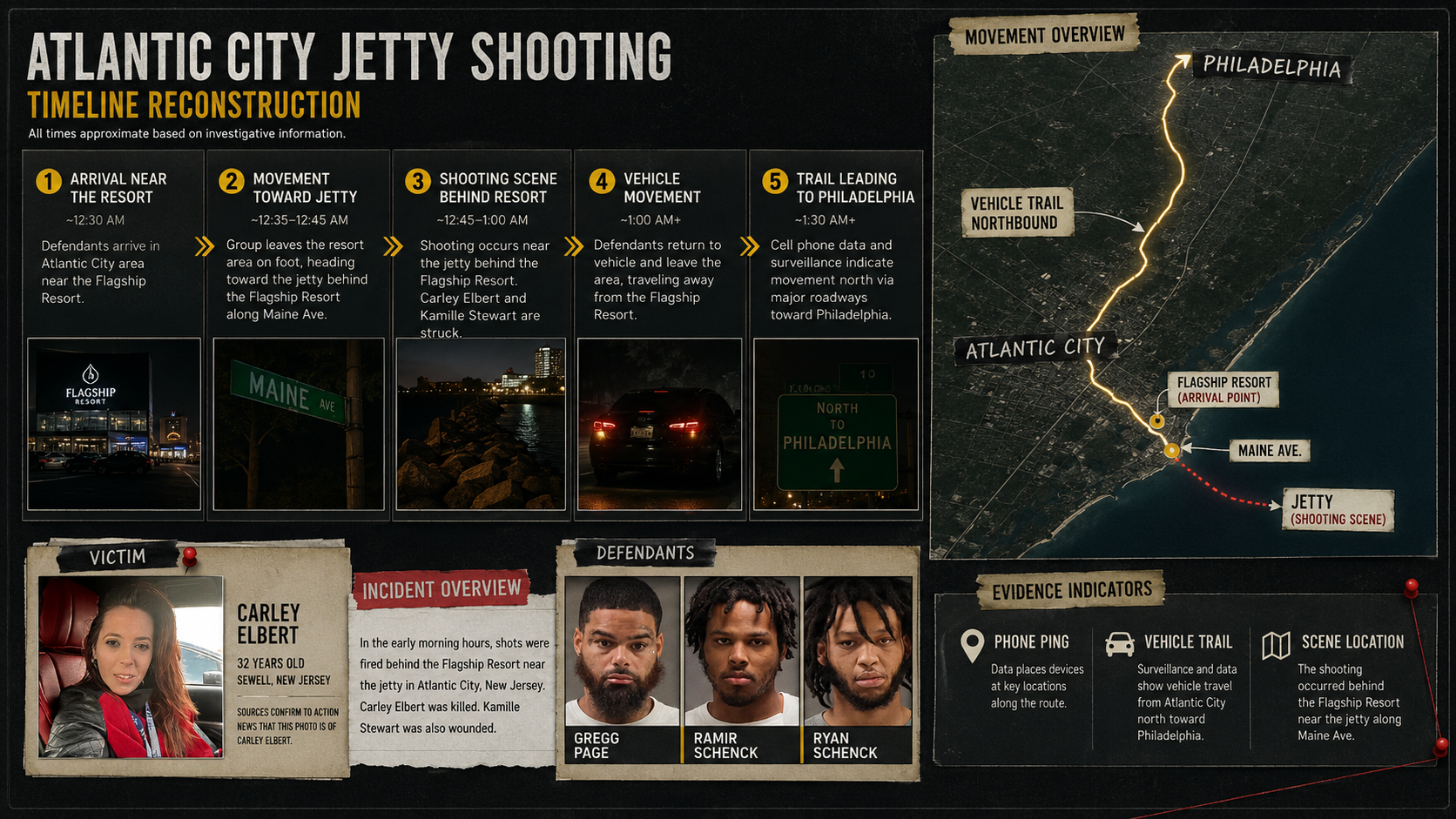
According to a criminal complaint obtained by Action News, investigators alleged that Page fled in a car belonging to one of the victims. The same report said he was allegedly seen on video driving that vehicle and discarding it at another location before being picked up by co-conspirators and fleeing in another car to Philadelphia.
That sequence gave investigators more than a shooting scene. It created a movement trail: the jetty, the victim’s vehicle, the discarded car, the second getaway vehicle, and Philadelphia. The official prosecutor release does not lay out every surveillance movement in that detail, but it confirms detectives were led to Philadelphia the same day, where Page was located with a handgun and additional incriminating evidence.
The Phone Ping
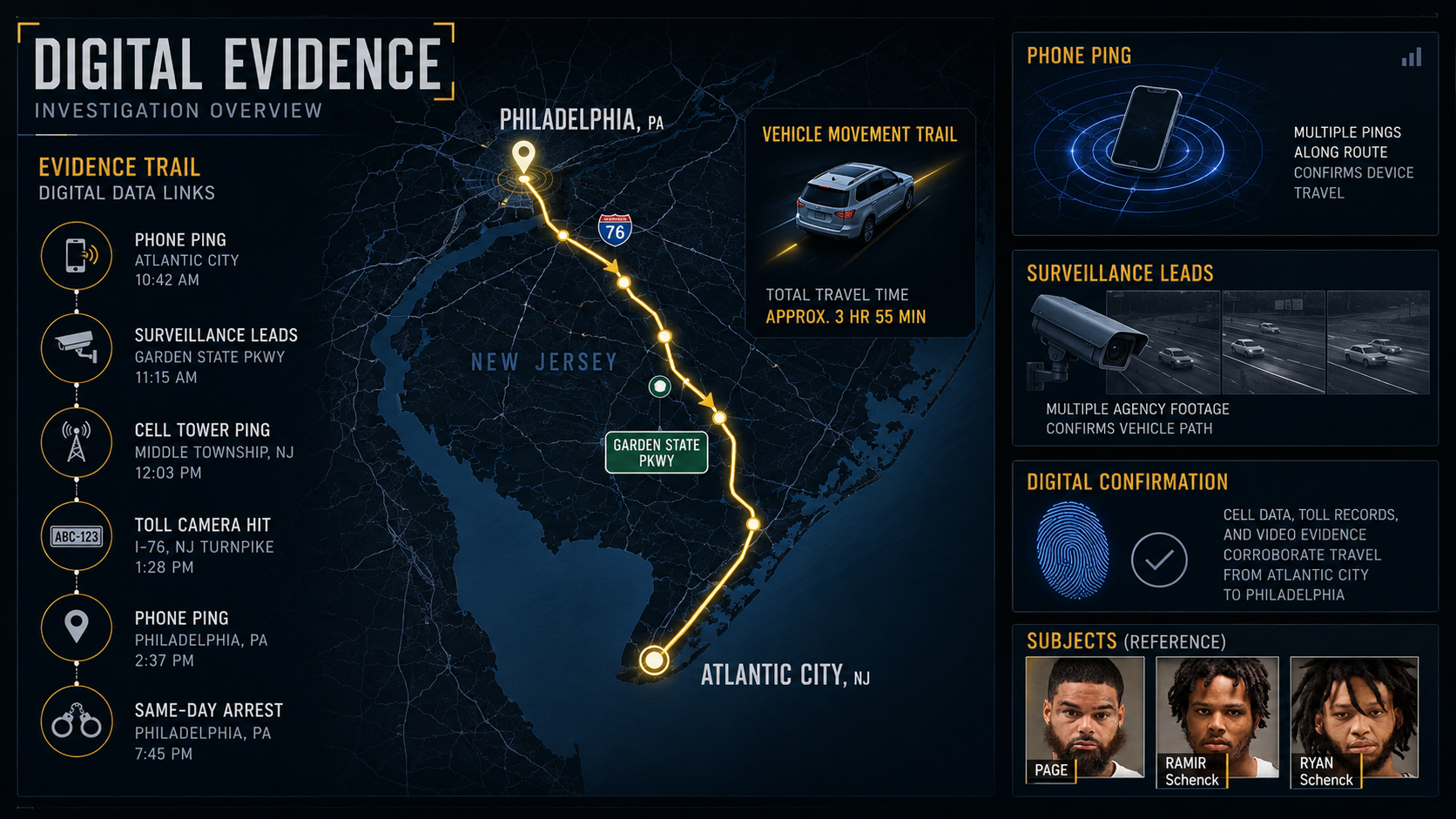
One of the most important reported breaks came through Carley Elbert’s mother. Action News reported that Elbert’s mother helped lead police toward the alleged killer after a ping to her phone tracked it to the 6100 block of Mulberry Street in Northeast Philadelphia. That location became part of the same-day arrest story, with Action News reporting that officers, including the FBI, arrested the three men.
The official plea release confirms the investigation led detectives to Philadelphia that same day, where Page was found with a handgun and additional incriminating evidence. It does not publicly detail the phone ping, the exact Philadelphia block, or every agency present at the arrest, but those details were reported by Action News from the early criminal complaint coverage.
The Defendants
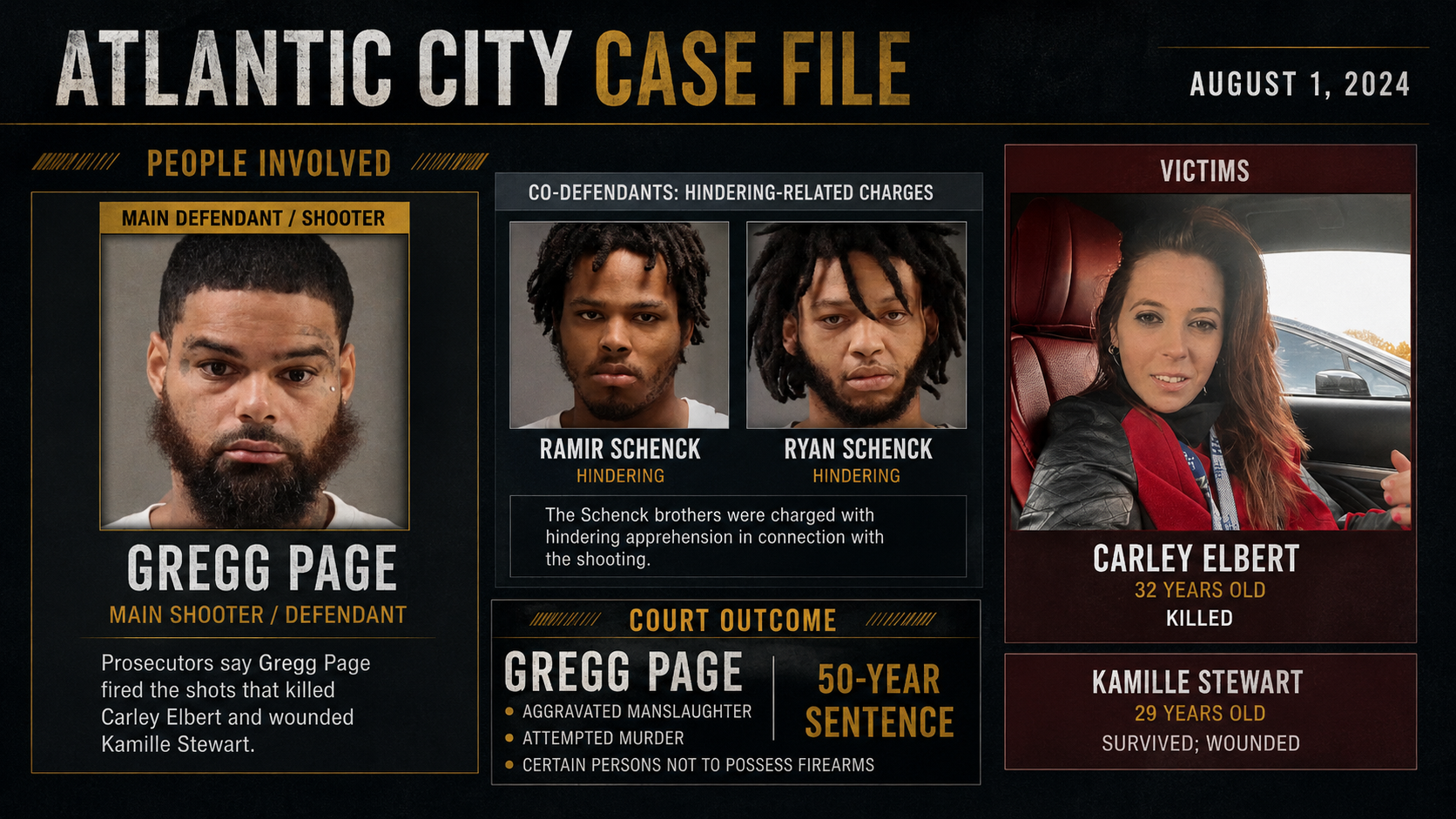
Gregg Page was 34 when the indictment was reported in October 2024 and 35 by the time of his guilty plea in April 2026. The indictment coverage said Page was charged with murder and attempted murder, while Ryan Schenck, 30, and Ramir Schenck, 27, were charged with hindering apprehension. Action News identified Ryan and Ramir as brothers.
By the time prosecutors announced Page’s guilty plea, the state’s language separated the roles. The Atlantic County Prosecutor’s Office said two co-defendants were not involved in the homicide itself but assisted Page in his flight. Those co-defendants were later charged and pleaded guilty to third-degree Hindering an Investigation.
The Plea
On April 13, 2026, Gregg Page pleaded guilty to first-degree Aggravated Manslaughter, first-degree Attempted Murder, and second-degree Certain Persons Not to Possess Firearms. Prosecutors said the plea was connected to the 2024 shooting of both women near the Maine Avenue jetty in Atlantic City. During that guilty plea, Page admitted to shooting both victims.
The recommended sentence was structured in three parts: 25 years in New Jersey State Prison for aggravated manslaughter, 20 years for attempted murder, and 5 years with no parole for the Certain Persons firearm count. Prosecutors announced they would argue for the sentences to run consecutively, creating an aggregate 50-year prison term.
The Sentence
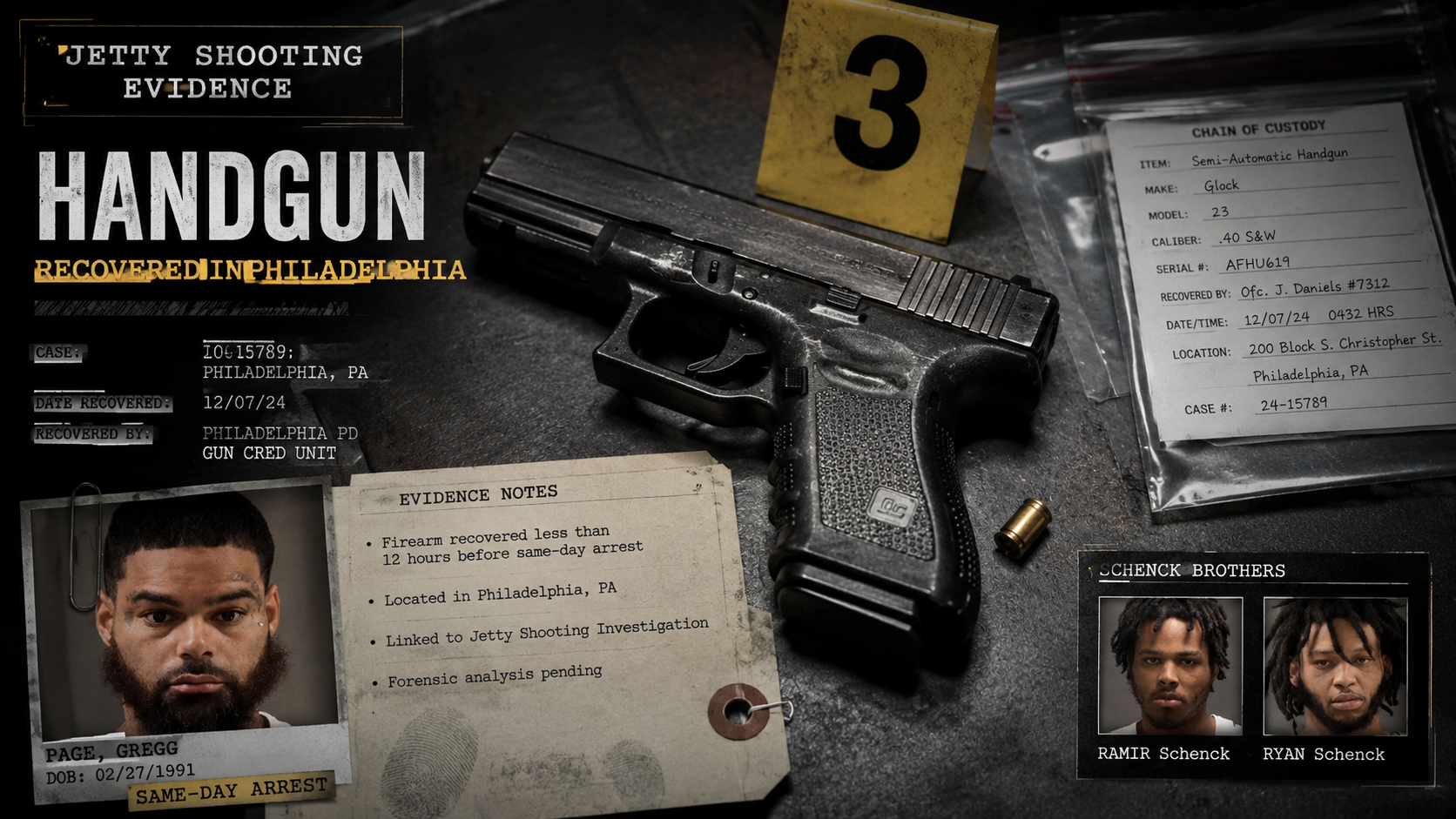
On June 16, 2026, Page was sentenced in Superior Court in Atlantic County. Local reporting said the judge agreed with the state’s request to run the sentences consecutively: 25 years for aggravated manslaughter in Carley Elbert’s death, 20 years for the attempted murder of Kamille Stewart, and 5 years for the firearm offense. The total sentence was 50 years in state prison.
The case was handled by the Atlantic County Prosecutor’s Office Major Crimes Unit with support from the Atlantic City Police Department and Philadelphia Police Department. Executive Assistant Prosecutor Rick McKelvey represented the state.
Official Record vs Early Reporting
The official record confirms the core facts: August 1, 2024, two women shot near the jetty by Maine Avenue, Carley Elbert killed, Kamille Stewart seriously injured, Gregg Page arrested in Philadelphia the same day with a handgun and incriminating evidence, Page later admitting to shooting both women, and two co-defendants pleading guilty to hindering after helping him flee.
The early Action News reporting adds the public-facing reconstruction: the Flagship Resort surveillance, the car arriving after 2 a.m., five people getting out, only two men returning about 20 minutes later, the alleged use of a victim’s car, the discarded vehicle, the second getaway car, and the phone ping to Northeast Philadelphia. Those details are powerful, but they come from media reporting on the complaint and surveillance descriptions, not from the short prosecutor plea release.
What The Public File Does Not Explain
The public record does not reveal a clear motive. It does not explain why the group was at the jetty, what happened during the reported 20-minute gap, what relationship Page had to the victims, or what was said before the shooting. The available sources show the outcome and the movement after the shooting, but they do not fully open the moments between the group walking the Boardwalk and two men returning to the vehicle.
The case also leaves one important legal distinction clear: prosecutors said the co-defendants assisted Page after the shooting, but the investigation revealed they were not involved in the homicide itself. That matters because the public story began with three Philadelphia men indicted in connection with the case, but the final resolved record narrowed the homicide responsibility to Page’s own guilty plea.
Final Breakdown
The Atlantic City jetty case did not end with an unidentified suspect or an open murder file. It ended with an admission in court. Gregg Page admitted he shot Carley Elbert and Kamille Stewart. One woman died at the scene, the other survived with lasting injuries, and the trail that began behind a resort near the Boardwalk ended the same day in Philadelphia with a handgun, incriminating evidence, and two hindering cases tied to Page’s flight. The unanswered part is not who the court held responsible. The unanswered part is what happened in that 20-minute window by the water before the surveillance story turned into a 50-year sentence.