
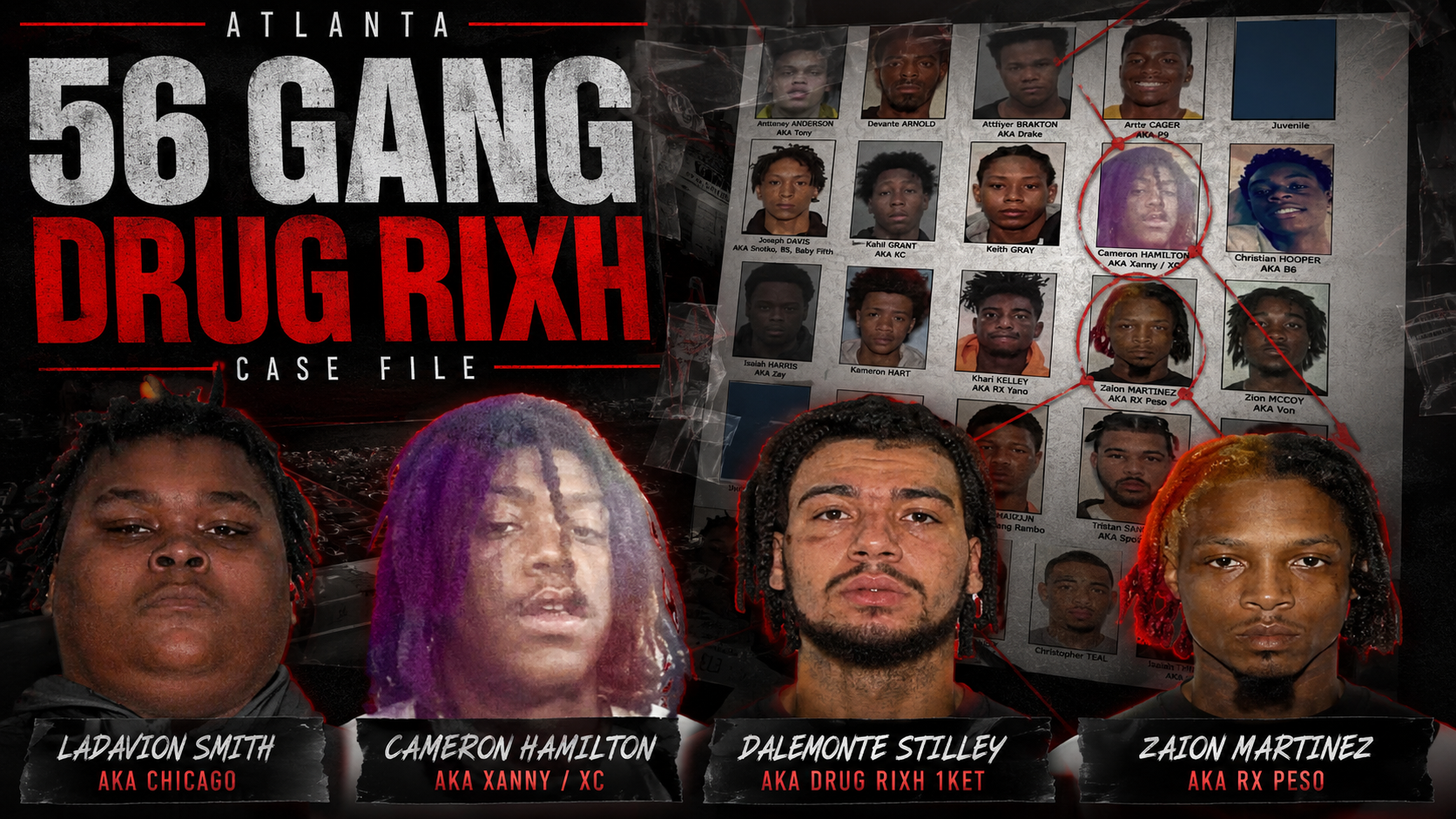
Reporting and analysis may discuss allegations and online theories. Allegations are not findings of guilt. Verify important details in the cited public record.
Case File Preview
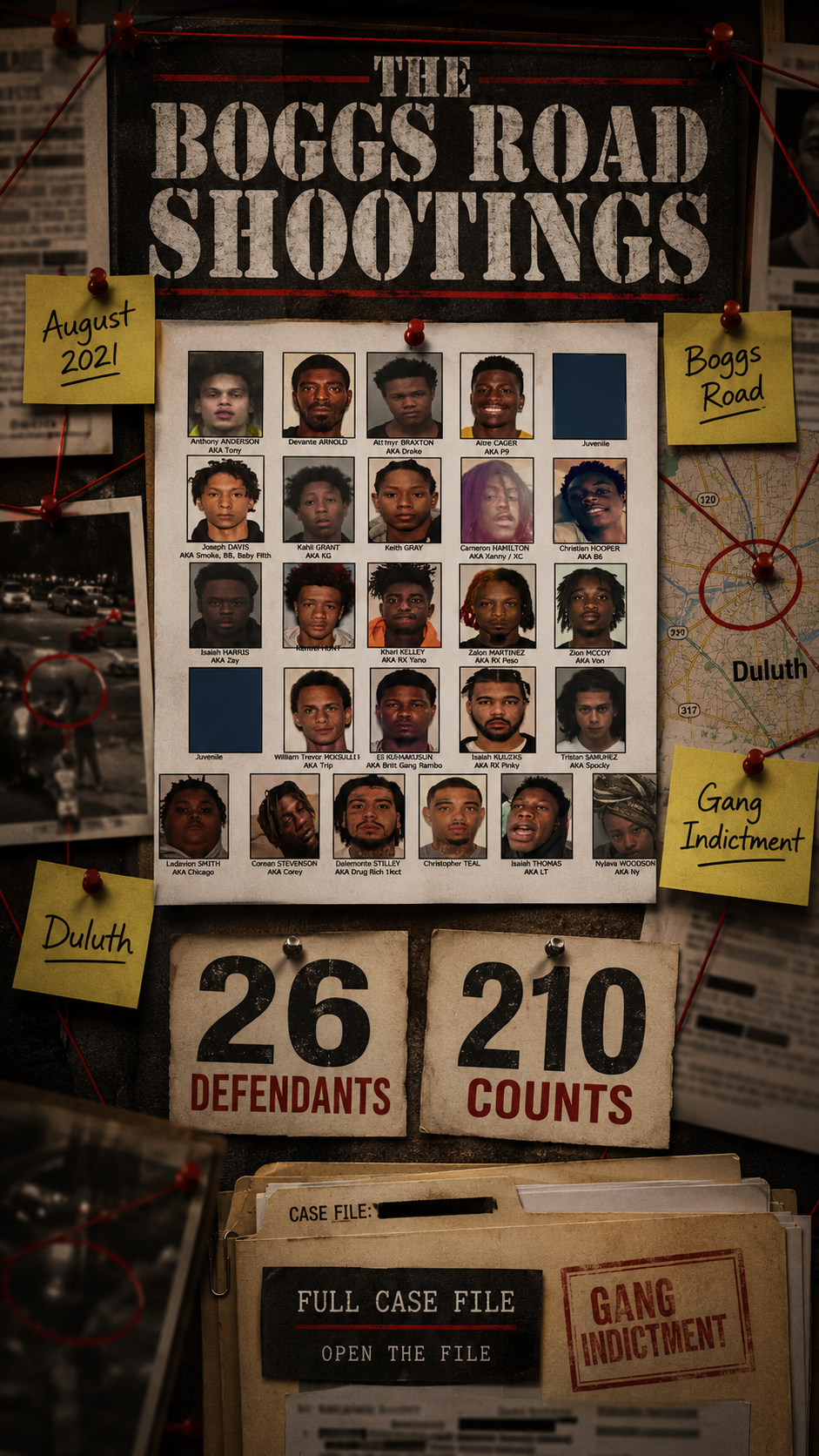
In August 2021, multiple shootings along Boggs Road in Duluth, Georgia, drew investigators into what police described as an escalating gang conflict. Before the month ended, an eighteen-year-old was dead—and the inquiry was no longer limited to a string of shootings.
Over the next seventeen months, detectives widened the case across metro Atlanta. What began near one Gwinnett County road eventually produced a defendant wall filled with mugshots, allegations involving two separate criminal organizations, and one of the largest gang indictments publicly announced in the county.
The Murder That Changed the Investigation
The homicide occurred on August 29, 2021. Police later described it as the event that opened the door to a much broader investigation involving armed robberies, carjackings, aggravated assaults, firearms offenses, and alleged racketeering activity.
The abbreviated public announcement did not reveal the complete shooting reconstruction, identify every person prosecutors tied directly to the killing, or explain how the homicide evidence connected to the remaining defendants. Those details sit at the center of the full file.
The Defendant Wall
On January 25, 2023, a Gwinnett County grand jury returned a 210-count indictment against 26 defendants. When police announced the case in March, twenty-five people had been arrested and one defendant remained wanted.
The mugshot board showed nearly the entire prosecution in one frame. But the wall created a question the headlines rarely answered: were all twenty-six defendants accused of the same violence, or were separate crimes and individual roles combined under one racketeering case?
The full file separates the defendant board from the actual charging structure.
Two Gangs—and a Third Name Inside the Conflict
Public reporting repeatedly paired 56 Gang with Drug Rixh, but the violence that opened the investigation involved another alleged rival group. That distinction changes how the Boggs Road shootings, the homicide, and the later RICO case fit together.
The full case file reconstructs the relationship between the groups, identifies the men police described as alleged leaders, and breaks down why the original feud and the later indictment were not the same thing.
What the 210 Counts Included
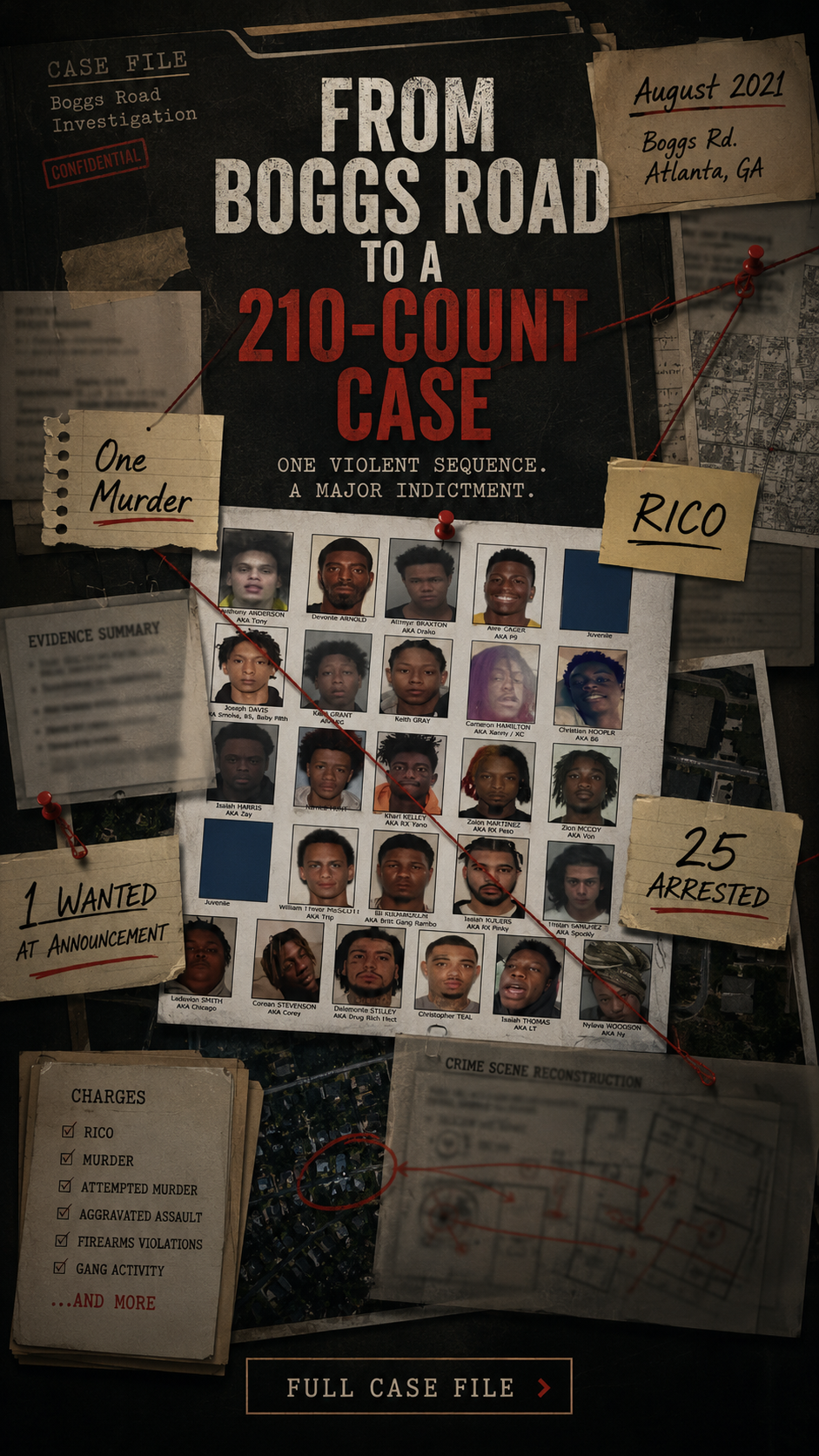
The indictment was reported to contain allegations involving racketeering, Georgia’s Gang Act, murder, armed robbery, vehicle hijacking, aggravated assault, terroristic threats, and firearms offenses.
But the number 210 did not mean every defendant faced 210 charges. It also did not mean every face on the mugshot wall was accused of committing the homicide.
The full breakdown examines what the indictment number reveals, what it does not reveal, and why the missing count-by-count record remains one of the largest gaps in the public file.
The Evidence and the Missing Record
Police described an investigation that expanded across several metro Atlanta jurisdictions and reached as far as Carroll County. The prosecution likely involved a much larger evidence package than the public ever saw, but no complete discovery file, surveillance sequence, or open-web copy of the full indictment accompanied the arrest announcement.
The full case file follows the timeline from Boggs Road to the grand jury, maps the geographic spread, organizes the defendant roster, separates verified facts from police allegations, and identifies the unanswered questions hidden behind the mass-arrest headline.
Click the button below to open the full case file.
Unlock the full case file.
Continue with the complete investigation, source material, member video, and related evidence.
Unlock Full Case FileMembership starts at $5/month · Secure checkout


