
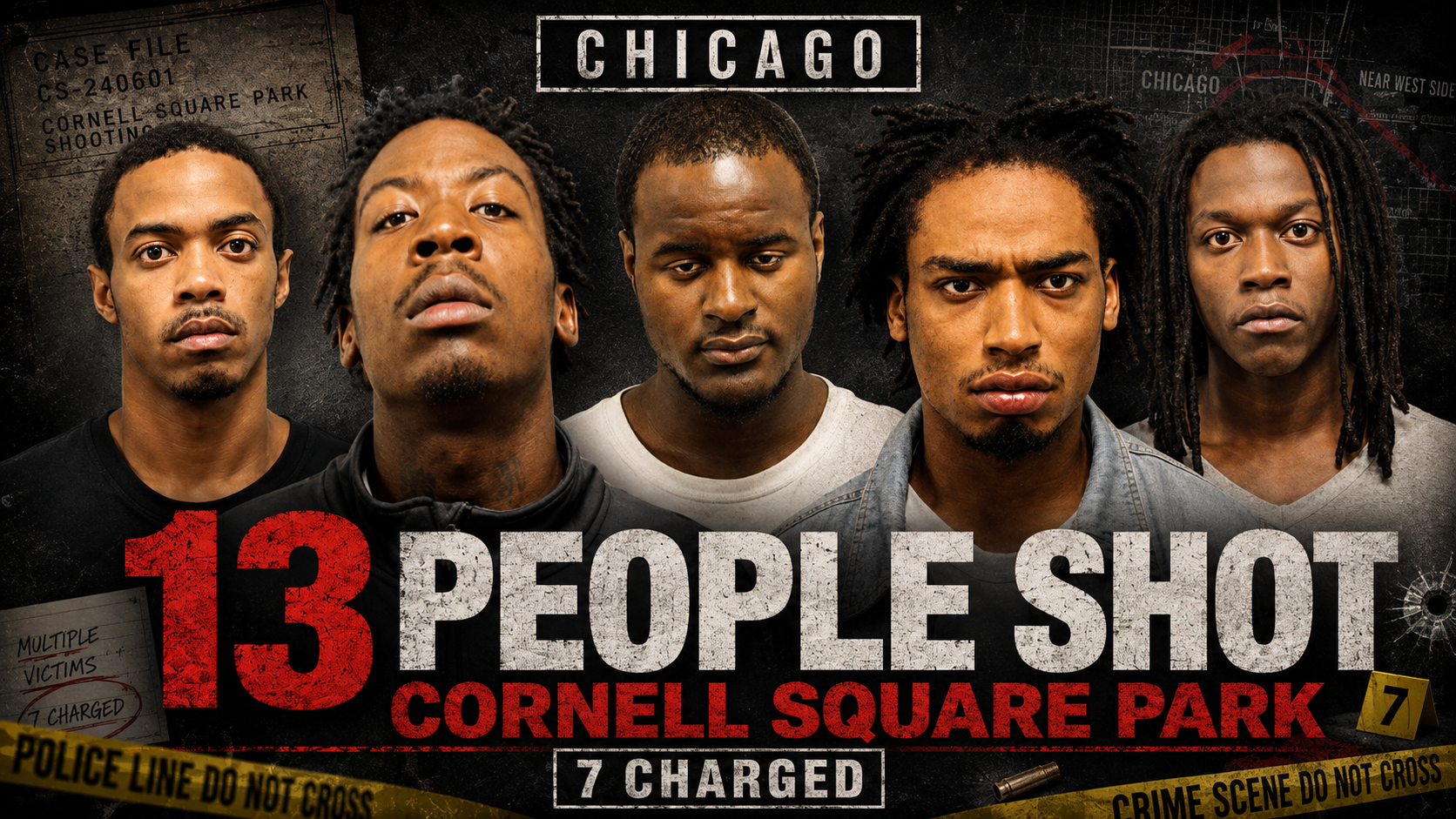
Reporting and analysis may discuss allegations and online theories. Allegations are not findings of guilt. Verify important details in the cited public record.
The Case File
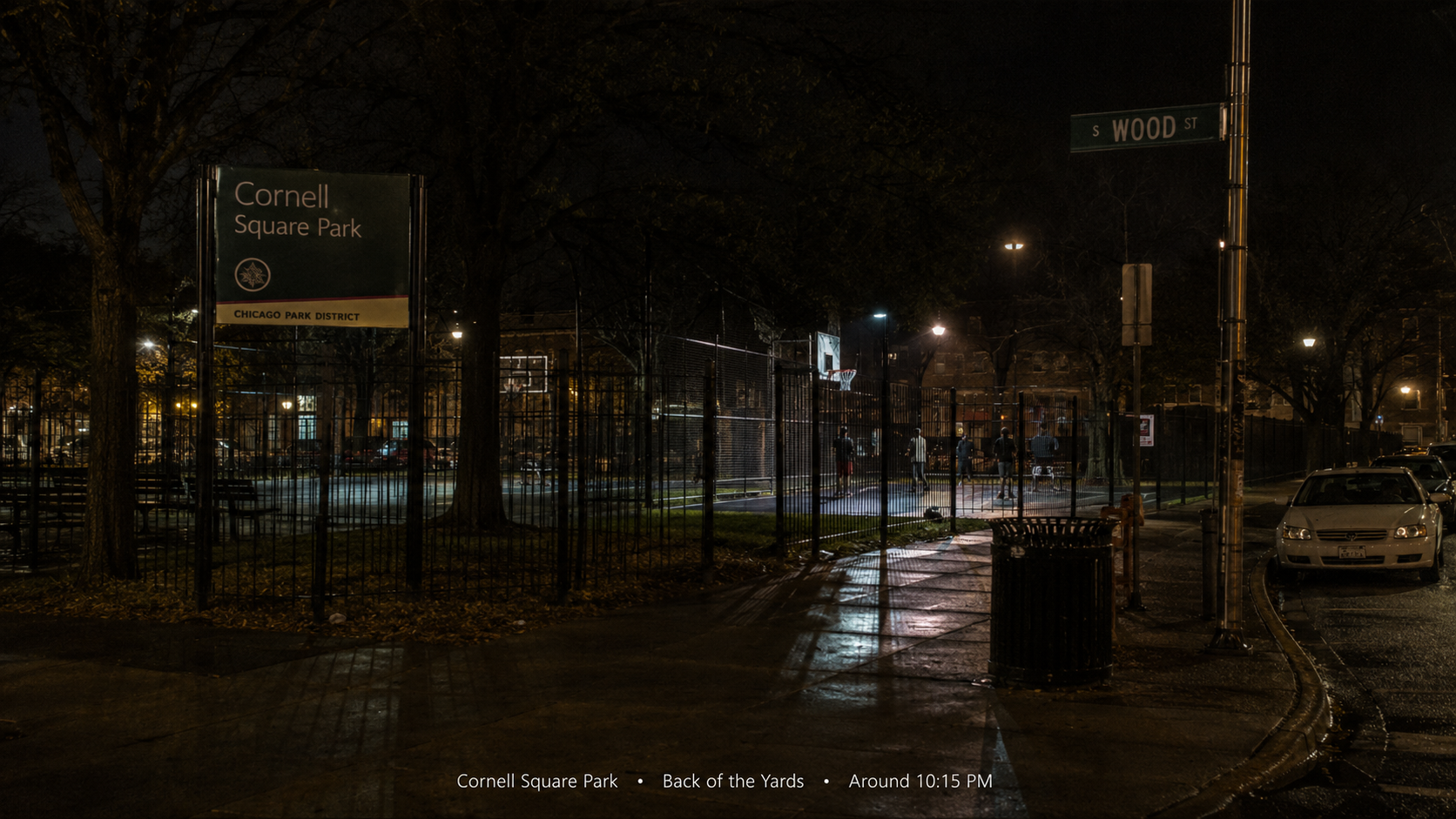
On September 19, 2013, a crowded basketball court at Cornell Square Park became the center of one of Chicago’s most widely reported mass shootings of that year. The location was familiar: 51st and Wood, inside the Back of the Yards neighborhood. The time was late enough for the park to be close to closing, but still active enough for people to be gathered outside. Around 10:15 p.m., gunfire cut through the park, striking 13 people, including 3-year-old Deonta Howard. CBS later reported the shooting happened about 45 minutes before the park’s 11 p.m. closing time.
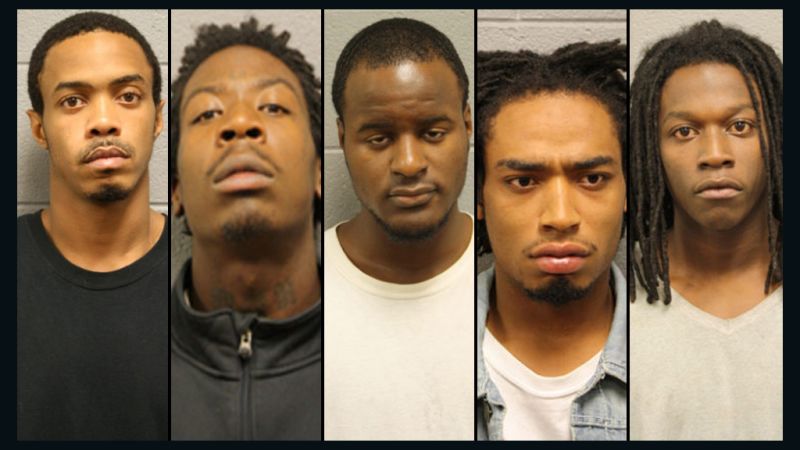
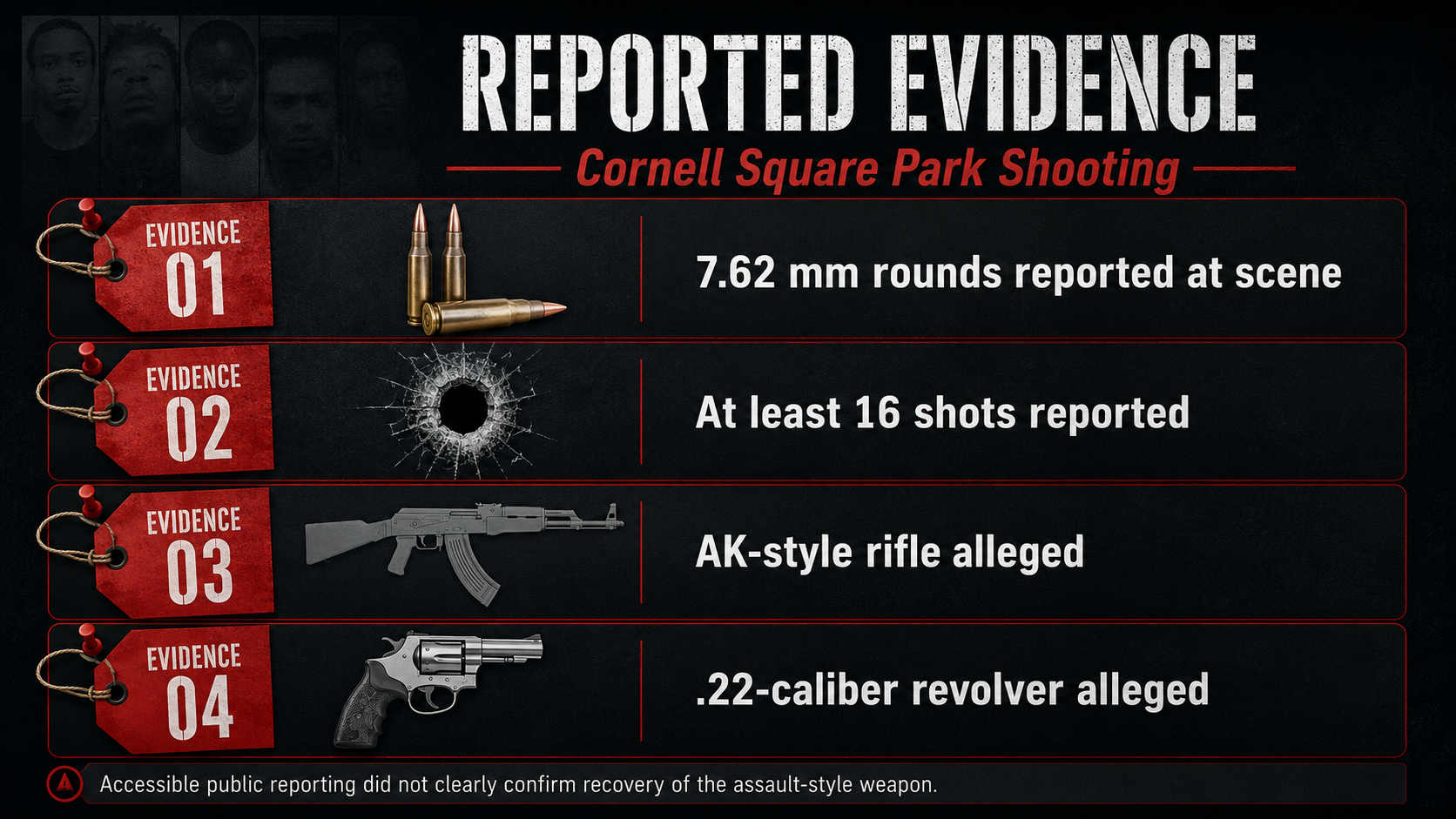
Early reporting described the attack as a gang-related shooting, but the first police question was not simply who fired. It was why a crowded park became the target. ABC7 Chicago reported that at least 16 shots were fired and that police found 7.62-millimeter rounds, while witnesses believed an AK-style weapon may have been used. A police camera was located near the intersection, but early reports said it was unclear whether that camera captured anything useful for investigators.
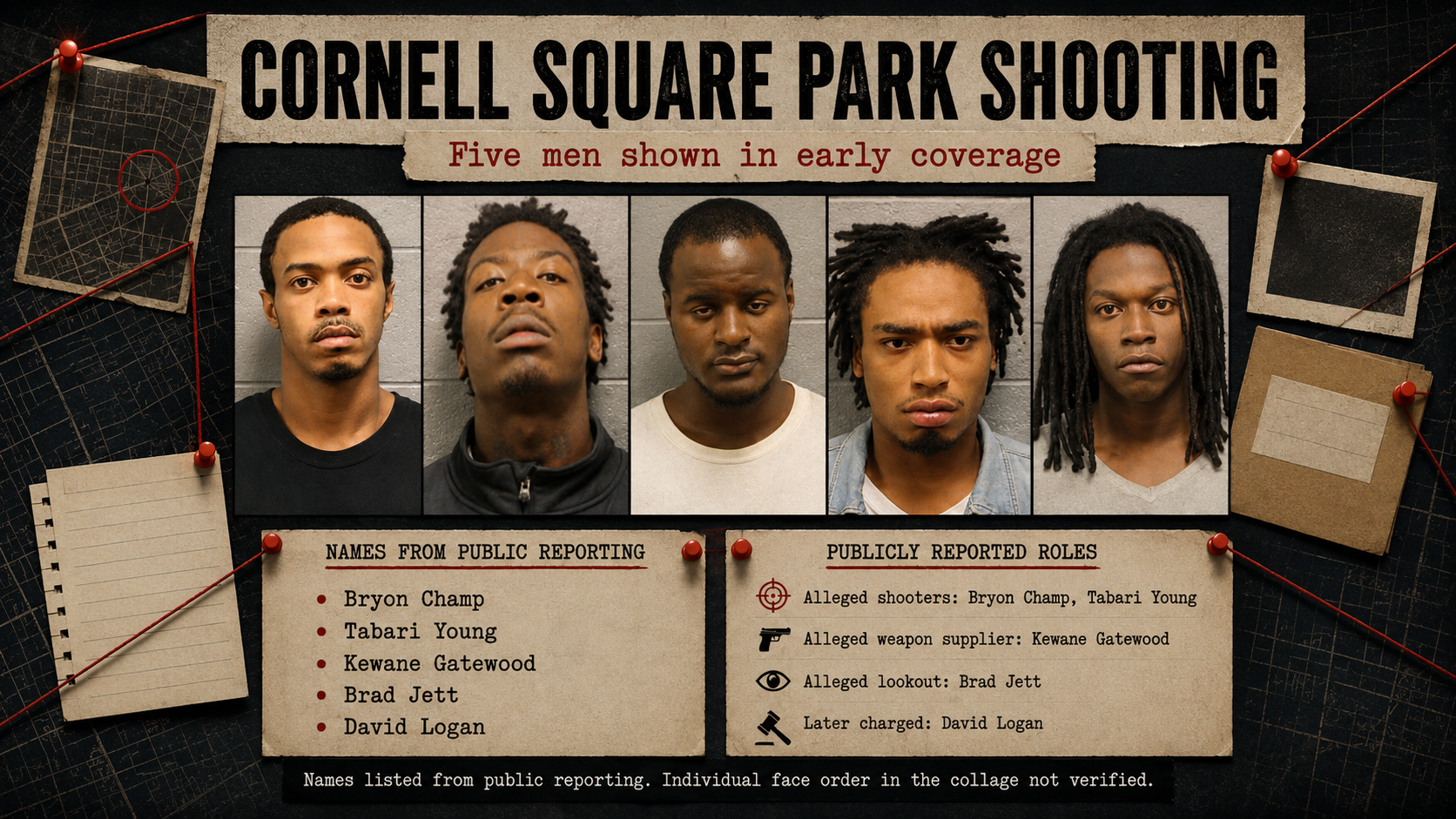
What made the case spread nationally was not only the number of victims. It was the age of the youngest victim and the allegation that the attack started with a retaliation chain from another shooting hours earlier. Prosecutors later said the Cornell Square Park shooting was revenge for a minor graze wound Bryon Champ suffered earlier in the 5200 block of South Paulina after a quarrel with gang rivals.
The Incident At Cornell Square Park
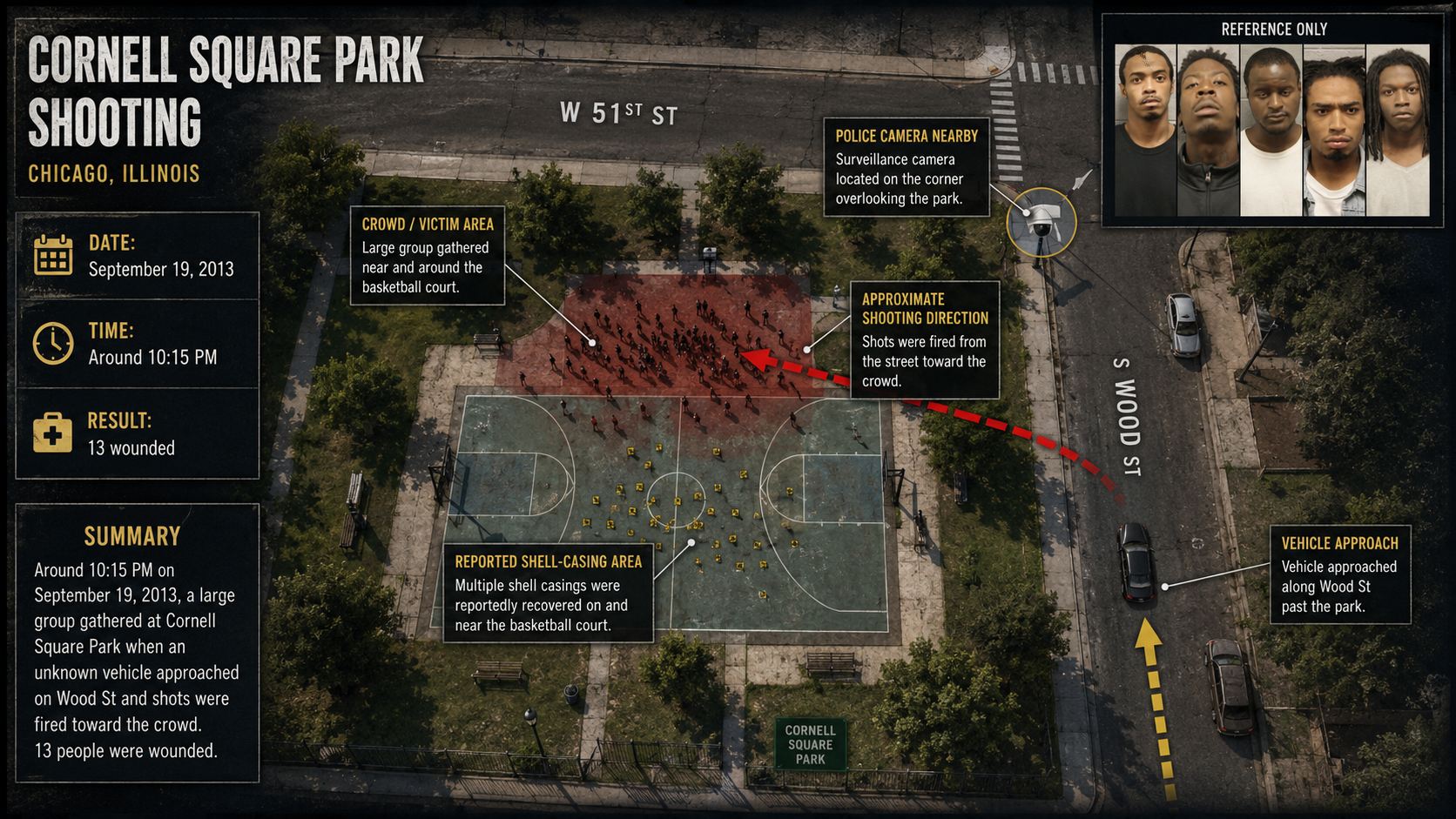
The shooting happened near Cornell Square Park in Chicago’s Back of the Yards neighborhood, close to 51st Street and Wood Street. ABC7 reported that shots rang out near the basketball court shortly after 10 p.m., while CBS and later court-related reporting placed the time around 10:15 p.m.
The first reports described a chaotic scene with multiple victims transported to hospitals. CNN’s reporting, republished by WTKR, said all victims were alive when transported and that four were in critical condition at that early stage. The same report said police believed the shooting was gang-related and that no suspects were in custody immediately after the attack.
ABC7 reported that 3-year-old Deonta Howard suffered injuries near his ear and cheek, underwent surgery, and was expected to recover. Other victims included a 15-year-old boy shot in the arm, a 17-year-old girl shot in the foot, and a 41-year-old man listed in serious condition.
The Earlier Shooting On South Paulina
The official prosecution theory placed the beginning of the case away from the park. According to prosecutors, Bryon Champ had been grazed by gunfire several hours earlier in the 5200 block of South Paulina. That earlier incident was described as a quarrel with gang rivals.
From there, investigators alleged the response moved toward Cornell Square Park. The state’s version was not that the park shooting was random. Prosecutors alleged it was retaliation, with the park targeted because of rival gang presence or rival territory. CBS reported that police said some of the victims were members of the Gangster Disciples and that the shooters were suspected of being affiliated with the Black P Stones. That remains a police/prosecutor claim, not a fact that should be presented as proven for every victim or every defendant.
The Weapons Alleged In Court
Prosecutors alleged Bryon Champ and Tabari Young opened fire into the crowd using two different weapons: an AK-style rifle and a .22-caliber revolver. ABC7 reported there were conflicting statements about which defendant had which gun. Prosecutors also said Kewane Gatewood supplied the assault-style weapon and Brad Jett acted as lookout.
ABC7’s early reporting said police found cartridges at the scene, but the assault-style weapon had not been located at the time of that report. That detail matters because the public record confirms recovered cartridge evidence, but accessible reporting does not confirm that the rifle itself was recovered.
The ballistic detail that gives this case its strongest evidence angle is the reported 7.62-millimeter ammunition. Those rounds matched the early police belief that a high-powered rifle or assault-style weapon was involved. ABC7 reported at least 16 shots were fired and that 7.62-millimeter rounds were found at the scene.
The First Four Charged
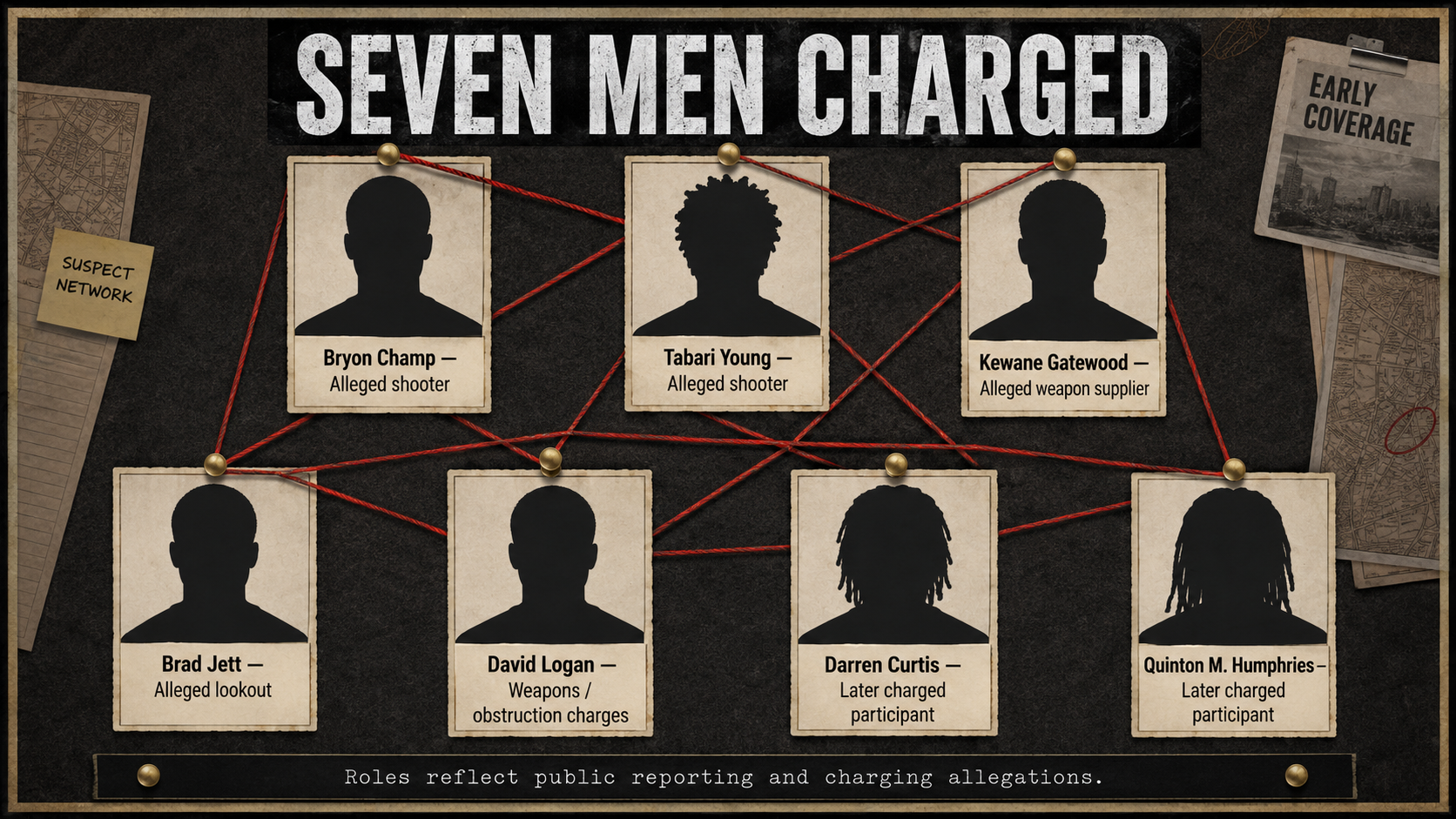
By September 24, 2013, four men had been charged in connection with the shooting: Bryon Champ, Kewane Gatewood, Tabari Young, and Brad Jett. ABC7 reported Champ and Gatewood were first charged with three counts each of attempted murder and aggravated battery with a firearm, with Young and Jett later added to the case.
Police and prosecutors alleged Champ and Young were the shooters. Gatewood was accused of supplying the assault-style weapon. Jett was described as a suspected lookout. The Los Angeles Times reported police believed the motive was retaliation after Champ was grazed by gunfire hours earlier.
Superintendent Garry McCarthy also pointed to Champ’s prior firearm conviction. ABC7 reported Champ had been convicted in 2012 of unlawful use of a weapon by a felon and was sentenced to boot camp instead of prison. McCarthy argued that if Champ had not been on the street, the Cornell Square Park shooting likely would not have happened.
The Case Widens
The investigation did not stop with the first four arrests. David Logan became the fifth man charged. CBS reported Logan was arrested and charged with unlawful use of a weapon without a FOID card and obstructing justice. He was one of five men arrested in the case by late September 2013.
Darren Curtis became the sixth man charged. CBS reported Curtis was arrested in November 2013 and charged with three counts of attempted first-degree murder and three counts of aggravated battery with a firearm. Prosecutors alleged Curtis was the driver that night.
Quinton M. Humphries became the seventh man charged. CBS reported Humphries was charged with three counts of attempted murder and three counts of aggravated battery/discharge of a firearm. Police said only that Humphries “participated in the shooting,” without publicly specifying his alleged role.
The Victims
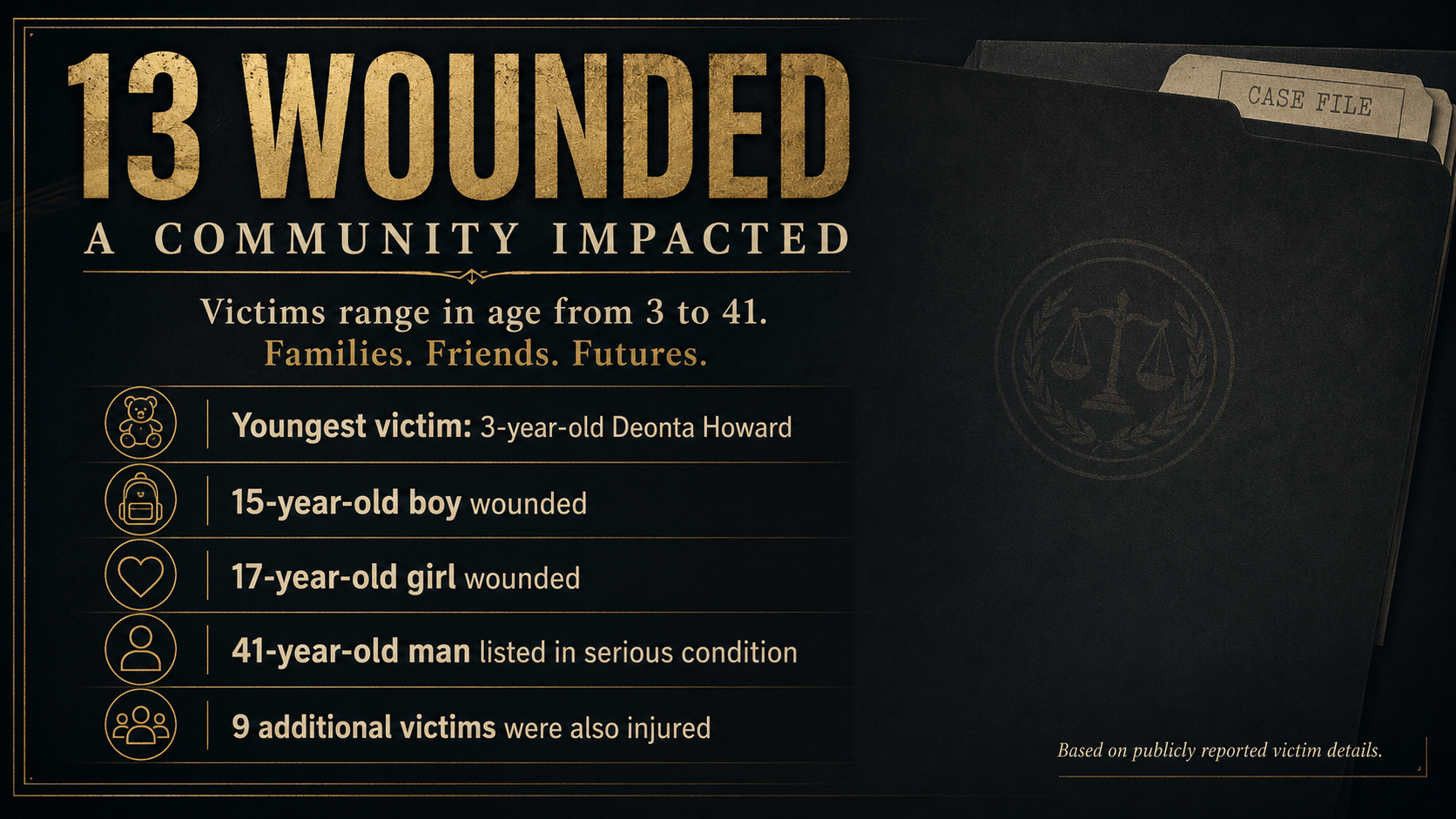
Thirteen people were wounded. The youngest was 3-year-old Deonta Howard, whose injury became the detail that pushed the case beyond local crime reporting and into national headlines. ABC7 reported that a bullet struck near his ear and exited through his cheek, but his family said he did not suffer brain damage and was expected to recover.
Other victims included teenagers and adults. ABC7 reported a 15-year-old boy was shot in the arm, a 17-year-old girl was shot in the foot, and the oldest victim, a 41-year-old man, was in serious condition. The full public list of all 13 victims was not surfaced in the accessible reports reviewed for this file.
This is why the case should be handled carefully. The official record confirms 13 people were wounded, but not every victim’s identity, affiliation, condition, or exact role at the park is publicly verified in the available reporting. Police said the shooting appeared gang-related, but that does not make every person struck a gang member or intended target.
The Court Outcomes Found In Public Reporting
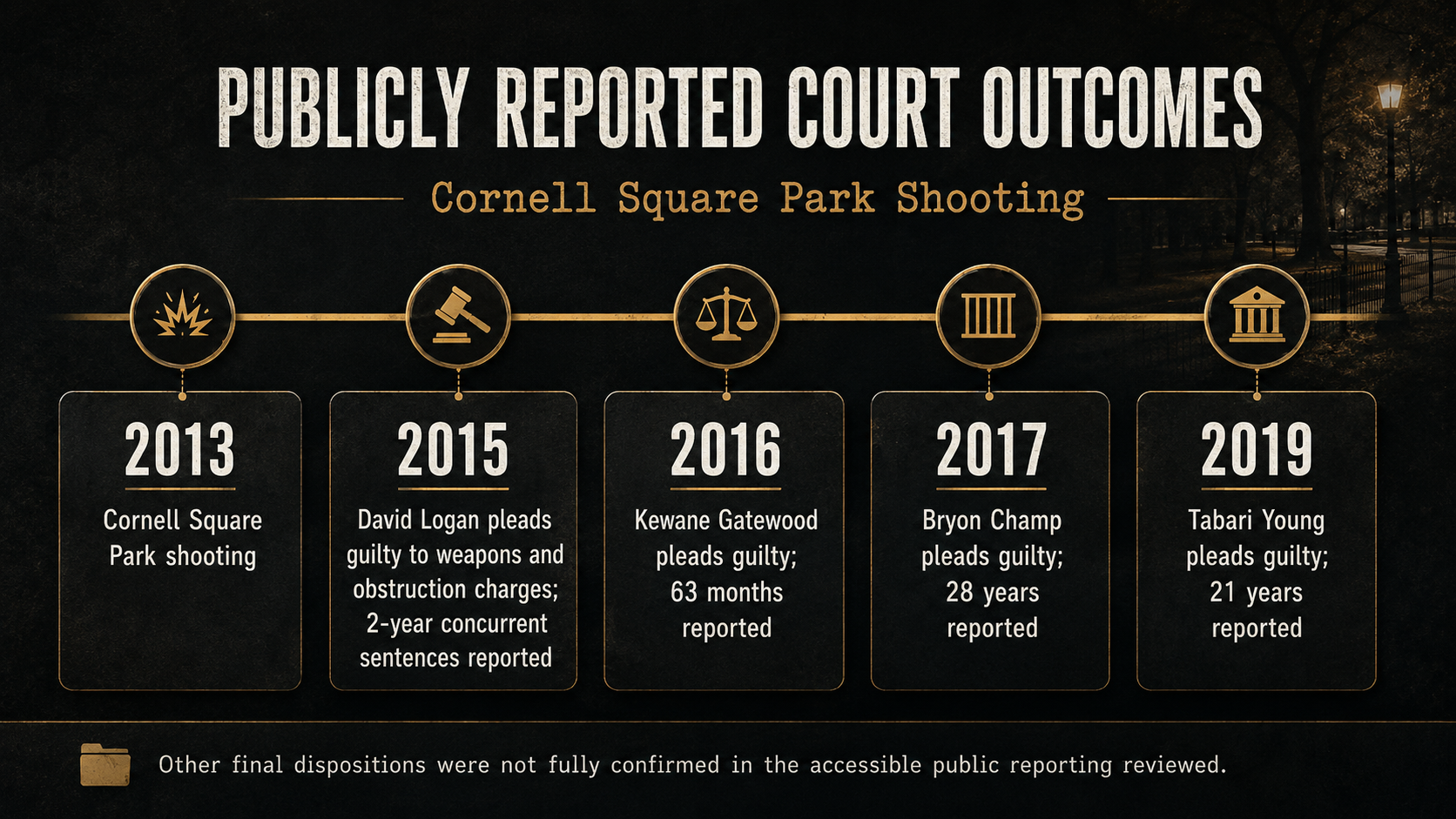
David Logan pleaded guilty in 2015 to aggravated unlawful use of a weapon and obstruction of justice. CBS reported he received two concurrent two-year prison sentences and credit for 688 days already spent in jail.
Kewane Gatewood pleaded guilty in 2016 to aggravated discharge of a firearm. The Chicago Sun-Times reported Judge Kenneth Woods sentenced him to 63 months in prison and gave him credit for 1,009 days served in Cook County Jail.
Bryon Champ later pleaded guilty to aggravated battery with a firearm and received a 28-year sentence, according to AP reporting republished in later coverage. Tabari Young, described as the last convicted defendant sentenced, pleaded guilty in 2019 to aggravated battery with a firearm and received 21 years in prison.
The accessible public reporting clearly documents outcomes for Logan, Gatewood, Champ, and Young. The final dispositions for Brad Jett, Darren Curtis, and Quinton M. Humphries were not confirmed through the accessible sources reviewed for this file. Those outcomes would need Cook County court-record verification before being written as fact.
Official Facts Versus Prosecutor Claims
The confirmed facts are straightforward: 13 people were shot at Cornell Square Park on September 19, 2013; the youngest victim was 3-year-old Deonta Howard; multiple people were charged; and several defendants later pleaded guilty.
The prosecution theory adds the motive and structure: Champ was allegedly grazed in an earlier shooting on South Paulina, then a retaliation attack was allegedly carried out at Cornell Square Park. Prosecutors alleged Champ and Young fired into the park, Gatewood supplied the assault-style weapon, Jett acted as lookout, and Curtis drove. Humphries was later accused of participating, though police did not publicly specify his alleged role.
The gang element should remain labeled as law-enforcement and prosecutor language. Police said the case appeared gang-related, and CBS reported police believed some victims were Gangster Disciples while the shooters were suspected Black P Stones. That is not the same as verified individual affiliations for every person involved.
What The Public Record Still Does Not Fully Answer
The accessible reporting does not fully establish who the intended target was. Early police statements said investigators believed the shooting was gang-related, but ABC7 reported they were not certain who the intended target might have been.
The public reporting also does not fully confirm whether the nearby police camera captured usable footage. ABC7 reported that a police camera was near the intersection, but it was unclear whether it recorded evidence that helped investigators.
The final unresolved piece is the full court record for all seven defendants. Public reporting confirms several plea outcomes, but not every final case disposition. Until those records are pulled from Cook County, the safest version is to state exactly what is confirmed and mark the remaining outcomes as unverified in the accessible public record.
Final Breakdown
The Cornell Square Park shooting was not a homicide, but it became one of Chicago’s most visible mass shooting cases because of where it happened, how many people were hit, and how young the youngest victim was. The official case moved from a crowded park to a retaliation theory, then into a widening prosecution that eventually named seven defendants.
The strongest confirmed evidence points are the date, location, number of victims, reported 7.62-millimeter rounds, the assault-style weapon allegation, the South Paulina retaliation theory, and the later guilty pleas. The weakest parts of the accessible record are the exact intended target, any confirmed surveillance footage, the full victim list, and the final court outcomes for every defendant.
What remains clear is that a park shooting near 51st and Wood became much larger than a single burst of gunfire. It became a case about retaliation, illegal weapons, public space, and a prosecution that took years to fully move through the courts.


