
Reporting and analysis may discuss allegations and online theories. Allegations are not findings of guilt. Verify important details in the cited public record.
THE CASE FILE
By the time federal agents finally tore TTG apart in 2017, West Baltimore detectives already believed the crew had left a years-long trail of bodies, shootings, drug territory disputes, witness intimidation, and retaliatory violence across Sandtown. What made the case different from a normal Baltimore drug indictment was not just the murder count. It was the amount of surveillance, wiretap evidence, social-media activity, rap connections, cooperating witnesses, ballistic links, and organized structure investigators claimed they uncovered while building the federal RICO case.
Federal prosecutors described Trained To Go, also known as TTG, as a violent criminal organization operating mainly in Sandtown-Winchester and surrounding parts of West Baltimore between roughly 2010 and 2017. According to DOJ filings and appellate records, the organization sold heroin, cocaine, crack cocaine, and marijuana while using violence to maintain control over territory and retaliate against rivals, robbery crews, informants, and perceived disrespect. The organization was eventually tied by prosecutors to multiple murders, attempted murders, kidnappings, assaults, robberies, witness intimidation, and murder-for-hire schemes connected to another Baltimore group known as YGG, or Young Go Getters.
The case later became nationally known because it collided directly with Baltimore’s drill and street-rap culture. Prosecutors, journalists, and later book coverage all pointed toward a world where social-media posts, music references, online taunting, neighborhood alliances, and real violence constantly overlapped. Unlike internet rumors built only around Reddit speculation, the TTG investigation produced years of federal surveillance records, wiretap transcripts, tracking warrants, forensic evidence, and cooperating testimony that gave prosecutors one of the biggest organized gang cases Baltimore had seen in years.
WEST BALTIMORE BEFORE TTG
The environment TTG came out of matters because Sandtown was already one of the most violent and economically damaged sections of Baltimore long before the federal case exploded publicly. Sandtown-Winchester had become nationally recognized for vacant housing, open-air drug markets, high homicide rates, police corruption scandals, and concentrated poverty. Entire rows of abandoned homes sat only blocks away from active drug corners. Heroin trafficking remained deeply embedded in parts of West Baltimore for decades, and violence tied to narcotics distribution became normalized in many neighborhoods.
The Freddie Gray unrest in 2015 intensified national attention on the area, but federal records show TTG was already active before the riots. By the mid-2010s, Baltimore police and federal investigators were focusing heavily on neighborhood-based organizations rather than loose individual offenders. Investigators increasingly believed groups like TTG operated with structure, territory enforcement, internal alliances, access to firearms, and retaliatory systems that resembled smaller organized criminal enterprises rather than random neighborhood crews.
Court records later showed investigators believed TTG defended drug territory aggressively and responded violently to robberies, conflicts, disrespect, and threats against members. The organization’s alleged influence stretched beyond simple corner dealing. Prosecutors argued the crew maintained power partly through fear and reputation. Witness intimidation became a major issue during the investigation and later during the federal trial itself.
THE TWELVE NAMES IN THE INDICTMENT
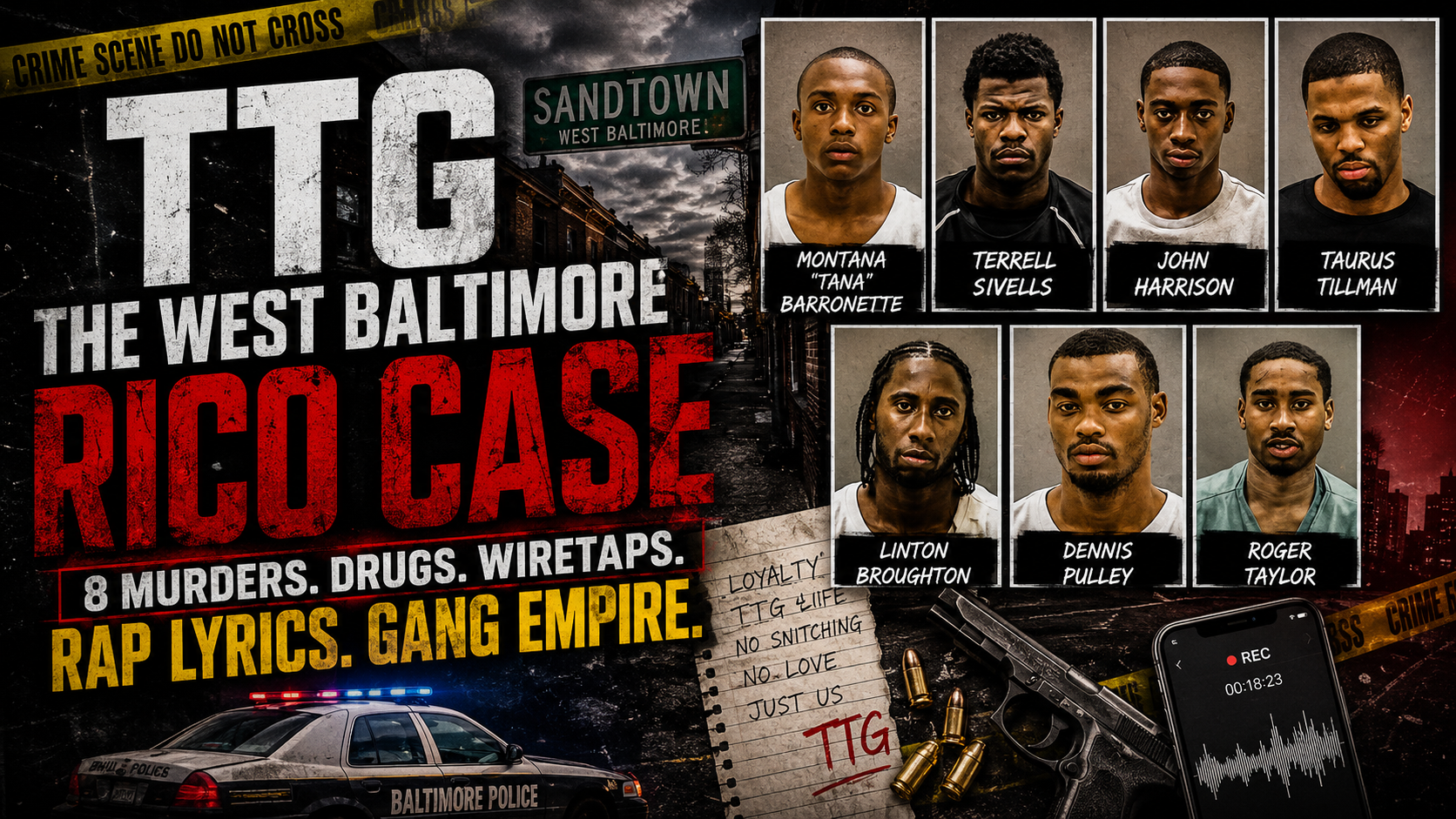
In July 2017, federal authorities announced a superseding indictment charging twelve alleged TTG members and associates in a sweeping racketeering and narcotics conspiracy case.
The defendants named publicly included:
Montana Barronette, also known as Tana or Tanner
Terrell Sivells, also known as Rell
John Harrison, also known as Binkie
Taurus Tillman, also known as Tash
Linton Broughton, also known as Marty
Dennis Pulley, also known as Denmo
Roger Taylor, also known as Milk
Brandon Wilson, also known as Ali
Brandon Bazemore, also known as Man Man
Timothy Floyd, also known as Tim Rod
Hisaun Chatman
James Woodfolk
The original federal announcement stated that ten defendants faced RICO conspiracy charges while all twelve were charged in the narcotics conspiracy involving heroin, cocaine, and marijuana distribution. Several defendants also faced murder-in-aid-of-racketeering allegations carrying potential life sentences.
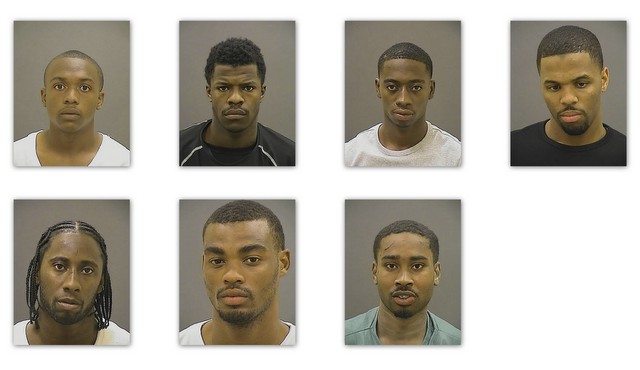
The AFRO article covering the indictment included one of the most widely circulated public images tied to the case: a lineup photo showing several TTG defendants after the federal announcement. Montana Barronette appeared among the defendants shown in the image, helping turn him into one of the most recognizable faces associated with the case publicly.
MONTANA “TANA” BARRONETTE
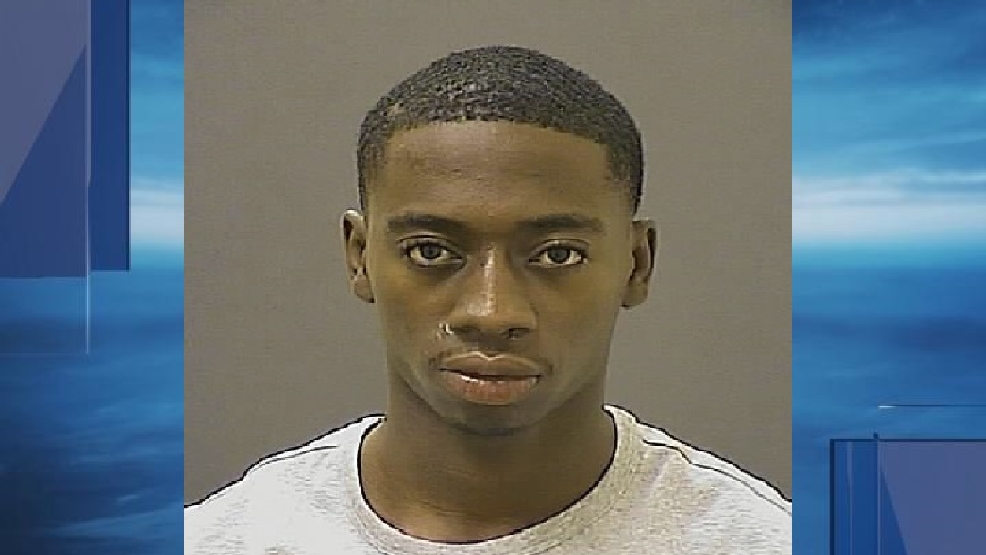
Montana Barronette quickly became the central figure in the federal narrative surrounding TTG. Prosecutors described him as a leader within the organization, while Baltimore Police Commissioner Kevin Davis publicly referred to him as Baltimore’s “number one trigger puller” during media coverage surrounding the indictment.
Federal prosecutors later stated that Barronette personally participated in six murders connected to the racketeering conspiracy. During sentencing, DOJ said the broader conspiracy involved eight murders total. Barronette was eventually sentenced to life in federal prison on February 15, 2019.
What made Barronette especially important to investigators was not just the murder allegations. Federal records suggest investigators believed he carried influence within the organization itself. Prosecutors repeatedly framed him as someone deeply involved in retaliatory violence, organizational activity, narcotics trafficking, and intimidation efforts tied to TTG operations.
The government also argued that Barronette continued trying to influence courtroom dynamics even while jailed. During appellate proceedings, records referenced allegations that he requested supporters pack the courtroom during witness testimony. The appeals court also referenced fights in the gallery, knives recovered inside the courthouse gallery area, and concerns involving intimidation surrounding the proceedings.
THE FEDERAL INVESTIGATION
The TTG case was not built around a single homicide investigation. It was built over years using overlapping surveillance techniques designed to map an organization rather than solve only one shooting.
According to appellate records, investigators used confidential informants, controlled drug buys, surveillance operations, search warrants, phone tracking warrants, wiretap applications, intercepted communications, cooperating testimony, and forensic evidence. Federal agents and Baltimore investigators attempted to build an entire picture of how TTG operated internally, how members communicated, where narcotics were distributed, and how violence allegedly connected back to organizational goals.
One major investigative step came on February 5, 2016, when authorities obtained a tracking order for a phone allegedly used by Terrell Sivells. On March 3, 2016, investigators secured a wiretap authorization connected to the same broader investigation. Additional wiretap applications followed afterward involving other communications tied to the organization.
According to court records, intercepted calls discussed narcotics trafficking, movements around Baltimore, disputes involving rival individuals, and conversations investigators believed related to planned violence. The Fourth Circuit later summarized portions of the evidence by stating intercepted communications reflected members discussing tracking individuals they allegedly planned to murder.
Investigators also conducted physical surveillance operations on defendants including Barronette and Sivells, documenting suspected narcotics transactions and movement around West Baltimore. Authorities eventually executed search warrants connected to properties investigators tied to TTG operations, including locations on Avalon Street in Baltimore.
THE MURDERS NAMED IN COURT
The murders tied to the federal conspiracy became one of the darkest parts of the case. According to appellate records, the broader conspiracy involved the murders of:
Brian Chase
Marquez Jones
Lamont Randall
Gerald Thompson
Jacqueline Parker
Domonique Harris
Antonio Addison
Christopher Pennington
Federal prosecutors did not argue every defendant participated equally in every murder. Instead, the government attempted to show varying involvement levels across the conspiracy.
The jury later found Montana Barronette conspired to commit the murders of Brian Chase, Marquez Jones, Lamont Randall, Gerald Thompson, Jacqueline Parker, Antonio Addison, and another unidentified individual. The jury did not find he conspired to murder David Moore.
John Harrison was found to have conspired to commit the murders of Brian Chase, Lamont Randall, Gerald Thompson, Jacqueline Parker, and Domonique Harris.
Terrell Sivells and Timothy Floyd were found to have conspired to murder Antonio Addison.
Dennis Pulley was found to have conspired to murder Christopher Pennington.
Linton Broughton was found to have conspired to murder an unidentified individual.
The federal structure of the case mattered because prosecutors used RICO conspiracy law to argue these acts were connected to maintaining or advancing the criminal enterprise rather than being isolated street incidents.
THE BALLISTICS AND FIREARMS EVIDENCE
One of the strongest evidence angles in the TTG case involved ballistic analysis and firearm tracing. DOJ later confirmed that the investigation benefited from leads generated through ATF’s National Integrated Ballistic Information Network, commonly known as NIBIN.
That detail matters because NIBIN allows shell casings and ballistic evidence recovered from different crime scenes to be compared and linked through firearm signature analysis. In practical terms, investigators were not relying only on witness testimony or informants. They were also attempting to connect shootings and murders through forensic firearm evidence.
Additional sentencing records later stated that a firearm recovered from Linton Broughton had been used in four murders connected to the broader conspiracy. Federal prosecutors also stated John Harrison participated in five murders tied to the enterprise.
The ballistic evidence strengthened the government’s broader argument that TTG violence was organized, connected, and recurring rather than random independent shootings.
THE WITNESS INTIMIDATION PROBLEM
Witness intimidation became one of the defining themes of the case.
Federal prosecutors repeatedly argued TTG members and associates used violence, threats, fear, and organizational reputation to discourage cooperation with law enforcement. By the time the trial was underway, concerns surrounding intimidation extended directly into courtroom security.
Appellate records referenced fights inside the courtroom gallery, knives recovered from individuals attending proceedings, vandalism involving TTG references inside courthouse areas, and broader fears involving witness safety.
The government also referenced murdered cooperating witnesses during arguments surrounding courtroom security concerns. The atmosphere surrounding the proceedings reflected how seriously federal prosecutors viewed the organization’s influence and intimidation potential.
THE MUSIC AND SOCIAL-MEDIA ANGLE
The TTG case eventually grew beyond normal Baltimore crime coverage because it sat directly inside the growing overlap between gang violence, social media, online identity, and rap culture.
Journalist Mark Bowden later explored the case heavily in the book Life Sentence. Reviews and reporting connected to the book described a culture where violent acts were celebrated online, neighborhood reputations were amplified through social media, and gangster rap references often mirrored real-world conflicts happening in West Baltimore streets.
This angle requires careful separation between documented fact and internet exaggeration.
There is verified reporting stating social media and rap culture surrounded the broader environment of the case. However, not every lyric should automatically be treated as evidence or confession unless specifically tied to trial records or introduced directly by prosecutors.
Still, the case became important nationally because it represented a new kind of organized gang prosecution where investigators increasingly examined phones, online behavior, social-media presence, music references, wiretaps, and digital communication alongside traditional street investigations.
THE SENTENCES
Montana Barronette received life in federal prison.
Terrell Sivells received life.
John Harrison received life.
Linton Broughton received 30 years.
Dennis Pulley received 30 years.
Timothy Floyd received 30 years.
Brandon Wilson received 25 years.
Taurus Tillman received 25 years.
Roger Taylor, also known as Milk, later received more than eleven years in federal prison. Prosecutors stated Taylor and members of YGG supported TTG operations through narcotics trafficking, money, and organizational assistance.
Federal authorities later described the TTG prosecution as one of Baltimore’s largest and most violent gang conspiracy cases of the period.
OFFICIAL FACTS VERSUS STREET CLAIMS
The official federal case established that TTG existed as a violent criminal enterprise operating in West Baltimore, that members engaged in narcotics trafficking, and that multiple defendants were convicted in connection with murders tied to the conspiracy.
The federal record also confirms the existence of wiretaps, surveillance operations, ballistic evidence, confidential informants, tracking warrants, and cooperating testimony.
What remains far less reliable are internet-level claims attempting to assign every unsolved West Baltimore murder to TTG, every rap lyric to a specific homicide, or every neighborhood conflict to a confirmed conspiracy event. Much of that material comes from online speculation rather than trial evidence.
The strongest version of the case file stays anchored to what prosecutors actually proved, what the jury actually found, and what federal appellate records specifically documented.
THE FINAL BREAKDOWN
The TTG case became bigger than a normal Baltimore gang indictment because it captured nearly every element of modern federal gang prosecution at once: murders, narcotics trafficking, wiretaps, digital surveillance, rap culture, social media, informants, firearm forensics, witness intimidation, and neighborhood power structures inside one of the most violent sections of West Baltimore.
By the time the convictions were finalized, federal prosecutors had spent years building a racketeering case designed not just to arrest individual shooters but to dismantle what they argued was an organized criminal enterprise controlling parts of Sandtown through violence and fear.
The result was a federal case that permanently attached the name TTG to one of the most heavily documented West Baltimore gang prosecutions of the 2010s.


