
Reporting and analysis may discuss allegations and online theories. Allegations are not findings of guilt. Verify important details in the cited public record.
The Case File
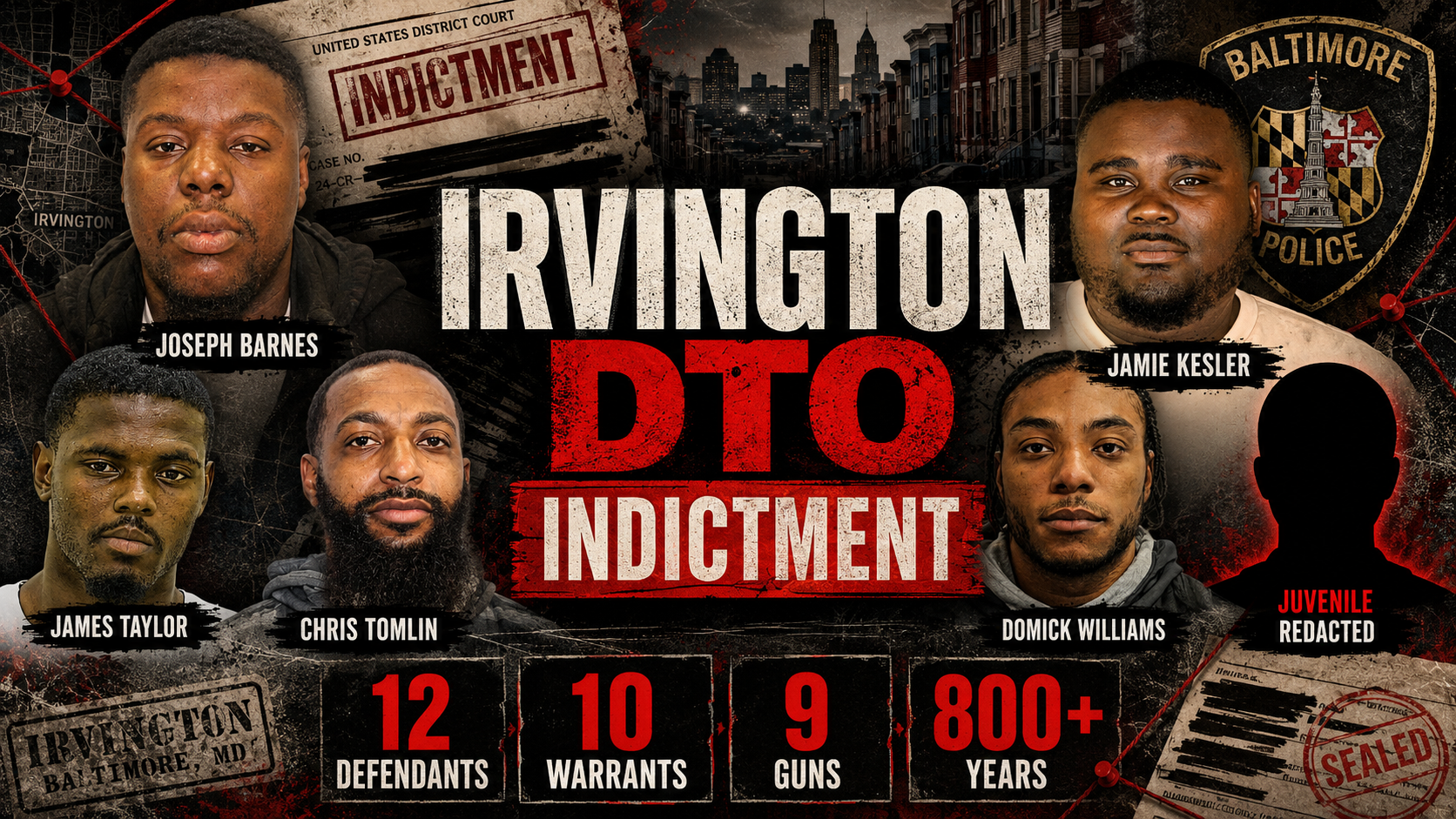
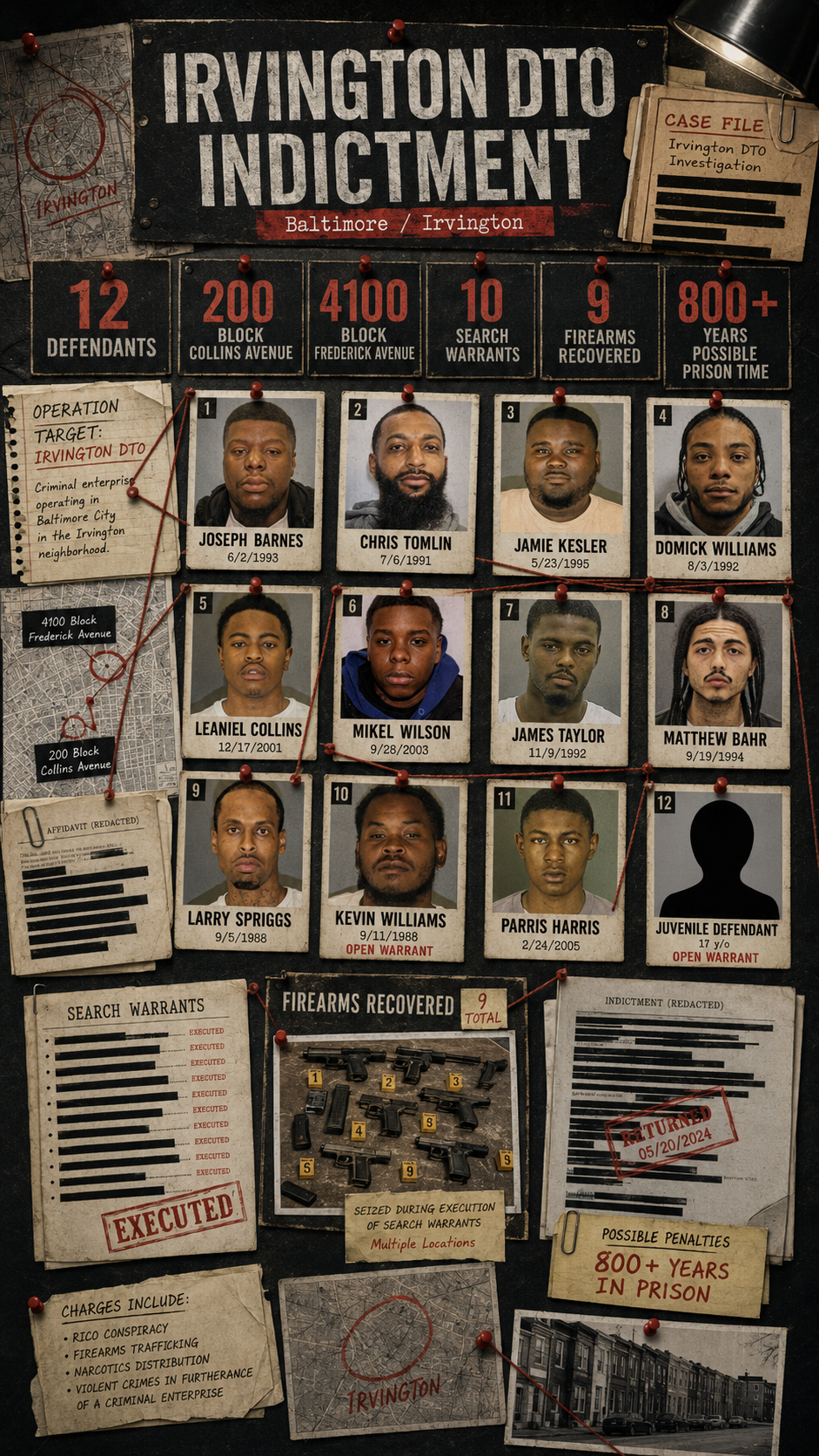
On March 14, 2024, Baltimore officials announced a drug trafficking indictment that turned two Southwest Baltimore blocks into the center of a much larger investigation. The Baltimore City State’s Attorney’s Office said 12 alleged members of a drug trafficking organization had been indicted after a four-month investigation in the Irvington neighborhood, with prosecutors identifying the 200 block of Collins Avenue and the 4100 block of Frederick Avenue as the alleged operating area.
The headline number was heavy: more than 800 years of possible prison time if every defendant was convicted on every charge. But the real case was bigger than the sentencing exposure. Officials described an investigation built around electronic surveillance, undercover officers, 10 search warrants, nine recovered firearms, suspected fentanyl mixture, marijuana, suspected heroin, suspected cocaine, and a coordinated law enforcement response tied to Baltimore’s Group Violence Reduction Strategy.
This was not presented as one person caught with drugs on one block. Prosecutors framed it as a connected DTO investigation, with alleged leadership, repeated narcotics activity, firearms, multiple search locations, and a public warning attached to it. The State’s Attorney’s Office also made clear that an indictment is not a conviction, and every defendant is presumed innocent unless proven guilty at trial.
The Irvington Investigation
According to officials, the investigation began in November 2023 and continued for four months. The target was an alleged drug trafficking organization operating in Irvington, inside Baltimore’s Southwestern Police District. The case involved the Baltimore City State’s Attorney’s Office Major Investigations Unit, the Baltimore Police Department, BPD’s Group Violence Unit, MONSE, and multiple law enforcement partners.
Investigators said electronic surveillance and undercover officers were used during the case. Based on that evidence, detectives identified Joseph Barnes and Chris Tomlin as the alleged leaders of the organization. That detail gives the indictment its structure. The public record does not simply say drugs were recovered. It says investigators believed they had identified a working organization, connected activity, alleged leadership, and enough evidence to bring charges against 12 people.
The public reporting does not release the full undercover timeline, the complete surveillance file, the search-warrant returns, the full indictment packet, or the exact evidence tied to each defendant. That means the case has to be read carefully. What is confirmed is that prosecutors announced a DTO indictment connected to Irvington, named 12 defendants, identified two alleged leaders, listed the main operating blocks, and said the investigation produced drugs, firearms, warrants, and arrests.
Collins Avenue And Frederick Avenue
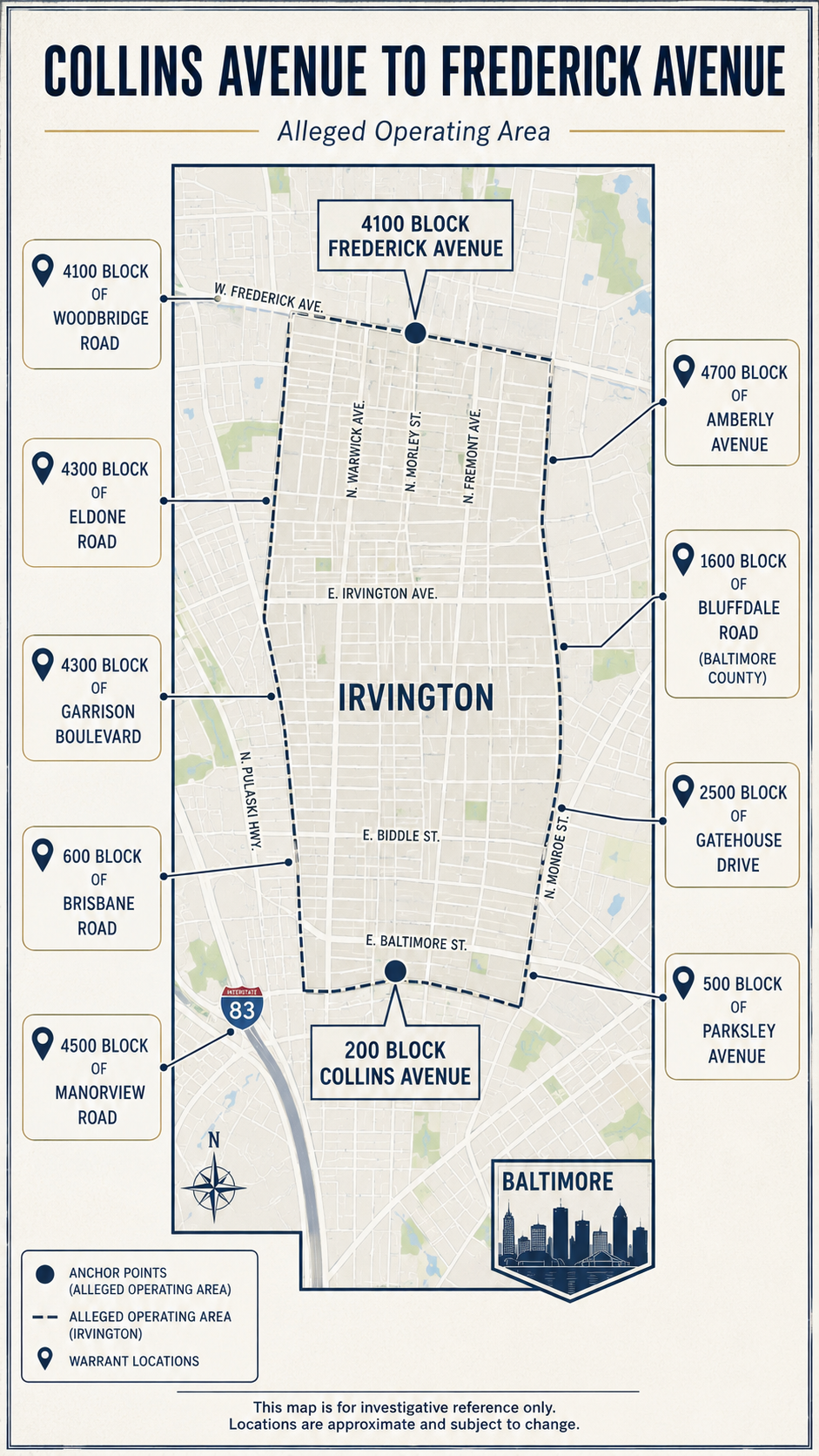
The two locations at the center of the case were the 200 block of Collins Avenue and the 4100 block of Frederick Avenue. Those blocks became the anchor points of the public announcement, with officials describing the area as part of a long-standing problem in Southwest Baltimore’s Irvington neighborhood.
Mayor Brandon Scott framed the takedown as part of the city’s response to groups officials believed were driving violence and harm in Baltimore communities. The State’s Attorney’s Office described the investigation as part of the Group Violence Reduction Strategy, a city effort built around both outreach and enforcement. In this case, officials said the group had been given a chance to engage with services and receive the city’s anti-violence message, but the investigation continued after authorities believed the alleged activity had not stopped.
That is what makes the case different from a routine narcotics article. The official version puts the indictment inside a wider strategy. First came the city’s warning and service-based approach. Then came the investigation. After that came the warrants, arrests, seized evidence, and charges carrying more than 800 years of possible prison exposure.
The 10 Search Warrants
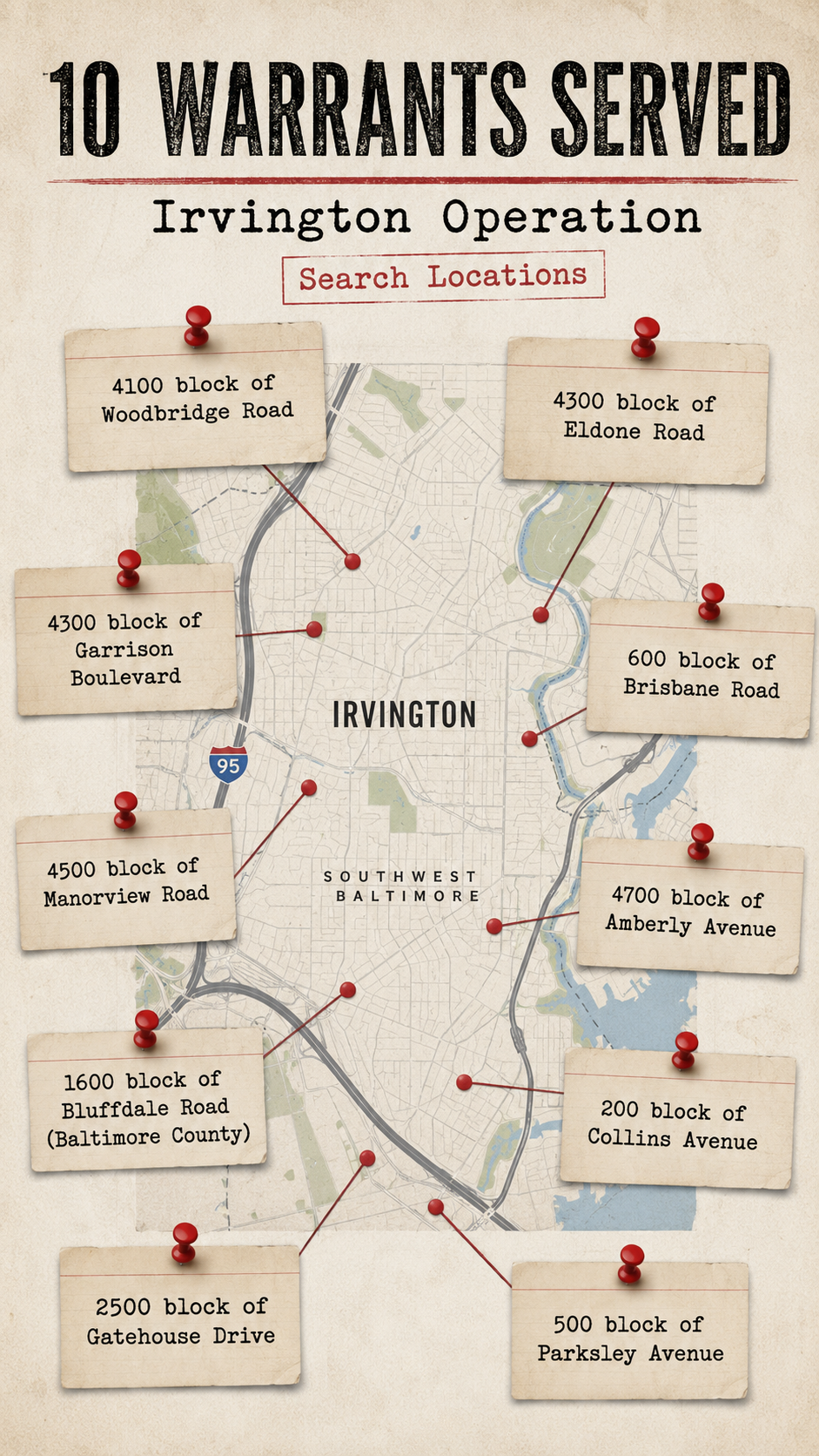
The search-warrant list shows how far the case reached beyond the two blocks named in the headline. Authorities said warrants were executed on the 4100 block of Woodbridge Road, the 4300 block of Eldone Road, the 4300 block of Garrison Boulevard, the 600 block of Brisbane Road, the 4500 block of Manorview Road, the 4700 block of Amberly Avenue, the 1600 block of Bluffdale Road in Baltimore County, the 200 block of Collins Avenue, the 2500 block of Gatehouse Drive, and the 500 block of Parksley Avenue.
Those addresses turned an Irvington DTO case into a multi-location enforcement action. The public release does not explain exactly what was recovered from each address or which defendant was connected to every location, but the list still matters. It shows that investigators were not treating the alleged operation as one corner, one house, or one isolated sale. The case spread across multiple addresses before prosecutors brought it into court.
The strongest part of the warrant list is what it suggests about the scope of the investigation without overstating what the public record proves. Investigators believed the alleged operation had enough reach to justify searches across several Baltimore addresses and one Baltimore County location. The official documents released publicly do not show the full return from every warrant, so the case cannot claim more than that. But even with that limitation, the warrant pattern gives the indictment more weight.
The Evidence Recovered
Officials said detectives recovered nine firearms, 38 grams of suspected fentanyl mixture, 6.5 pounds of marijuana, 256 grams of suspected heroin, and approximately 69 grams of suspected cocaine. That evidence list became the backbone of the public announcement. The 800-year number may be the hook, but the drugs and guns are what make the case work as a file.
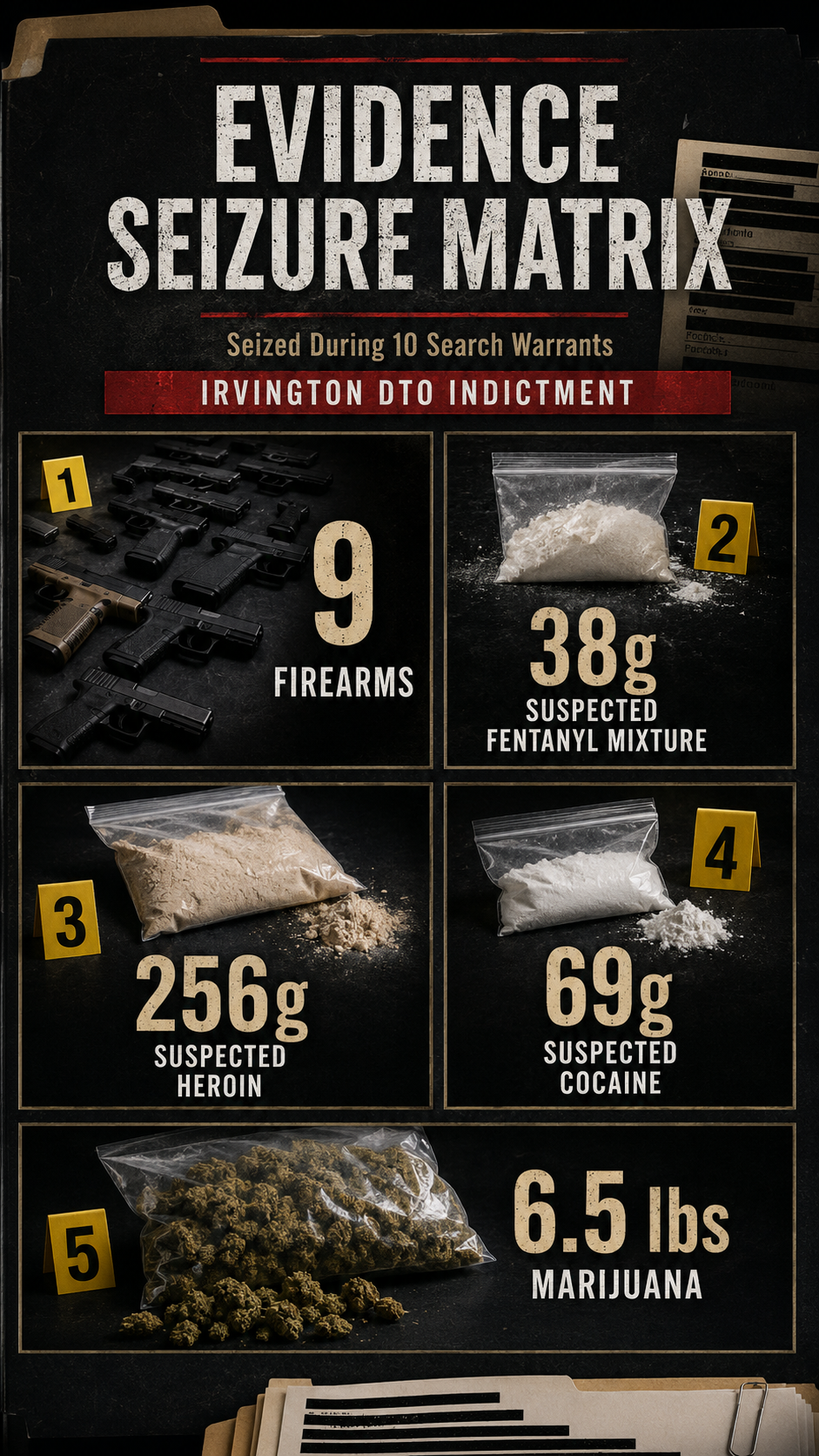
The firearms matter because they connect the indictment to the violence-reduction language used by city officials. The narcotics matter because the case was built around alleged distribution activity. The warrants matter because they show movement beyond one block. The undercover and surveillance claims matter because they show the investigation was not presented as a single search that suddenly turned into a DTO indictment.
At the same time, there are limits to what can be said from the public record. Officials did not publicly release ballistics results tying any recovered firearm to a specific shooting. They did not publicly release the full lab results for each suspected substance. They did not publicly break down which seized item came from which address. The evidence is strong enough to frame the indictment, but not detailed enough to attach every item to every defendant without the full court file.
The Defendants
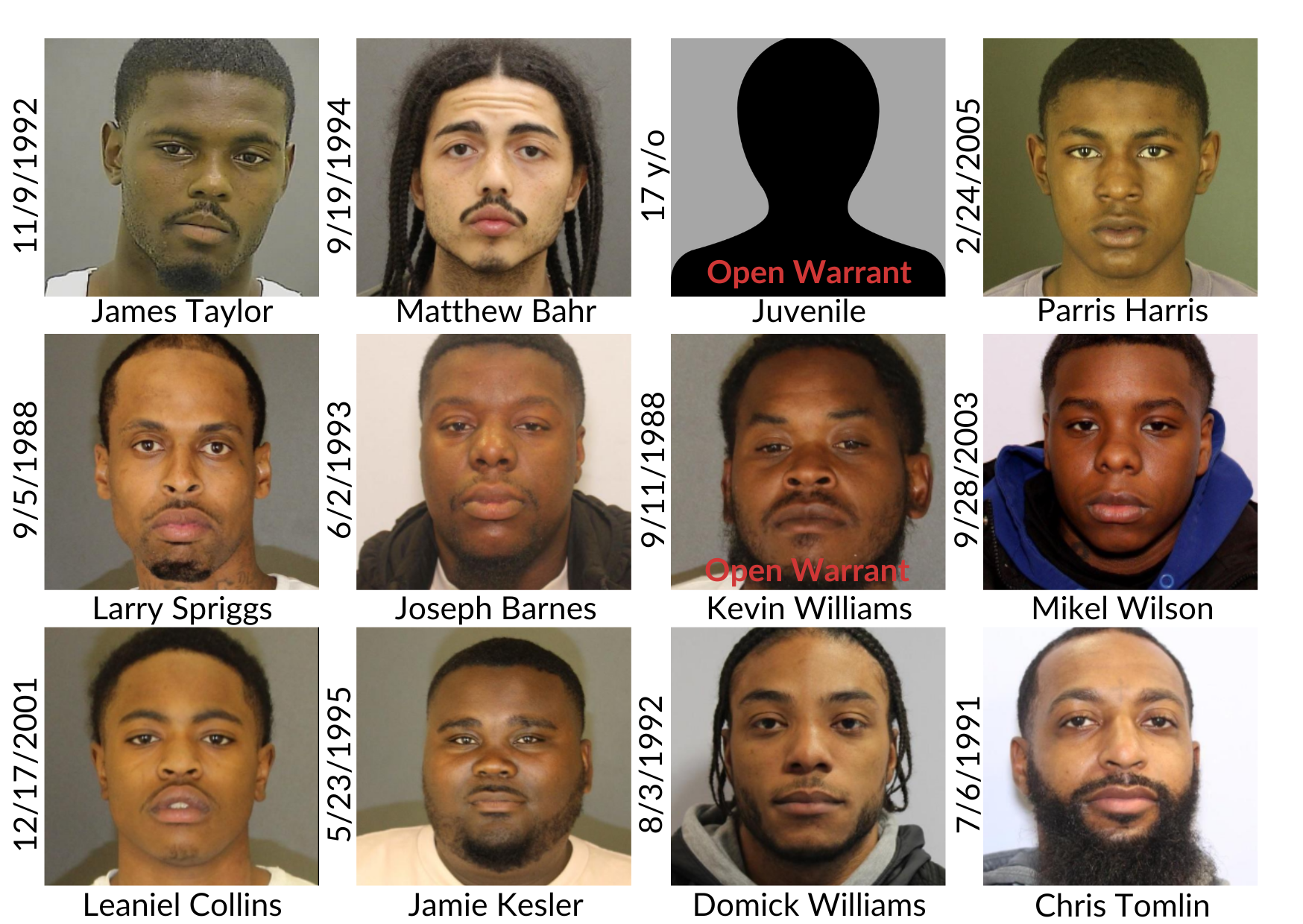
Joseph Barnes was indicted on conspiracy to distribute cocaine and four counts of distribution of cocaine. Detectives identified Barnes as one of the alleged leaders of the DTO based on the investigation.
Chris Tomlin was indicted on distribution of cocaine, distribution of fentanyl, possession of a large amount of fentanyl, possession with intent to distribute fentanyl, possession with intent to distribute cannabis, and felon in possession of a regulated firearm. Investigators also identified Tomlin as an alleged leader of the organization.
Jamie Kesler was indicted on conspiracy to distribute cocaine, conspiracy to distribute fentanyl, and distribution of cocaine. Domick Williams was indicted on conspiracy to distribute cocaine, firearm drug trafficking, two counts of illegal possession of a regulated firearm, possession with intent to distribute cocaine, two counts of distribution of cocaine, and obliterating a serial number.
Leaniel Collins was indicted on conspiracy to distribute cocaine, three counts of distribution of cocaine, and possession with intent to distribute cannabis. Mikel Wilson was indicted on conspiracy to distribute cocaine and distribution of cocaine.
James Taylor was indicted on conspiracy to distribute cocaine, four counts of distribution of cocaine, firearm drug trafficking, felon in possession of a regulated firearm, possession with intent to distribute cocaine, possession with intent to distribute fentanyl, and two counts of distribution of fentanyl.
A juvenile defendant was listed with minor in possession of a regulated firearm and an open warrant. Matthew Bahr was indicted on conspiracy to distribute cocaine and distribution of cocaine. Larry Spriggs was indicted on conspiracy to distribute cocaine and distribution of cocaine. Kevin Williams was indicted on conspiracy to distribute cocaine, distribution of cocaine, and had an open warrant listed. Parris Harris was indicted on conspiracy to distribute cocaine, distribution of fentanyl, and distribution of cocaine.
The defendant list shows why the indictment was presented as a DTO case instead of a basic drug arrest. The charges include conspiracy, cocaine distribution, fentanyl distribution, possession with intent to distribute, firearm drug trafficking, illegal firearm possession, and an obliterated serial number allegation. Prosecutors were not just pointing to drugs. They were building a wider picture around alleged group activity, firearms, and repeated distribution counts.
The Firearm Layer
The firearm side of the indictment is one of the most important parts of the case. Officials said nine firearms were recovered during the operation, and several defendants were listed with gun-related charges. Domick Williams and James Taylor were both listed with firearm drug trafficking charges. Chris Tomlin and James Taylor were listed with firearm possession counts tied to prohibited possession, while the juvenile defendant was listed with minor in possession of a regulated firearm.
That firearm layer is also where the case has to stay precise. The public record does not say the nine guns were connected to specific shootings. It does not say a recovered firearm was tied to a homicide. It does not release ballistic matches. It does not show the full chain of custody for each weapon. The confirmed fact is narrower: officials announced that nine firearms were recovered, and multiple defendants were charged with firearm-related offenses inside a larger DTO indictment.
That is still enough to make the indictment serious. A narcotics cXase with firearms carries a different weight than a case built only on street-level drug sales. It gives prosecutors a stronger public safety argument, gives the city a stronger violence-reduction message, and makes the case more damaging for defendants facing firearm enhancements or separate gun counts.
The GVRS Connection
The Group Violence Reduction Strategy is a major part of how Baltimore officials framed the case. According to public reporting, officials said members of the group had been invited to a call-in where the city delivered its anti-violence message and offered services. After that, authorities said the group continued activity connected to the investigation.
That sequence matters because it shows the city’s intended message. The case was not only about announcing arrests after the fact. Officials used it to show the enforcement side of GVRS. The public version was clear: groups identified through the strategy could be offered services, but if officials believed the activity continued, the response could shift into surveillance, undercover work, warrants, indictments, and prison exposure.
Whether that strategy reduces violence across the city is a larger question that cannot be answered from one case file. What can be said here is that Baltimore officials deliberately connected the Irvington indictment to that strategy. The DTO case became both a criminal prosecution and a public example of how the city says it will respond to groups that ignore the warning.
What The Public Record Proves
The public record proves that Baltimore officials announced indictments against 12 alleged DTO members on March 14, 2024. It proves the alleged operating area was identified as the 200 block of Collins Avenue and the 4100 block of Frederick Avenue. It proves officials said the investigation lasted four months, began in November 2023, and involved electronic surveillance and undercover officers.
The public record also proves that authorities listed 10 search-warrant locations, said 10 people had been arrested, stated that two people still had active warrants at the time of reporting, and announced the recovery of nine firearms, suspected fentanyl mixture, marijuana, suspected heroin, and suspected cocaine. It proves prosecutors identified Joseph Barnes and Chris Tomlin as alleged leaders based on the investigation.
What the public record does not prove is guilt. It does not show the full evidence against each defendant. It does not reveal the exact undercover-buy timeline. It does not show which defendant was allegedly present for every transaction. It does not connect the recovered firearms to specific shootings in the public reporting. It does not prove the defendants were part of a violent gang or tied to specific murders. Those claims would require court documents, police records, ballistic reports, or verified evidence that has not been included in the public articles.
Official Facts Versus Allegations
The official facts are the indictment announcement, the named defendants, the listed charges, the warrant locations, the seized evidence totals, the alleged operating blocks, and the agencies involved in the investigation. Those are the parts that can be repeated confidently because they come from the public record and official reporting.
The allegations are the DTO structure, the leadership roles, the connection between defendants, and the prosecution theory that the group operated as an organization in Irvington. Those allegations are central to the indictment, but they remain allegations unless proven in court.
There are also no verified public street-rumor layers attached to this case in the available reporting. No confirmed gang name was publicly tied to the indictment. No confirmed murder connection was listed. No verified retaliation motive was released. That makes this case cleaner than many Baltimore files, but also more limited. The strength is in the indictment structure, warrant spread, drug evidence, firearms, and the way officials tied the case to GVRS.
The Final Breakdown
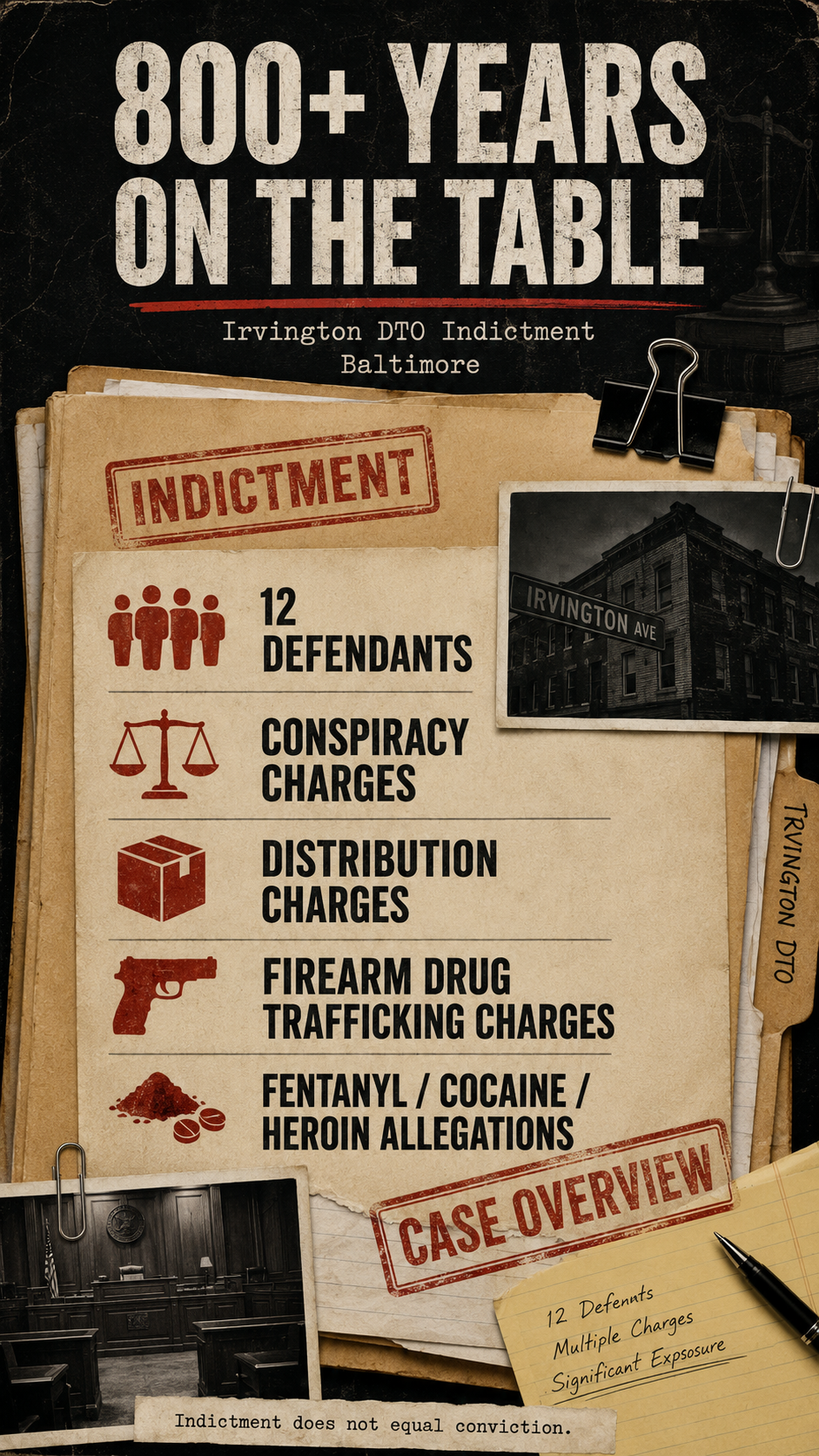
The Irvington DTO indictment is strong because the case does not rely on one dramatic detail. It builds through layers. Two Southwest Baltimore blocks were named as the alleged operating area. A four-month investigation followed. Detectives used electronic surveillance and undercover officers. Prosecutors named 12 defendants. Officials identified two alleged leaders. Search teams hit 10 locations. Nine firearms were recovered. Suspected fentanyl, heroin, cocaine, and marijuana were seized. The charges added up to more than 800 years of possible prison exposure.
The unanswered part is what the full court file would reveal. The public still has not seen the complete indictment packet, the search-warrant returns, the undercover-buy reports, the surveillance timeline, or the evidence map connecting each defendant to each alleged act. Those documents would decide how deep the case really goes.
For now, the public version shows exactly how Baltimore wanted this indictment understood. Irvington was the location. Collins Avenue and Frederick Avenue were the anchor points. The alleged DTO became the target. The city’s warning came first, then the investigation, then the warrants, then the charges. By the time officials stepped in front of the cameras, the case had already moved from a neighborhood complaint to a multi-agency indictment carrying more than 800 years in possible prison time.


