
Reporting and analysis may discuss allegations and online theories. Allegations are not findings of guilt. Verify important details in the cited public record.
The Case File
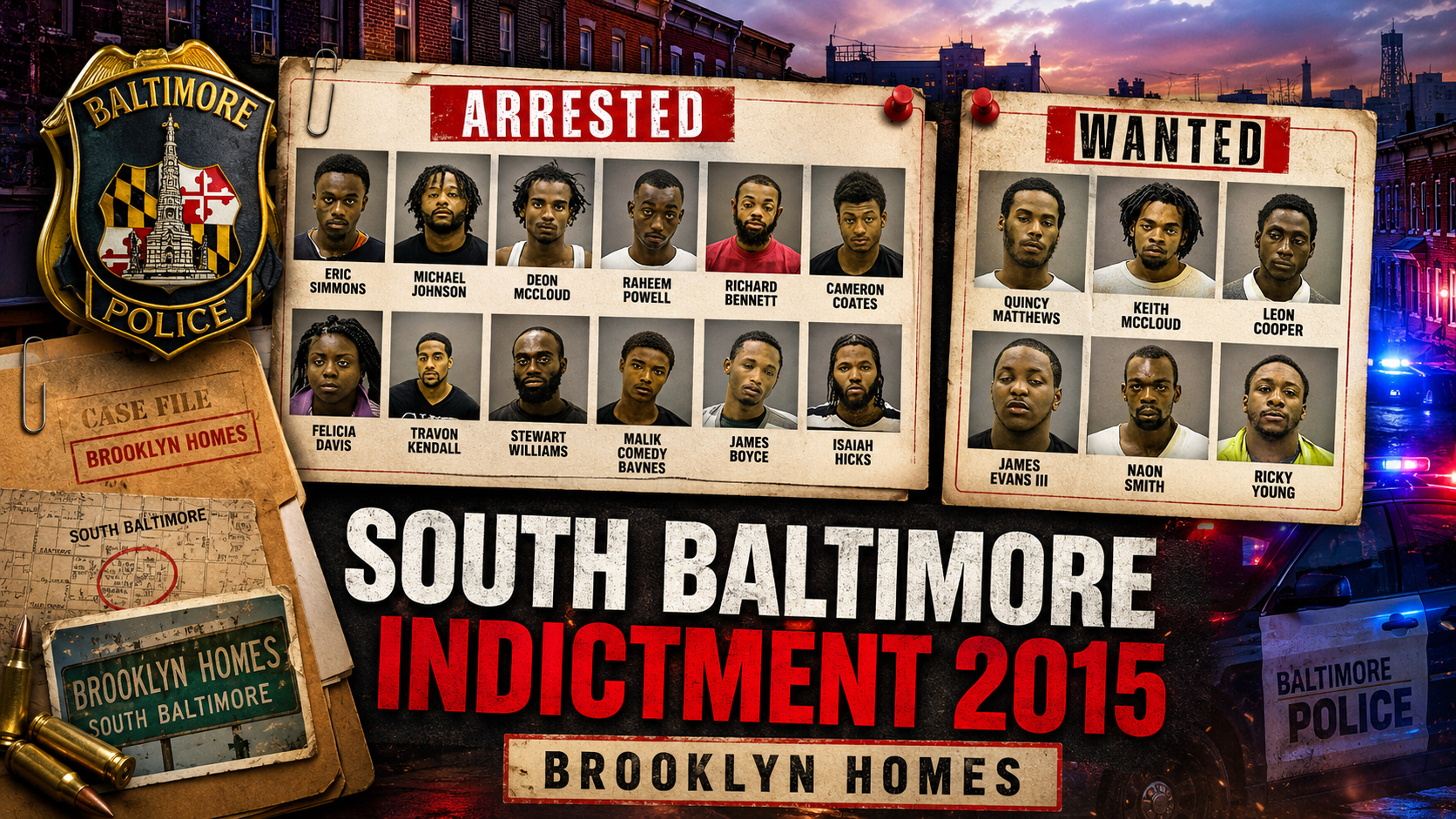
In November 2015, Baltimore Police stood in front of the city with a message about Brooklyn Homes. They said a 60-day investigation had led to 19 indictment warrants, 20 search warrants, multiple gun seizures, drug recoveries, and a list of suspects accused of being connected to drug dealing and violence in South Baltimore. On paper, it looked like a drug and gun takedown. But the deeper story was more serious than that.
Police said some of the suspects in the operation were linked to two homicides and eight nonfatal shootings. They also said members from three different gangs had been working together to make drug money. That one statement changed the entire weight of the case. This was not presented as a small neighborhood bust. Police framed it as a targeted strike against people they believed were helping fuel violence around Brooklyn Homes during one of the bloodiest years Baltimore had seen in decades.
Brooklyn Homes Was Not Just A Location
Brooklyn Homes was not just the place where police said the investigation centered. It was part of the story itself. The community sits in South Baltimore, made up of long rows of low brick public housing units, small patches of grass, tight walkways, and blocks where residents know the difference between people who live there and people who pass through. For the people who call it home, Brooklyn Homes is not a headline. It is where families live, children grow up, and residents deal with everything that comes after the cameras leave.
By the time this takedown happened, Brooklyn Homes had already been through years of decline and disinvestment. Later neighborhood reporting described residents remembering a different version of the community, one with more activity for children, more stores nearby, and more structure around daily life. Over time, residents described businesses closing, resources disappearing, and crime feeling more open. That context matters because a police sweep does not happen in empty space. It happens inside a real neighborhood where people are trying to survive around the same conditions police are trying to investigate.
The Baltimore Climate In 2015
The timing of the Brooklyn Homes takedown is one of the reasons the case matters. Baltimore in 2015 was under pressure from every direction. The city was dealing with a historic homicide surge, deep mistrust between police and residents, the aftermath of Freddie Gray’s death, and a growing public fear that shootings were becoming harder to control. The U.S. Department of Justice later described 2015 as the deadliest year in Baltimore’s history on a per-capita basis, with 344 homicides and more than 900 people shot across the city.
That was the atmosphere when police announced the Brooklyn Homes operation. Every violent neighborhood became part of a bigger citywide crisis. Every gun seizure was treated like proof that police were trying to slow the bloodshed. Every indictment announcement carried a message that officials wanted the public to hear clearly. They were not just saying they found drugs. They were saying they were identifying people they believed were tied to the shootings, the murders, and the street activity pushing Baltimore deeper into violence.
Why Brooklyn Homes Became A Target
According to police, the investigation into Brooklyn Homes developed over the summer through intelligence work involving Baltimore detectives and DEA agents. A DEA official said investigators worked through what was described as a “war room,” then decided to target the area based on violence happening there. That detail made the case feel less like a random raid and more like a focused operation built around a specific section of South Baltimore.
Police also said the investigation reached beyond the most recent summer violence. Officials stated that some of the violence connected to the case dated back to 2013. That detail gave the takedown a longer timeline. It suggested investigators believed they were looking at the same circle of people, the same area, or the same pattern of activity showing up across multiple years. The public reports did not identify the exact 2013 crime, but police clearly wanted the city to understand that they saw this operation as part of a bigger violence pattern, not just one short investigation.
The Community Information Angle
Commissioner Kevin Davis said the investigation would not have reached that point without information from the community. Police said residents provided details about people, houses, streets, communities, and specific activity. That matters because the official version of the case was not only about surveillance, warrants, and tactical teams. Police wanted the public to know that people inside or close to the neighborhood had helped point investigators toward what they believed was happening.
That angle is complicated, but important. In 2015 Baltimore, police-community trust was already damaged. Residents in many neighborhoods wanted violence addressed, but many also had reasons to distrust law enforcement. Brooklyn Homes sat inside that same tension. The police message was that community cooperation helped build the case. The neighborhood reality was that residents still had to live there afterward, surrounded by the same pressures, the same risks, and the same uncertainty over what would happen once the sweep was over.
The Search Warrant Sweep
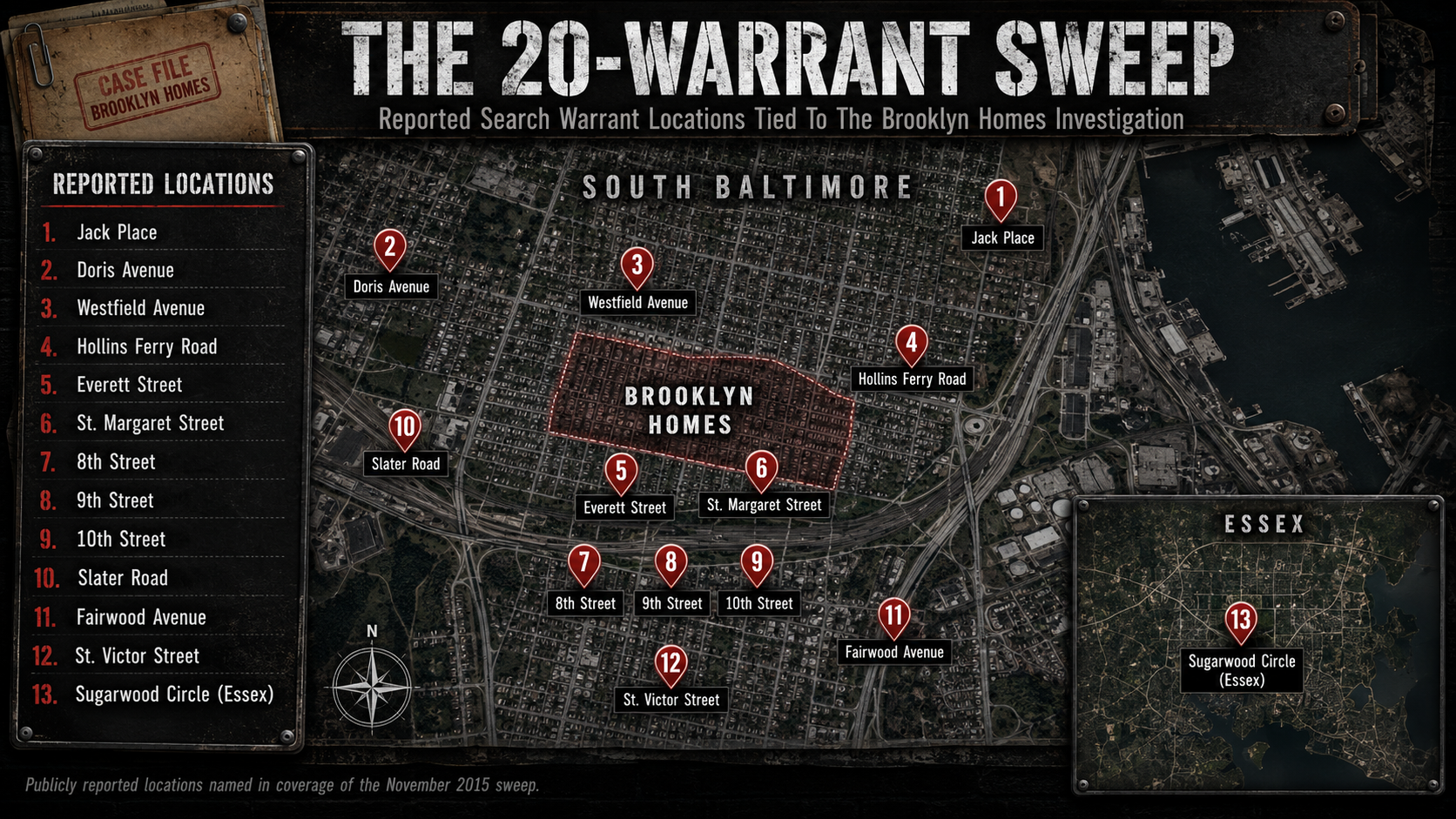
On November 3, 2015, police said 20 search-and-seizure warrants were carried out. Fox Baltimore reported that 19 warrants were served in Baltimore City and one was served in Baltimore County. The warrant locations were spread across South Baltimore and surrounding areas, including the 1000 block of Jack Place, 4100 block of Doris Avenue, 2100 block of Westfield Avenue, 2800 block of Hollins Ferry Road, 3600 block of Everett Street, 3700 block of St. Margaret Street, 3800 block of 8th Street, 3800 block of 9th Street, 3700 block of 10th Street, 1200 block of Slater Road, 6100 block of Fairwood Avenue, 1200 block of Sugarwood Circle in Essex, and 3800 block of St. Victor Street.
The spread of locations showed that police were not describing one house or one corner. They were describing a wider network of addresses they believed were connected to the investigation. Some locations were directly inside the South Baltimore street grid around Brooklyn Homes, while the Essex address showed that the sweep extended beyond the immediate neighborhood. That wider footprint is part of what made the announcement feel larger than a standard street-level arrest operation.
The Evidence Police Said They Seized
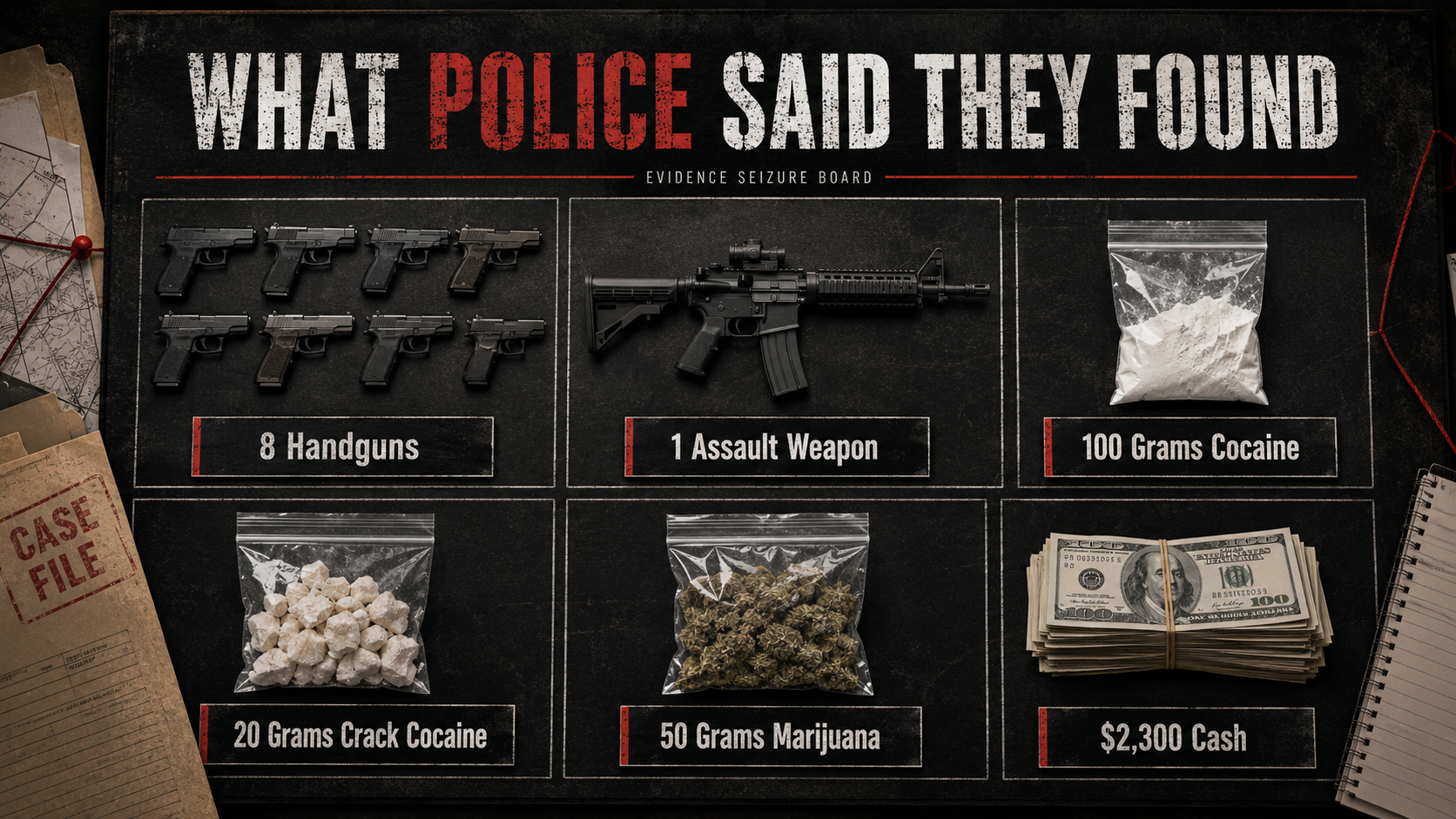
Police said the operation recovered eight handguns, one assault weapon, 100 grams of cocaine, 20 grams of crack cocaine, 50 grams of marijuana, and $2,300 in cash. Those numbers tell part of the story, but the context tells the rest. In a year when Baltimore was dealing with hundreds of killings and hundreds more shootings, the guns were the centerpiece of the public message. The drug seizures showed the alleged money side. The firearms showed the violence side.
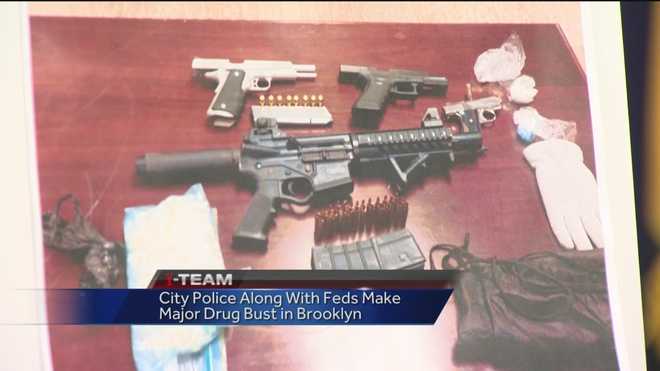
The evidence total was not massive compared with a large federal trafficking case, but that was not how police framed the takedown. They were not presenting Brooklyn Homes as a national cartel pipeline. They were presenting it as a neighborhood violence operation where guns, drugs, and street affiliations allegedly crossed into the same space. That is why the nine total firearms mattered. In the middle of Baltimore’s 2015 gun violence surge, every recovered handgun was part of the story police wanted the city to see.
The People Named In The Operation
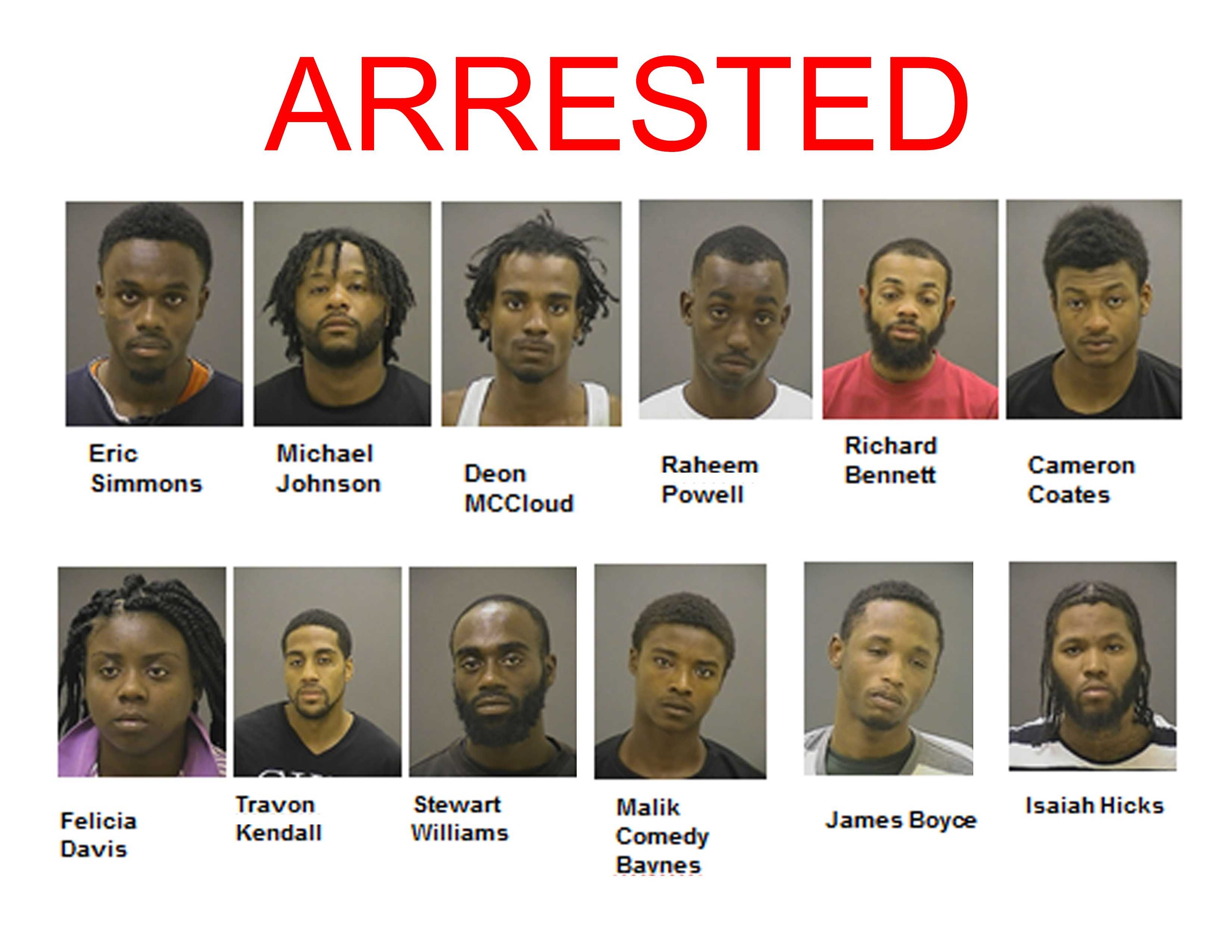
The reported indicted group included Michael Johnson, Eric Simmons, Raheem Powell, Richard Bennett, Cameron Coates, Deon McCloud, James Boyce, Malik Comedy-Baynes, Ronald Ports, Isaiah Hicks, Vernon Phillips, Andre Harris, Derrick Morris, and David Lewis. Their ages ranged from 18 to 44, which showed police were not describing one age group or one small circle of younger suspects. The list included men in their late teens, men in their twenties, men in their thirties, and men in their forties.
Most of the listed defendants were reported as facing distribution of cocaine and other drug-related charges. Andre Harris was reported as facing a handgun violation and other drug-related charges. Derrick Morris was reported as facing felony possession of a controlled dangerous substance and other drug-related charges. David Lewis was reported as facing possession of a controlled dangerous substance and other drug-related charges. The way the charges were summarized publicly made the case look mainly narcotics-driven, but the police statements around the operation made clear that violence was the reason the case received heavier attention.
The Wanted Names
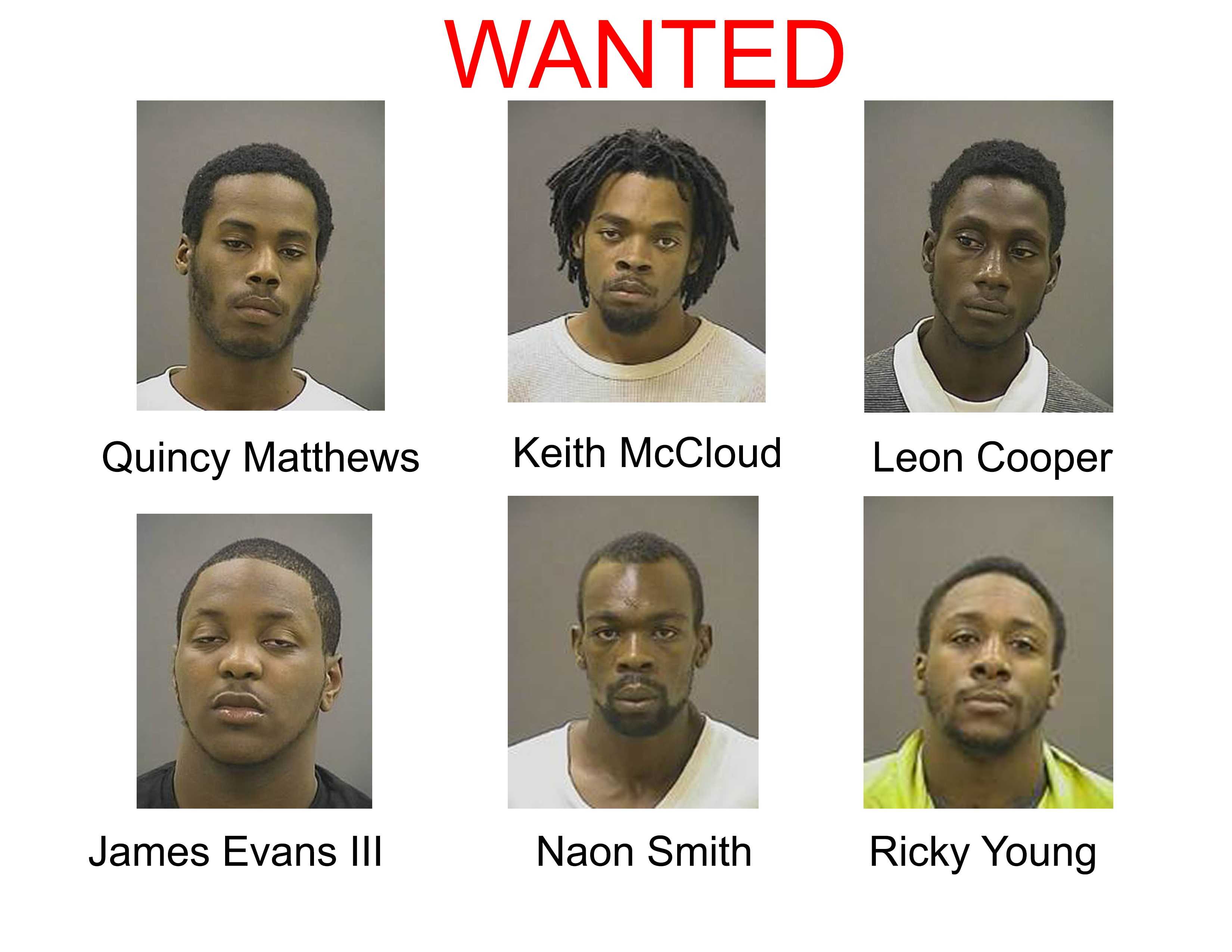
At the time of the public announcement, police also listed several people who had not yet been arrested. The wanted group was reported as Quincy Mathews, Willie Willis Jr., Keith McCloud, Leon Cooper, James Evans, and Naon Smith. They were also described as facing distribution of cocaine and other drug-related charges.
This part of the case gives the announcement a different kind of tension. Police were not only telling the public who had been indicted or arrested. They were also putting names into public view while saying more arrests were still expected. In a neighborhood where police said community information helped build the case, the wanted list became part of the pressure campaign. The message was clear: the sweep had started, but police were saying the operation was not finished.
The Violence Claim Behind The Case
The most important line in the entire case is the police claim that some of the suspects were linked to two homicides and eight nonfatal shootings. That statement turned a drug indictment story into a violence story. It suggested investigators believed the same people connected to narcotics activity around Brooklyn Homes were also connected to shootings and killings.
The public reports did not name the homicide victims, identify the shooting scenes, or explain which suspect was allegedly tied to which act of violence. That matters because this case file should not turn a police claim into a detailed murder allegation without documents to support it. The accurate point is still strong enough: police publicly said some of the suspects in the takedown were connected to two homicides and eight nonfatal shootings. In the climate of Baltimore in 2015, that was enough to make the operation feel urgent.
The 2013 Shadow
Another major piece of the announcement was the claim that some of the violence connected to the investigation dated back to 2013. Commissioner Davis said that as investigators looked at recent crimes, they ran into an older unsolved crime from “days gone by” involving the same kind of people he described as wreaking havoc on the city. The public reports did not give the name of the victim, the address of the incident, or the case number tied to that older crime.
That missing detail makes the 2013 reference one of the biggest open questions in the story. Police were clearly trying to tell the public that this takedown reached beyond one summer of drug activity. They were pointing to a longer pattern of violence, one that allegedly stretched from older unsolved crimes into the violence that had been happening around Brooklyn Homes in 2015. Without the full underlying case records, the exact 2013 connection remains unidentified, but the statement itself shows how investigators wanted the sweep understood.
Three Gangs And One Money Motive
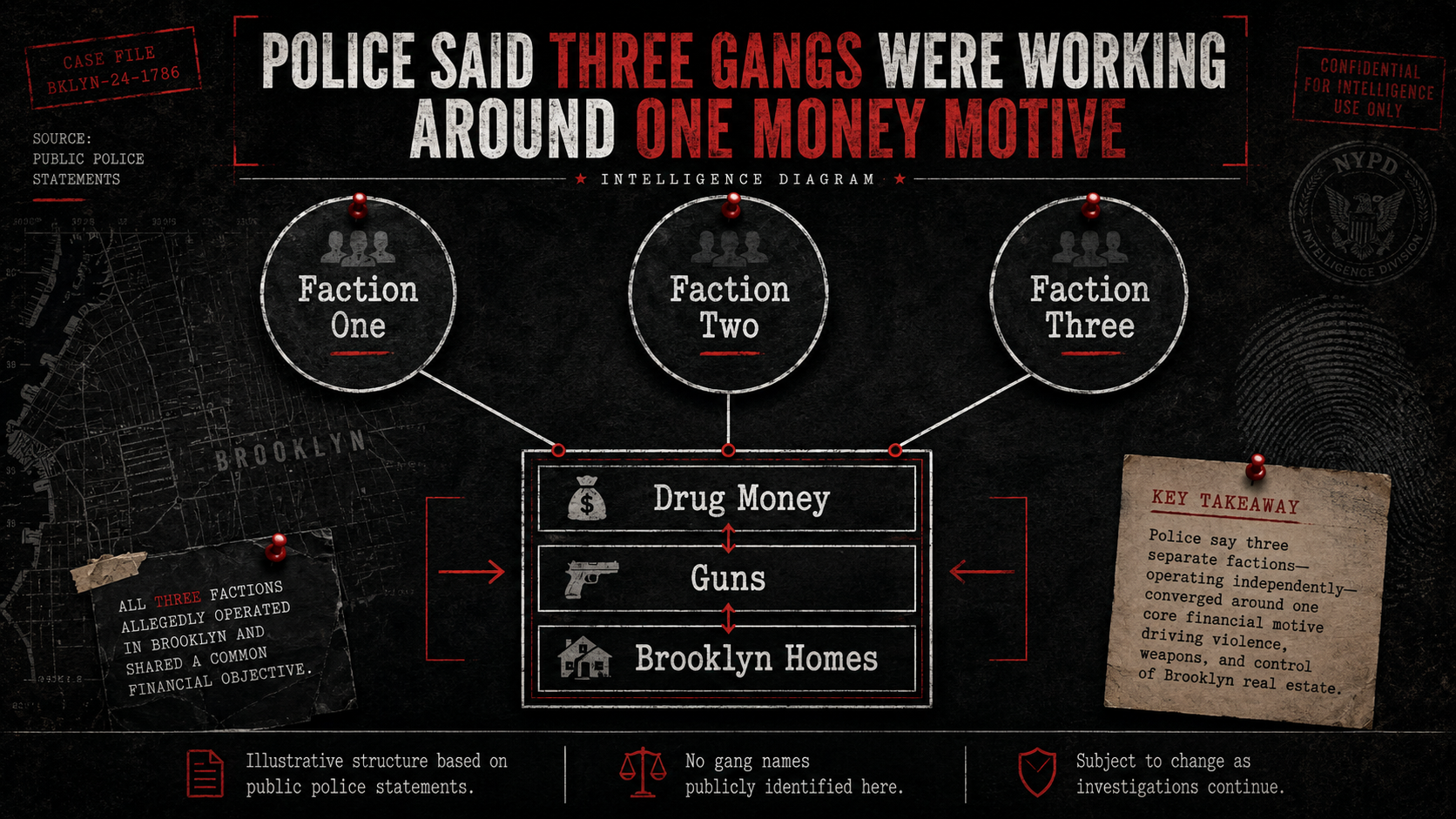
Police also said members from three different gangs were collaborating to make drug money. That part of the case is important because it shows the operation was not described as one gang moving under one banner. Officials described a situation where people from different factions could allegedly work together when money was involved.
Police did not publicly name the three gangs in the main reports, so this case file does not guess. The important part is the structure police described. They were saying that drug money could bring different affiliations into the same space, even if those people did not all belong to the same group. Deputy Commissioner Dean Palmere described that kind of cross-affiliation as something police had seen across Baltimore and surrounding jurisdictions. In other words, the alleged motive was not loyalty. It was profit.
What The Takedown Said About The Street Economy
The Brooklyn Homes announcement showed how police believed the street economy worked around the area. Drugs created the money. Guns protected the money, enforced disputes, and increased the risk of shootings. Different affiliations could allegedly overlap when there was profit to be made. Residents provided information because they were the ones living around the activity. Police used that information to build warrants, make arrests, and publicly connect the operation to violence.
That is the real structure of the case. It was not only about the amount of cocaine or marijuana recovered. It was about the way officials believed drugs, guns, neighborhood fear, and violent crime were tied together. Brooklyn Homes became the center of the announcement because police wanted to show they had identified a pocket of people they believed were driving danger in that area.
The Human Reality Around The Sweep
One thing that can get lost in police announcements is that Brooklyn Homes was still a neighborhood after the raid ended. Families still had to walk the same blocks. Children still had to pass the same corners. Residents still had to live with the same broken systems, limited resources, and fear that outsiders could come into the community and bring trouble with them.
Later reporting from the neighborhood showed residents describing Brooklyn Homes as a place that had changed over time. Some remembered more activities, more stores, more community structure, and a different feeling around the area. Others described crime feeling more open and resources becoming harder to reach. That background does not excuse criminal activity, and it does not erase the violence police were describing. It explains the environment where the case unfolded.
Why The Announcement Hit Hard In 2015
The announcement hit hard because Baltimore was already approaching 300 homicides at the time of the report, and the year would end with 344. Police officials were trying to show progress before the city closed out one of its worst years. The Brooklyn Homes takedown gave them a visible example: names, warrants, guns, drugs, cash, and a statement linking some suspects to murders and shootings.
That is why the case had a public-relations edge to it. Police were not only announcing arrests. They were trying to send a message that they were preparing for a stronger response going into 2016. Commissioner Davis said the department was gearing up for a bigger and better 2016 so the city could put 2015 behind it. That statement captured the pressure of the moment. Baltimore was not just trying to solve one case. It was trying to stop a year that felt like it was spiraling.
What Is Confirmed
The confirmed public record shows that Baltimore Police and DEA investigators conducted a 60-day investigation into violence and drug dealing in Brooklyn Homes. Police said 19 indictment warrants were issued. They said 20 search warrants were carried out on November 3, 2015. Fox Baltimore reported that 19 warrants were in Baltimore City and one was in Baltimore County. Police reported the seizure of eight handguns, one assault weapon, cocaine, crack cocaine, marijuana, and cash.
The confirmed public record also shows that police listed 14 indicted suspects and six people who had not yet been arrested. Police publicly said some of the suspects were linked to two homicides and eight nonfatal shootings. They also said members from three different gangs were collaborating to make drug money. Those are the strongest verified points of the case.
What Still Remains Unanswered
The biggest unanswered questions are not small details. They are the parts of the case that would make the story even deeper. The public reports did not identify the two homicides police referenced. They did not list the eight nonfatal shootings by date, address, or victim. They did not name the three gangs. They did not explain the exact 2013 crime that investigators said appeared while they were looking at more recent violence.
There is also a count issue in the public reports. The announcement was built around 19 indictment warrants, but the publicly listed names include 14 indicted suspects and six people not yet arrested. That creates 20 names in the public-facing list. Commissioner Davis also referred to seven people who were wanted, while the printed wanted list showed six. That does not prove the case was wrong, but it does show that the public announcement left some details unclear.
The Final Breakdown
The Brooklyn Homes takedown was a South Baltimore drug and gun sweep announced during one of the most violent years in Baltimore’s modern history. Police said the case came out of a 60-day investigation by Baltimore detectives and DEA agents focused on violence and drug dealing around Brooklyn Homes. The operation produced 20 search warrants, 19 indictment warrants, multiple arrests, several wanted names, nine total firearms, cocaine, crack cocaine, marijuana, and cash.
The reason this case matters is not just the seizure total. It matters because police publicly tied the operation to two homicides, eight nonfatal shootings, older violence dating back to 2013, and alleged cooperation between members of three different gangs. Brooklyn Homes became the center of a case that showed how Baltimore officials believed drug money, guns, street affiliations, and neighborhood violence were crossing into the same space.
For readers, the case leaves behind two stories at once. One story is the police version: a targeted takedown of people accused of fueling violence and drug dealing in South Baltimore. The other story is the neighborhood reality: Brooklyn Homes was a community already shaped by disinvestment, closed resources, public safety concerns, and residents who still had to live there after the raid was over. That is what makes this case more than a headline. It was a snapshot of Baltimore in 2015, when the city was trying to stop the bleeding, and Brooklyn Homes became one of the places where police said the violence, the drugs, and the guns had all collided.
Unlock the full case file.
Continue with the complete investigation, source material, member video, and related evidence.
Unlock Full Case FileMembership starts at $5/month · Secure checkout


