
Reporting and analysis may discuss allegations and online theories. Allegations are not findings of guilt. Verify important details in the cited public record.
The Case File
Before the mugshot board went public, before the evidence was spread across police tables, and before the name “Showtime” hit Baltimore news, investigators were locked in on one narrow piece of East Baltimore. The location was the rear alley near 2400 Brentwood Avenue and Greenmount Avenue, a cut behind the block that police described as the operating ground for a drug-trafficking organization moving fentanyl, cocaine, and other controlled dangerous substances.
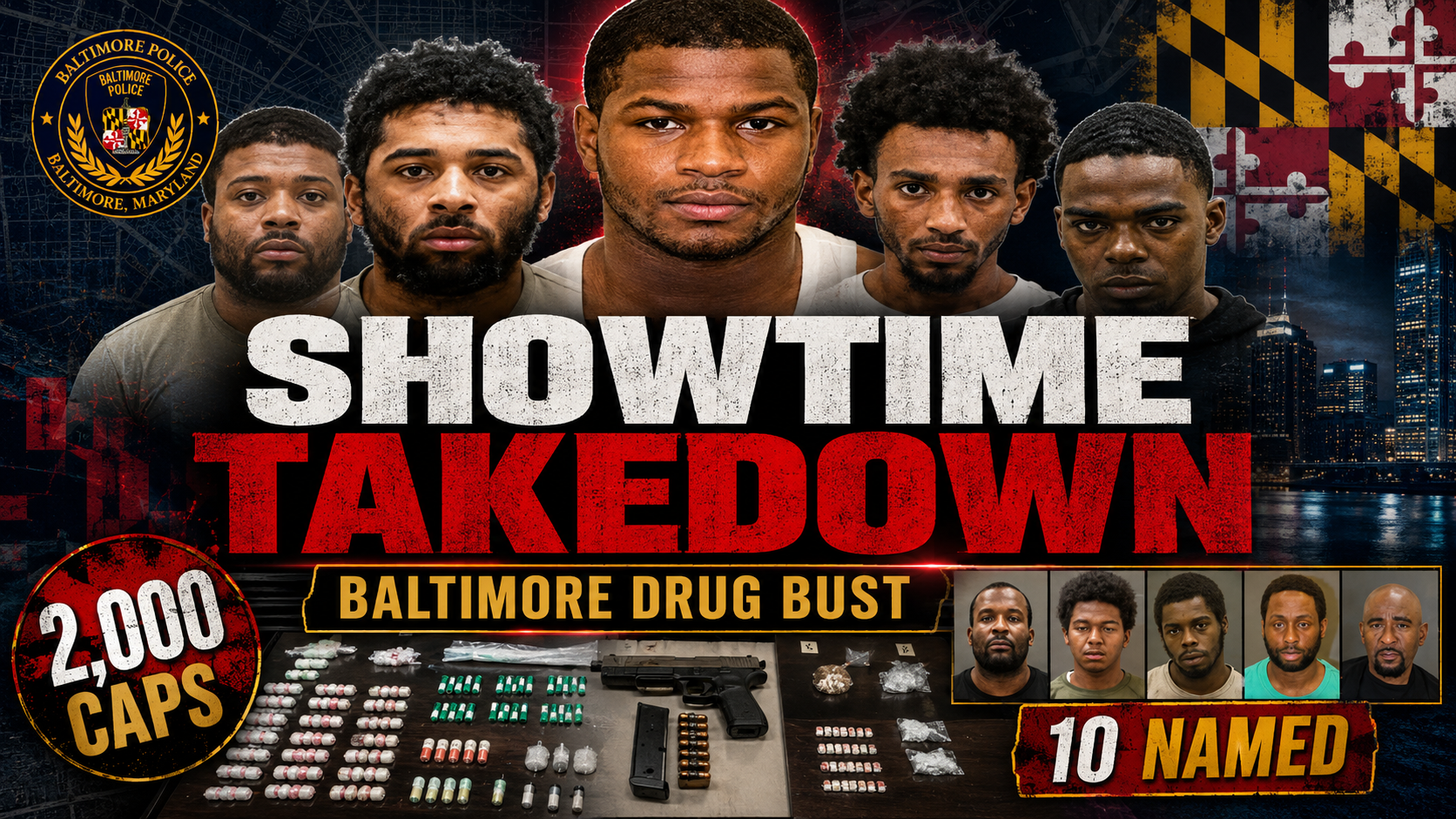
The case became public on September 15, 2020, when Baltimore Police announced that ten alleged members of Showtime had been indicted after a targeted enforcement investigation. The announcement said the group was hit with multiple drug offenses and handgun-related charges. What made the case stand out was the number attached to the undercover buys: nearly 2,000 suspected fentanyl gel caps, dozens of cocaine vials, and an unregistered handgun allegedly sold to undercover investigators.
This file is built around a small but sharp set of public details. One
alley. One organization name. Ten defendants. Five people already in custody. Five more still wanted. A table full of suspected narcotics. A firearm laid out as evidence. And one public graphic that appears to show a name mismatch that still needs the official indictment sheet to fully settle.
The Alley Behind Brentwood And Greenmount
Police did not frame Showtime as some vague citywide operation with no clear center. They gave the case a location: the rear alley around 2400 Brentwood Avenue and Greenmount Avenue. That matters because it gives the file a fixed point, a place where investigators said the organization was active enough to become the focus of an indictment.
In Baltimore, alleys are not just empty spaces behind houses. They can become routes, meeting points, stash zones, lookout cuts, and escape paths. The official wording placed Showtime’s alleged activity directly around that kind of space, behind the block instead of out front in plain view. That detail gives the case its strongest visual: a back alley in East Baltimore becoming the center of an undercover drug investigation.
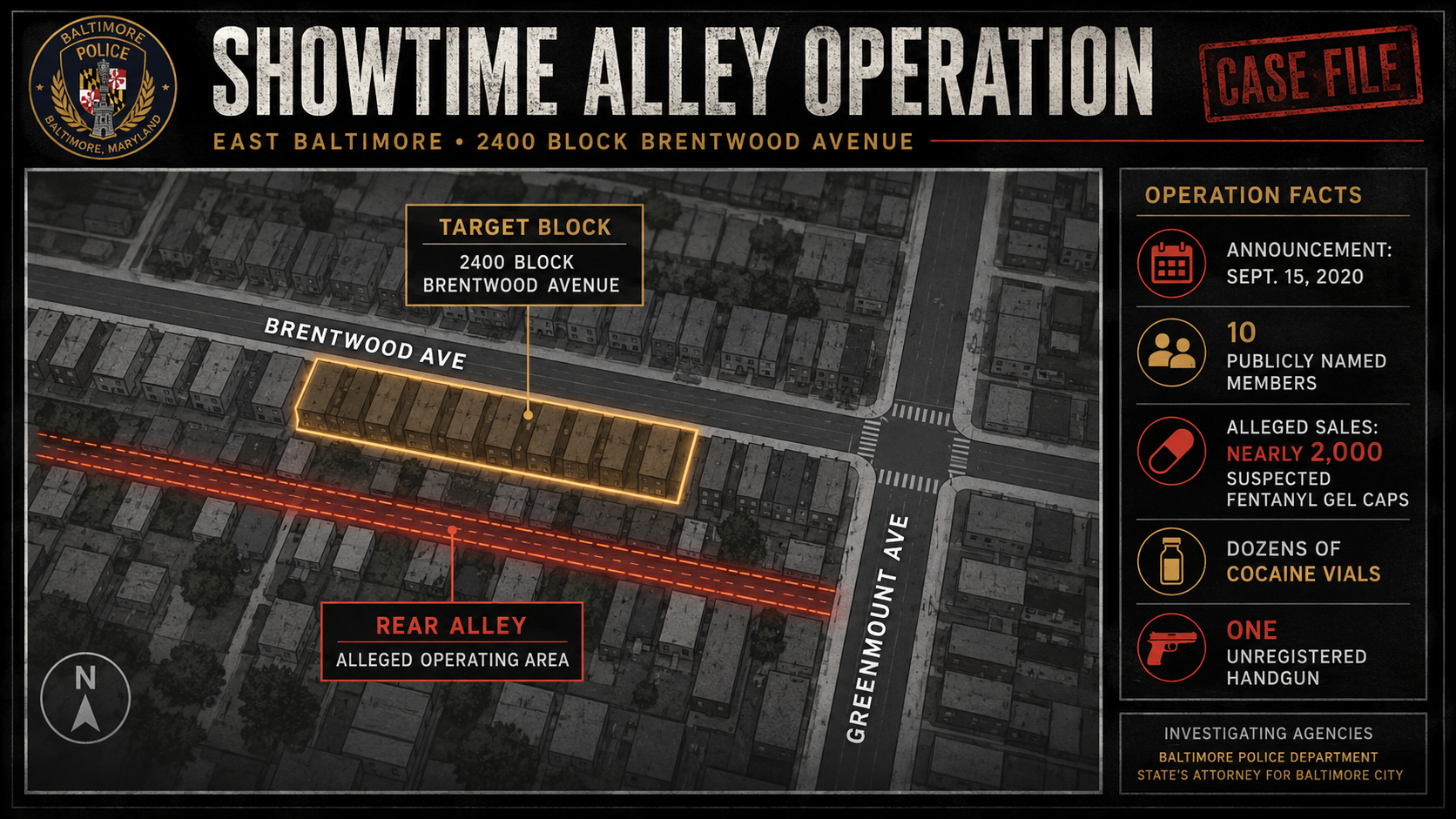
The public reports do not give the full surveillance story. They do not say how many controlled buys happened, how long investigators watched the block, or which alleged member was connected to each sale. But the foundation is clear. Police said Showtime operated from that rear alley, and by the time they went public, they were claiming the investigation had already produced fentanyl, cocaine, and a gun.
The Showtime Board
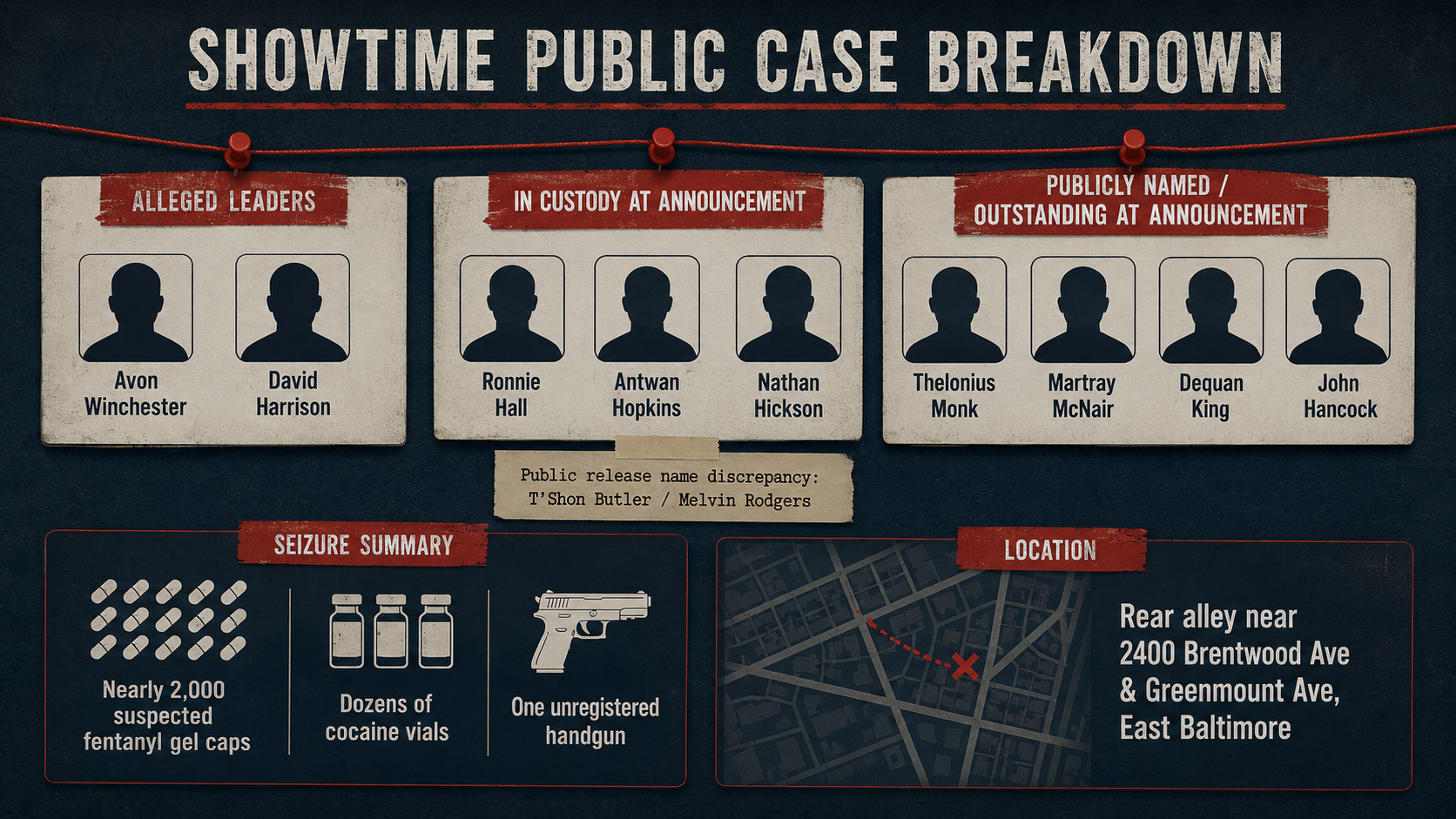
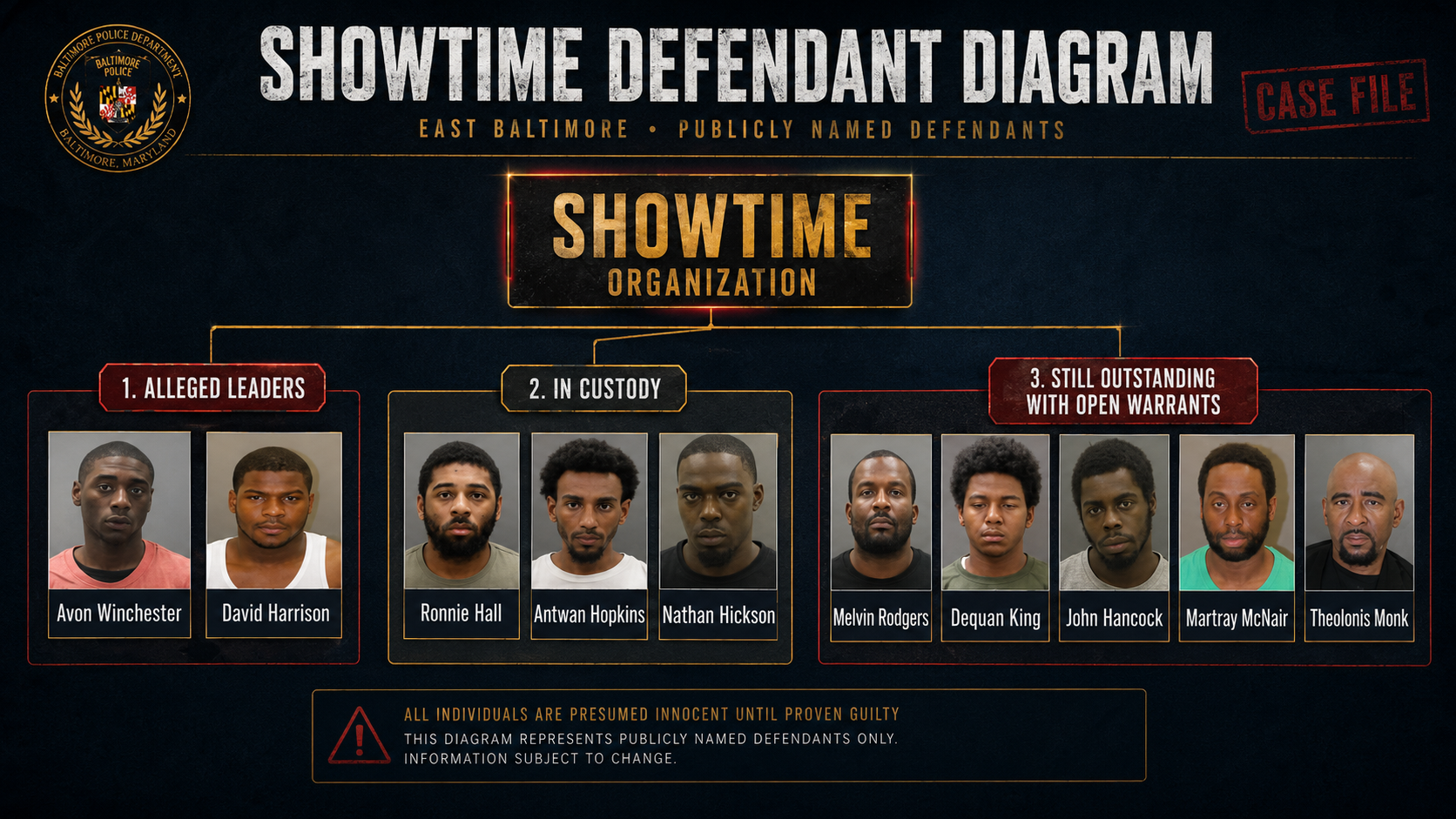
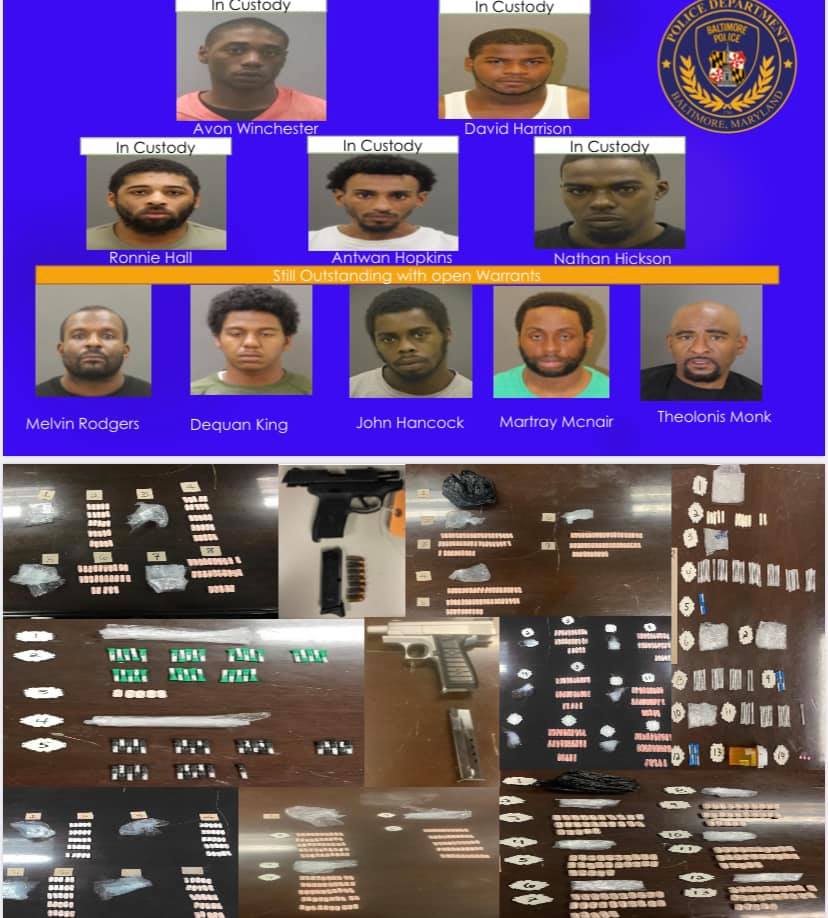
The public board split the defendants into two groups: those already in custody and those still wanted. Avon Winchester and David Harrison were shown at the top and identified in public reporting as alleged leaders. Ronnie Hall, Antwan Hopkins, and Nathan Hickson were also listed in custody when the announcement went out.
The bottom row carried the open-warrant pressure. Public reports listed Thelonius Monk, Martray McNair, Dequan King, T’Shon Butler, and John Hancock as still wanted at the time. But the uploaded graphic appears to show Melvin Rodgers instead of T’Shon Butler on that wanted row. That detail should stay in the file because it is one of the only visible inconsistencies in the public record.
Until the indictment sheet is pulled, the safest way to read it is simple: the articles list T’Shon Butler, while the graphic appears to show Melvin Rodgers. That could be a typo, a later correction, an alias issue, or a mismatch between the public release and the image used in circulation. The case file does not need to force an answer. It only needs to point out that the public material does not line up perfectly.
The Undercover Buys
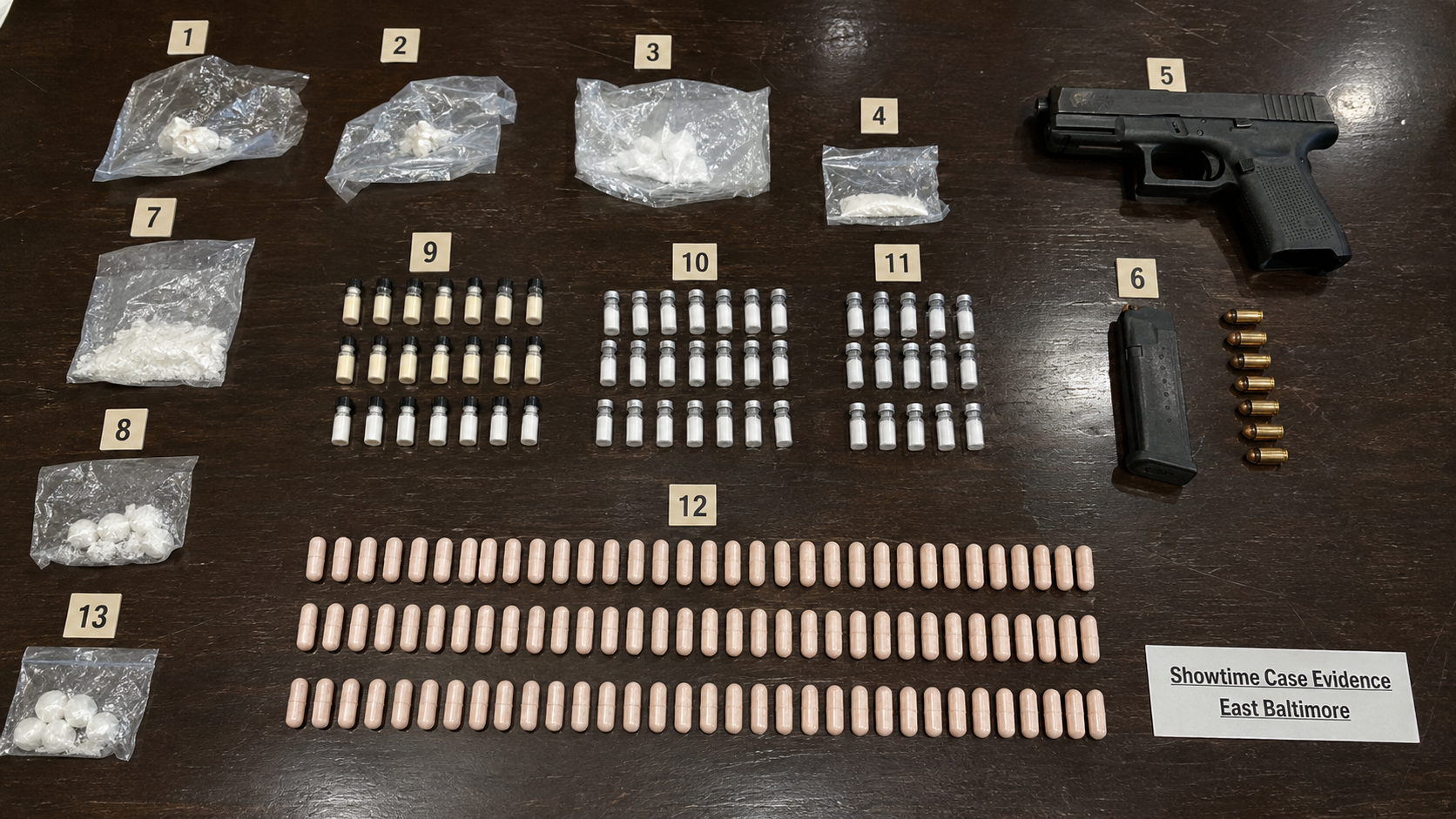
The most important investigative claim is not the mugshot board. It is what police said undercover investigators purchased. According to the public announcement, the investigation resulted in the sale of nearly 2,000 suspected fentanyl gel caps, dozens of cocaine vials, and an unregistered handgun by alleged Showtime members.
That number gives the file weight. Nearly 2,000 gel caps is not being presented as a small possession case. Police framed it as distribution evidence, tied to a named organization and a specific location. The addition of cocaine vials and a handgun pushed the case beyond a simple street-level drug arrest and into a larger indictment announcement.
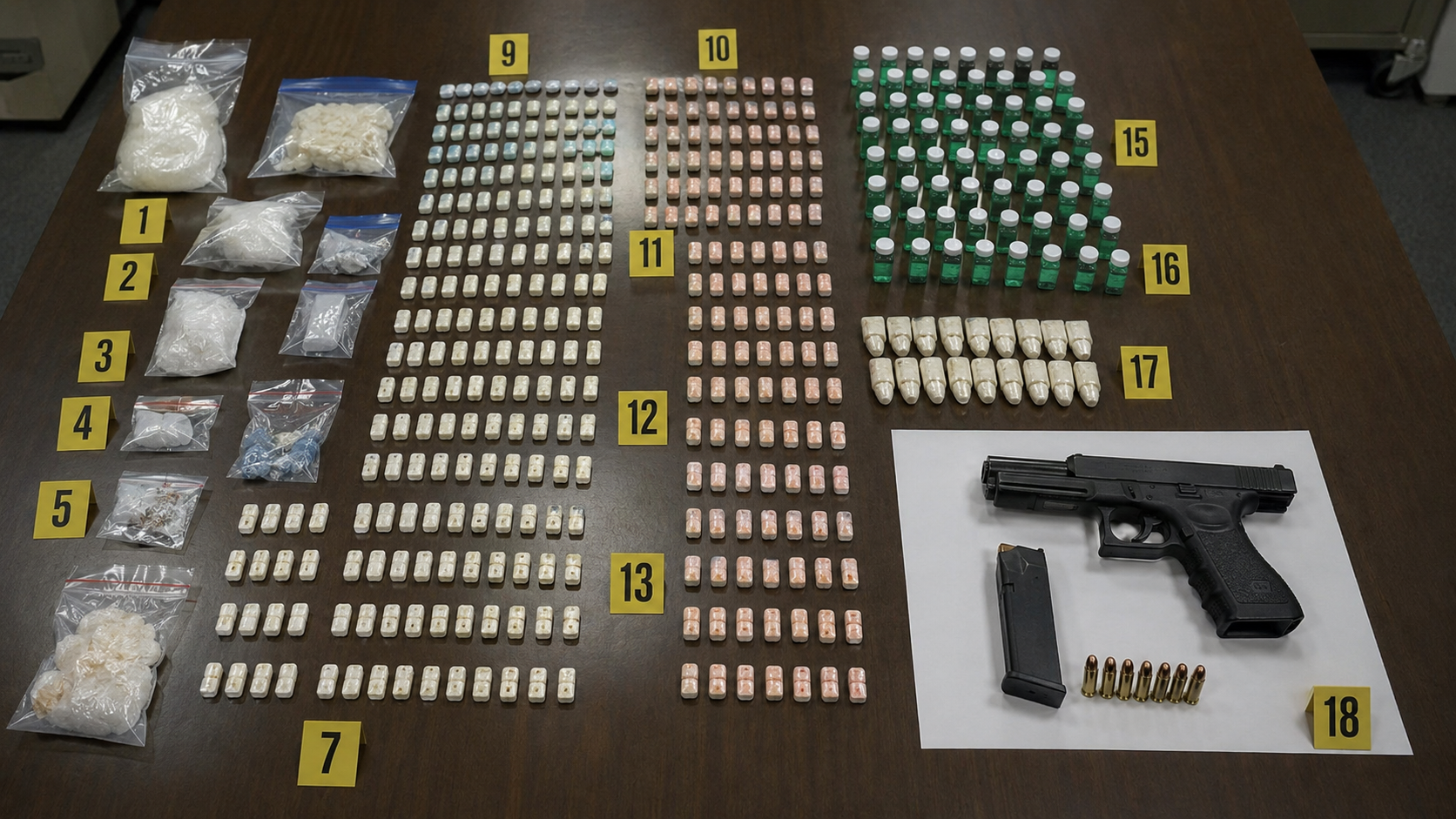
The public record does not break down the buys by date, seller, package count, or transaction. It does not say whether the alleged handgun sale happened during the same phase of the investigation as the narcotics buys. But even without those deeper records, the structure is visible: investigators claimed they went undercover, bought from the organization, built the case, and brought charges against ten alleged members.
The Evidence Spread
The evidence photos released with the case show suspected narcotics arranged in rows with markers placed around the table. Some images show gel caps grouped in long lines. Others show larger bags, vials, and packaged items separated into clusters. The layout gives the public a quick visual summary of what police wanted people to understand: this was not announced as one loose bag or one isolated arrest.
The firearm images added another layer. One photo shows a handgun with a magazine and ammunition displayed beside it. Another firearm image appears inside the evidence collage, helping explain why the public announcement included handgun-related crimes along with the narcotics charges.
For a free case file, this evidence spread is one of the best assets. It gives the reader something to study. The mugshot board gives the names. The table gives the scale. The alley gives the setting. Together, they turn a short police release into a fuller case file without needing to invent anything beyond what the public record already shows.
The Names Attached To Showtime
The defendants named in the public reporting were Avon Winchester, David Harrison, Nathan Hickson, Ronnie Hall, Thelonius Monk, Martray McNair, Dequan King, Antwan Hopkins, T’Shon Butler, and John Hancock. Winchester and Harrison were described as leaders of the organization. Hall, Hickson, and Hopkins were also reported in custody at the time of the announcement.
The still-wanted side of the case gave the release urgency. The public was not just being told what had already happened. Police were still asking for the remaining people to be located and arrested. That is why the board matters. It was not only a recap. It was part of the pressure campaign.
The name discrepancy between T’Shon Butler in the text and Melvin Rodgers on the graphic should be treated as an open file note. It is not big enough to take over the story, but it is specific enough to include because it shows why the indictment sheet matters. The official court document would lock down the correct defendant list, the exact charges, and whether the public graphic or the published text carried the error.
What The Public File Shows
The Showtime file shows a targeted East Baltimore narcotics investigation centered on the rear alley near Brentwood and Greenmount. It shows police identifying ten alleged members of a drug-trafficking organization and naming two alleged leaders. It shows undercover purchases involving fentanyl gel caps, cocaine vials, and an unregistered handgun. It also shows that the case was still active when it went public, with several people still listed as wanted.
The file also shows how much is still missing from the public version. The indictment sheet has not been publicly attached to the articles. The full charge list is not included in the news reports. The court outcomes are not shown in the initial announcement. There is no public breakdown showing which defendant was tied to which alleged buy, which charges stuck, or how each case ended.
That does not make the case weak for a free file. It just means the file should be presented for what it is: a public takedown breakdown, not a completed courtroom history. The value is in organizing the details cleanly, showing the evidence, identifying the names, explaining the alley location, and pointing out the one mismatch in the public materials.
The Unanswered Pieces
The biggest missing piece is the official indictment sheet. That document would likely show the exact defendant list, the formal counts, the case numbers, and how prosecutors described each person’s role. It would also help settle the public mismatch between T’Shon Butler and Melvin Rodgers.
The second missing piece is the outcome. A complete court pull could show who was arrested after the announcement, who appeared in court, who pled, who had charges dropped, and who received a sentence. Without that, the public file remains stuck on the day the takedown was announced.
The third missing piece is the investigation timeline. The public release says undercover investigators bought suspected fentanyl, cocaine, and a handgun, but it does not show when those buys happened or how they were documented. Those records would make a deeper premium update possible later. For now, the free file can stand on the details already available.
Final Breakdown
The Showtime Alley File is not built around a long public trial record or a massive indictment PDF. It is built around a focused police announcement with strong visuals and a specific East Baltimore location. Police said Showtime operated near the rear alley of 2400 Brentwood Avenue and Greenmount Avenue. They named ten alleged members, identified Avon Winchester and David Harrison as alleged leaders, and said undercover investigators bought nearly 2,000 suspected fentanyl gel caps, dozens of cocaine vials, and an unregistered handgun.
The reason this case works as a free file is the simplicity. The reader can understand it fast: an alley, a crew name, undercover buys, fentanyl, cocaine, a gun, a custody board, and open warrants. The deeper version depends on what the court records show later. But even from the public file alone, Showtime became more than just a name in a police release. It became a snapshot of how one East Baltimore alley ended up at the center of a drug and gun indictment.


