
Reporting and analysis may discuss allegations and online theories. Allegations are not findings of guilt. Verify important details in the cited public record.
The Case File
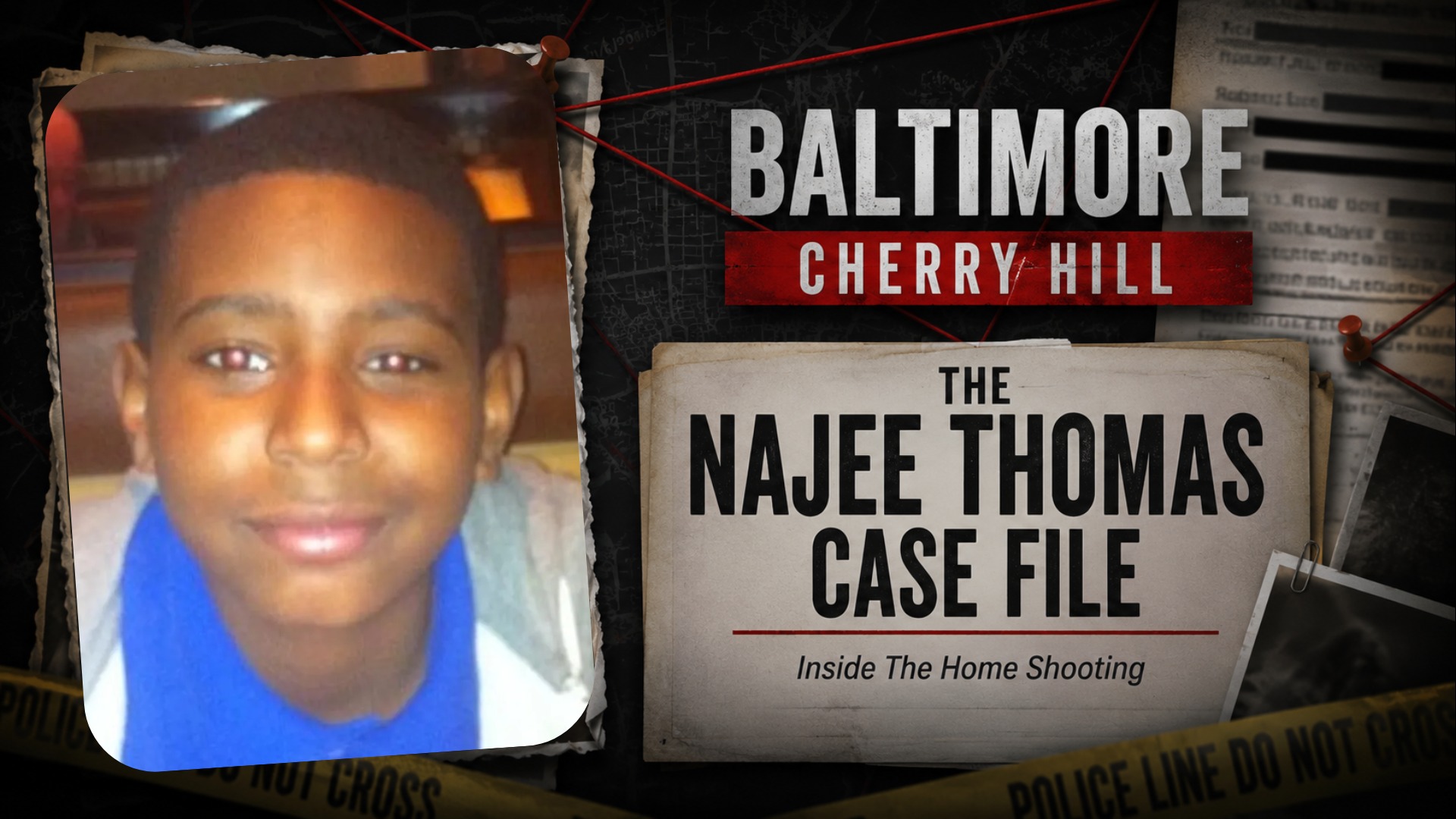
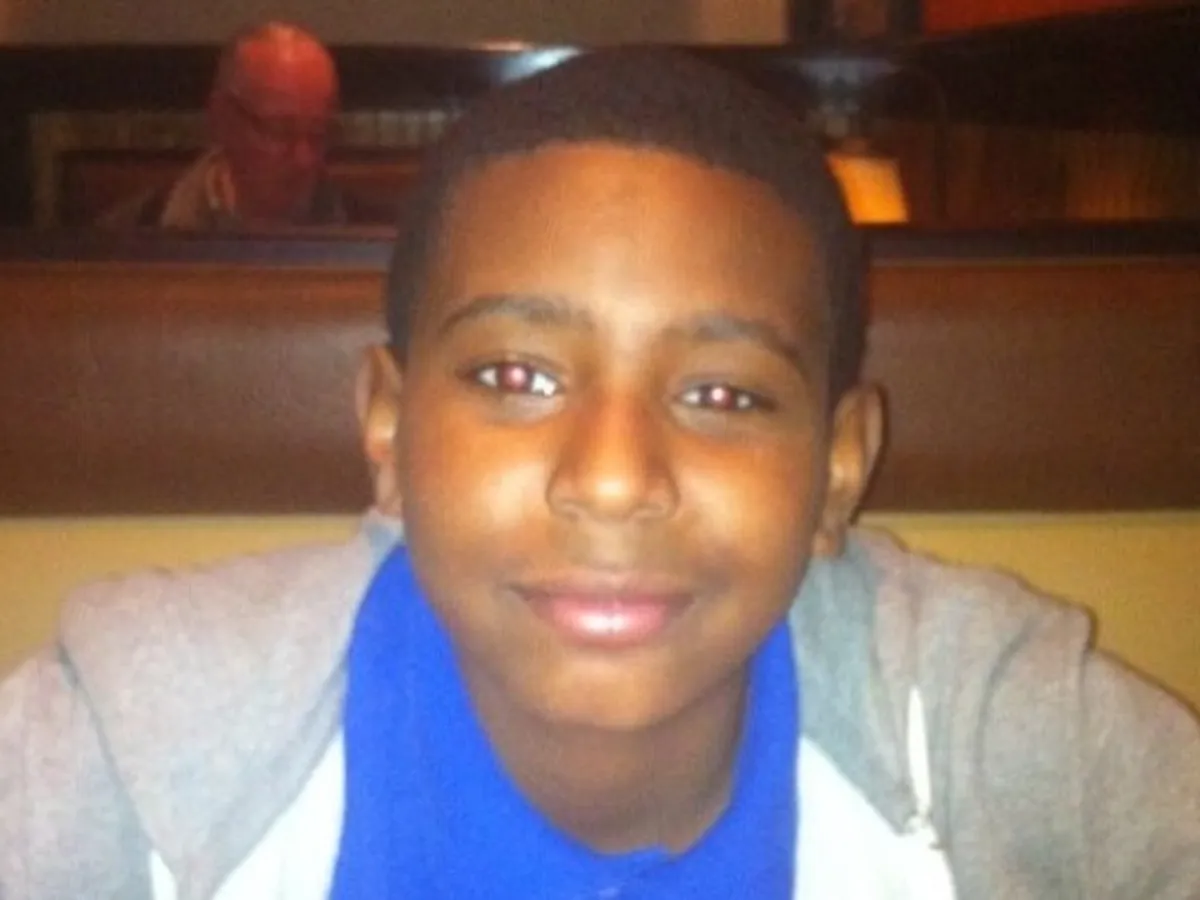
The murder of Najee Thomas did not begin as a street-corner shooting, a parking-lot ambush, or a crime scene built around shell casings in the road. It began inside a home on the 600 block of Roundview Road in Cherry Hill, where a 14-year-old boy was found with a gunshot wound to the head. Najee was killed in April 2014, inside the house where he lived with his mother and two other adults. Baltimore police were called around 1:15 a.m. after reports of a shooting. Detectives found him inside. He died at the scene.
The public record gives only part of the file. It confirms the victim, the location, the time, the home setting, the wound, and the early status of the investigation. It also gives something more complicated: a mother’s account of a locked door, a disturbed room, and a child she had left alive a little more than an hour earlier.
The case later carried another public layer because Najee was the son of Ronnie Thomas, also known as Skinny Suge, the Baltimore figure tied to the “Stop Snitching” DVD. But that connection has to be separated from proof. The available public reporting does not confirm that Najee was killed because of his father, because of the DVD, or because of any specific retaliation theory.
That is where this file sits: between what police confirmed, what the family feared, what the news reported, and what the public record still does not answer.
The Last Time His Mother Saw Him Alive
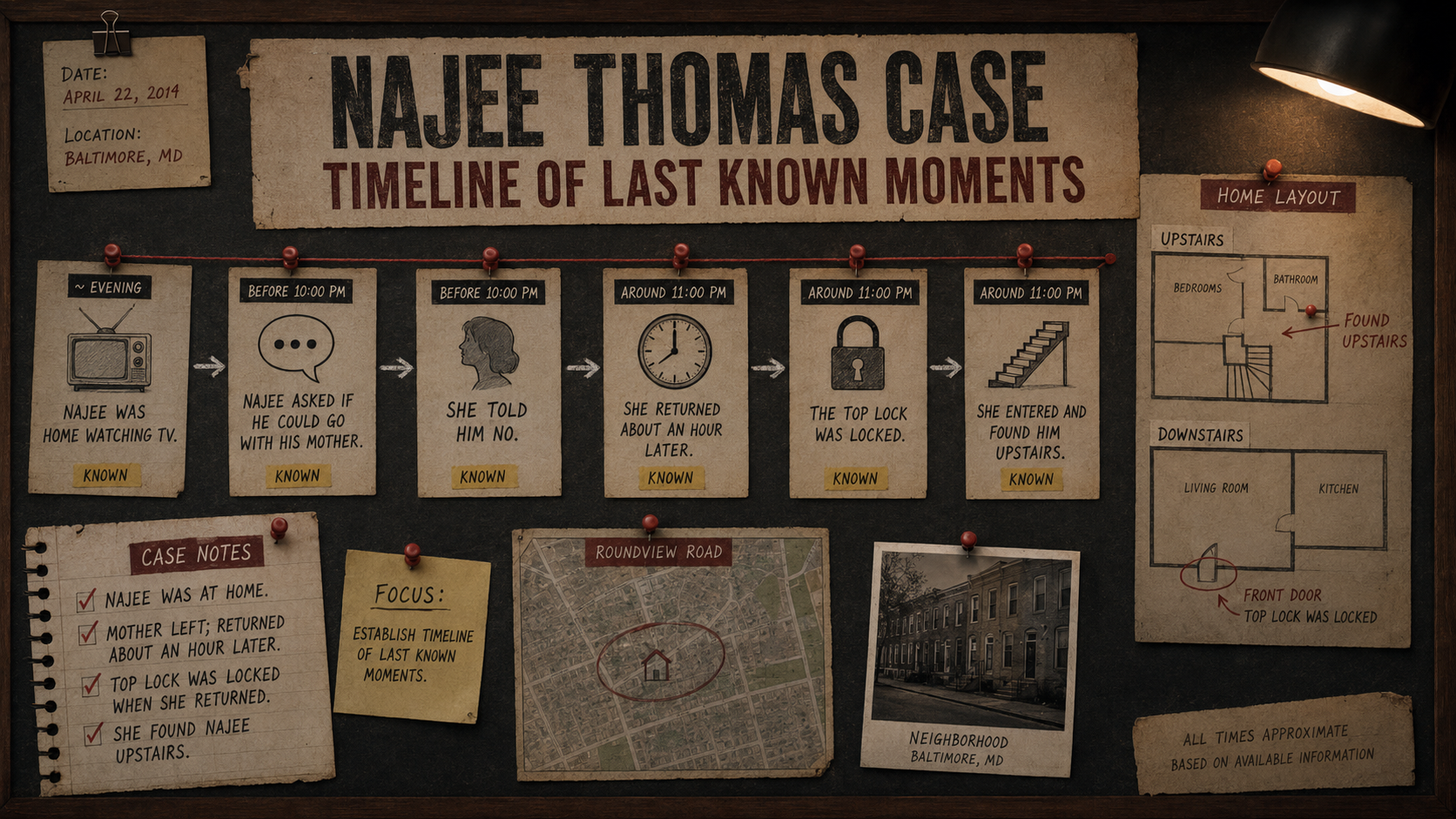
WBAL’s I-Team reported that Najee’s mother, Amina Gilliam, last saw her son alive late Monday night. He was on the sofa inside the Cherry Hill home watching television. She was leaving to make a quick visit to a friend, and according to Gilliam, Najee asked if he could go with her.
She told him no.
The reason was ordinary. Najee had a 9 o’clock doctor’s appointment the next morning. That detail does not solve the case, but it gives the timeline its most painful starting point. The last publicly reported exchange between Najee and his mother was not about danger, conflict, or warning. It was a child asking to leave the house, and a mother telling him to stay home because he had somewhere to be in the morning.
Gilliam said she returned a little more than an hour later. When she got back, the top lock was locked. She banged on the door and called Najee’s name, but he did not answer.
She used a key to get inside.
The Room Upstairs
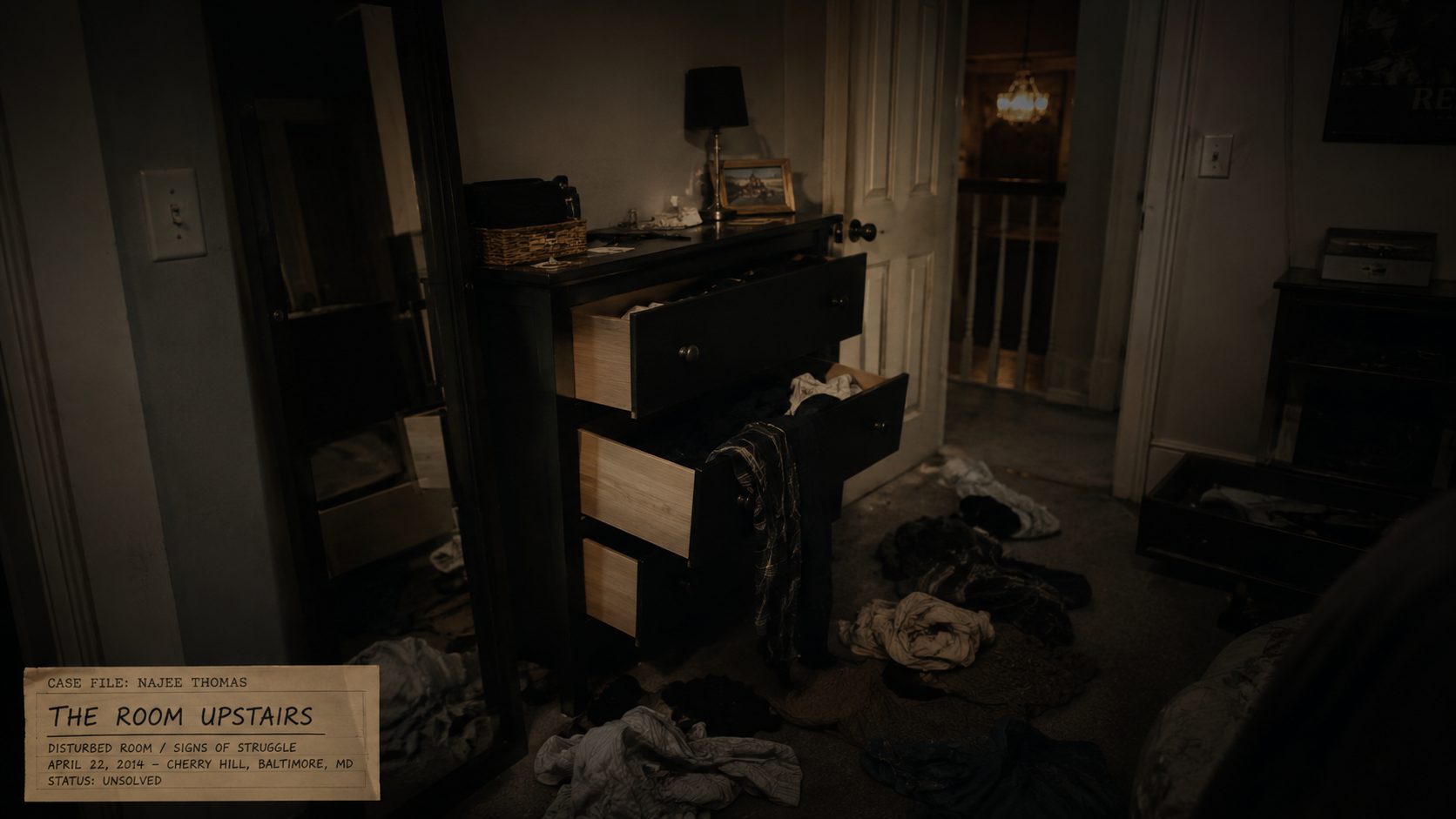
After entering the home, Gilliam went upstairs to her room. That is where she found Najee.
Her account to WBAL included two details that shaped the public mystery around the case. She said her room was a mess, and her dresser was disturbed. She also described trying to shake Najee before noticing what she first thought looked like a mark on his head.
Police later said Najee had been shot once in the head.
The public reporting does not provide a full crime scene diagram. It does not identify a weapon, list recovered casings, describe forced entry, explain whether anything was taken, or state whether investigators found physical evidence pointing to a suspect. The available reports also do not explain who locked the top lock, whether someone entered with a key, whether Najee let someone inside, or whether the disturbed room was connected to the reason he was killed.
Those missing details are not small gaps. They are the center of the case.
Najee was not found outside where investigators could immediately build the scene around street movement, vehicles, or witnesses standing nearby. He was found inside a home, upstairs, in a room his mother described as disturbed. That made the case depend heavily on questions the public record never fully answered.
The First Police Response
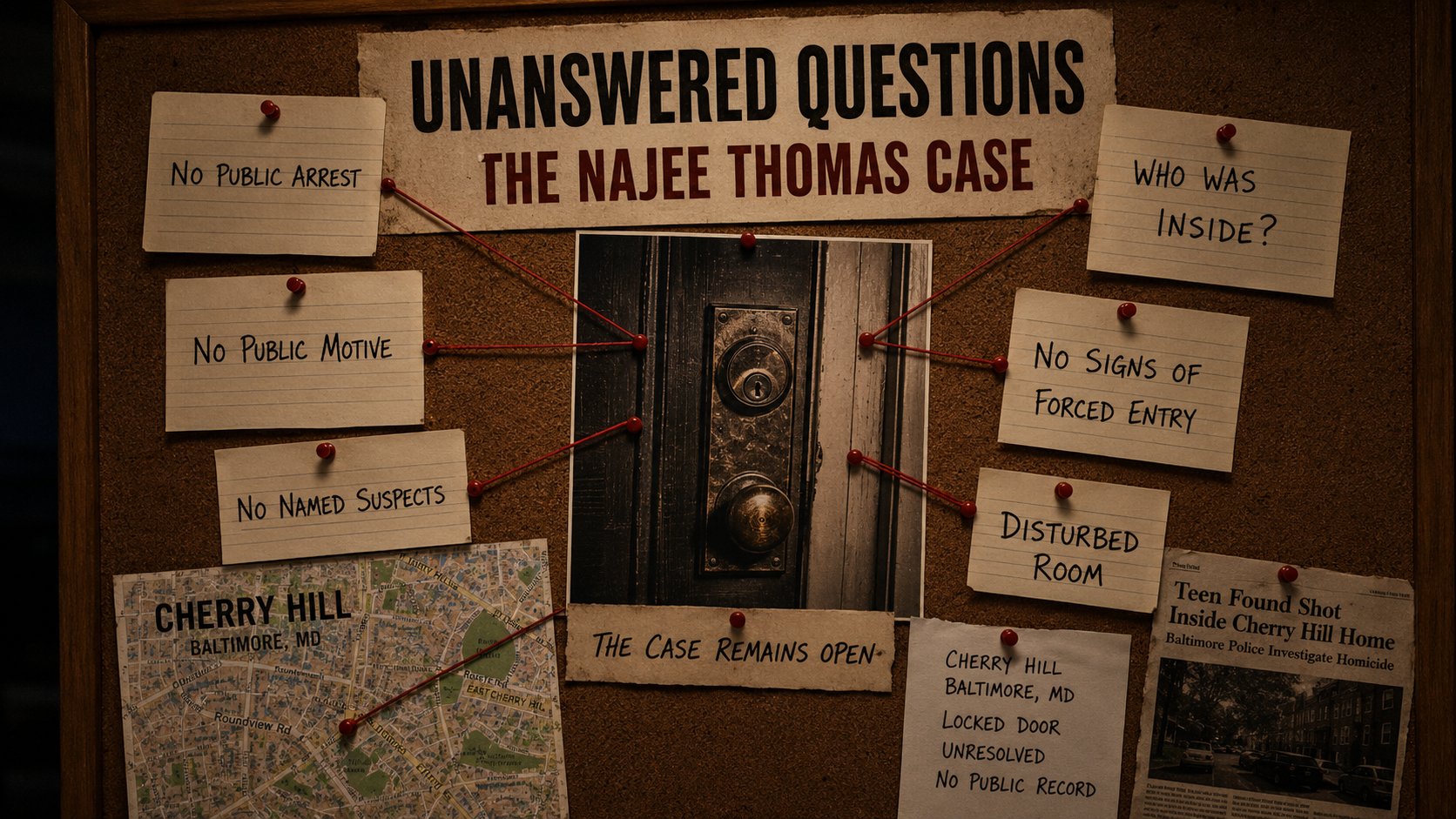
WBAL reported that officers were called around 1:15 a.m. Tuesday to the 600 block of Roundview Road after reports of a shooting. Detectives found Najee inside suffering from a gunshot wound to the head, and he died at the scene.
Baltimore police said they were still in the early stages of the investigation. Sgt. Jarron Jackson told WBAL that detectives were speaking to witnesses, gathering evidence, and trying to determine all the circumstances around the shooting. In that report, police said they did not believe the shooting was random.
A later WBAL I-Team report added another layer. Officials also said their investigation had uncovered no suspects or motive at that point, and there was no indication Najee had been targeted.
Those two public statements left the case in a narrow, unresolved lane. Police did not publicly treat the killing as a random event, but they also did not publicly say Najee himself had been targeted or identify a motive. That distinction matters because the home setting makes motive hard to separate from access. Whoever killed Najee either entered that house, was already inside, or reached him inside a space where outsiders should not have been moving freely.
Voices Around The Home
WBAL’s reporting included accounts from people close to the scene. A neighbor, Edith Wooden, said she woke up after hearing Najee’s aunt screaming, and said her son heard Najee running down to the basement asking for help. Najee’s best friend, Donte Wooding, said he and Najee were ninth-grade students at Coppin Academy High School, located on the grounds of Coppin State University.
The same report described detectives looking for evidence, canvassing the area, and speaking to neighbors. WBAL also reported that neighbors described tension in the home, though police did not provide details about that part of the investigation.
That last point is important because it is not an answer. It is only a public fragment. “Tension in the home” does not identify a suspect, prove a motive, or explain the shooting. It only shows that detectives and reporters were looking beyond the basic headline and trying to understand what was happening inside the house before Najee was killed.
Najee Thomas
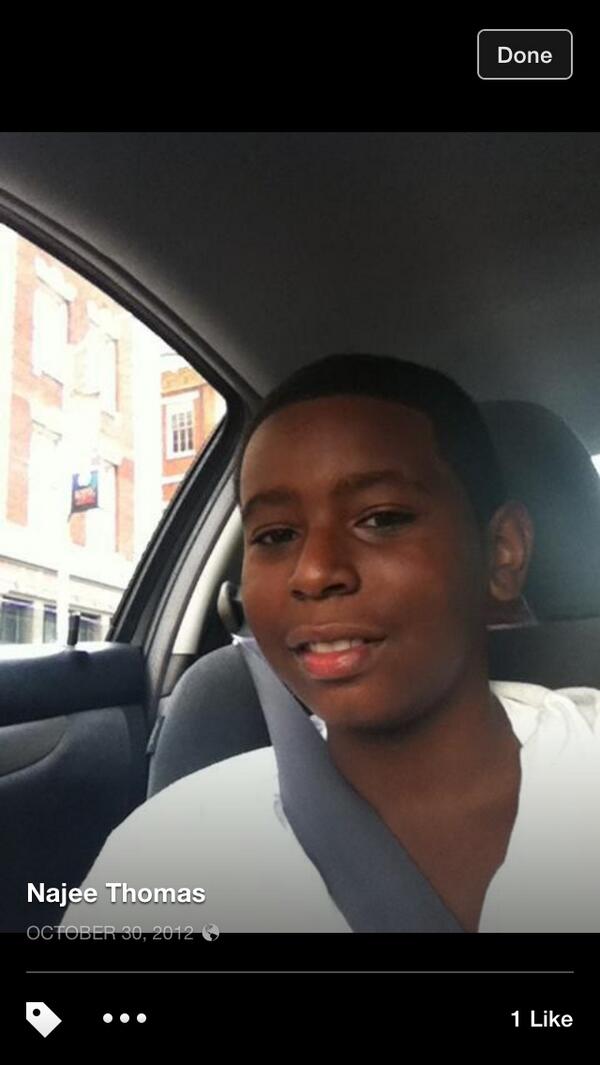
Najee was 14 years old.
Friends and neighbors described him as a friendly student who attended Coppin Academy High School. His grandfather, Randall Gilliam, told WBAL that Najee had a bright future, wanted to be a lawyer, and played football. CBS Baltimore reported that neighbors said their children had been playing basketball with Najee the same day he died.
Those details matter because the public attention around the case quickly moved toward his father’s name. But before the “Stop Snitching” connection entered the story, the victim was a ninth-grade student found dead inside his own home.
The strongest version of this file does not reduce Najee to a connection. It keeps the focus where the investigation began: a 14-year-old boy, a Cherry Hill address, a mother returning home, and a homicide scene upstairs.
The Stop Snitching Connection
CBS Baltimore and WBAL both reported that Najee was the son of Ronnie Thomas, also known as Skinny Suge. Ronnie Thomas was publicly tied to Baltimore’s “Stop Snitching” DVD, a street video that became notorious in the 2000s for discouraging witness cooperation. CBS reported that the first video surfaced in 2004 and was followed by a sequel in 2007.
The federal record gives that background more weight. In 2010, the FBI reported that Ronnie Thomas, also known as Rodney Thomas, Skinny Suge, and Tall Vialz, was convicted of participating in a racketeering conspiracy through the Tree Top Piru Bloods. The FBI described the gang case as involving narcotics trafficking, conspiracy to commit murder, and robbery.
That made the family connection impossible for reporters to ignore. A 14-year-old had been killed inside a Cherry Hill home, and his father was already a known figure in one of Baltimore’s most infamous street-media stories.
But the official line stopped short of turning that connection into a motive. CBS reported that police had not said whether the violent history of Najee’s father had anything to do with Najee’s murder. WBAL’s I-Team reported that police had no suspects or motive at the time of its follow-up.
For this case file, that separation is critical. Ronnie Thomas’s history is confirmed public context. It is not confirmed proof of why Najee was killed.
A Citywide Teen Violence Backdrop
Najee’s murder happened during a stretch of violence involving Baltimore teenagers. CBS reported that his death made him the seventh teenager killed in Baltimore City that year, and that no arrests had been made in his case shortly after the killing. WBAL also reported that Najee was the second Baltimore teen fatally shot in less than a week, after 17-year-old Michael Mayfield was killed in southwest Baltimore.
That context explains why the case drew public attention beyond Cherry Hill. City leaders were already facing pressure over youth violence, and Najee’s death became part of a larger discussion about teenagers being killed across Baltimore.
Still, the broader violence does not explain Najee’s homicide. His case remained specific: Roundview Road, inside a home, one gunshot wound, a locked door, a disturbed room, and no public arrest in the early reporting.
The Second Son Killed
The public record became heavier in 2015.
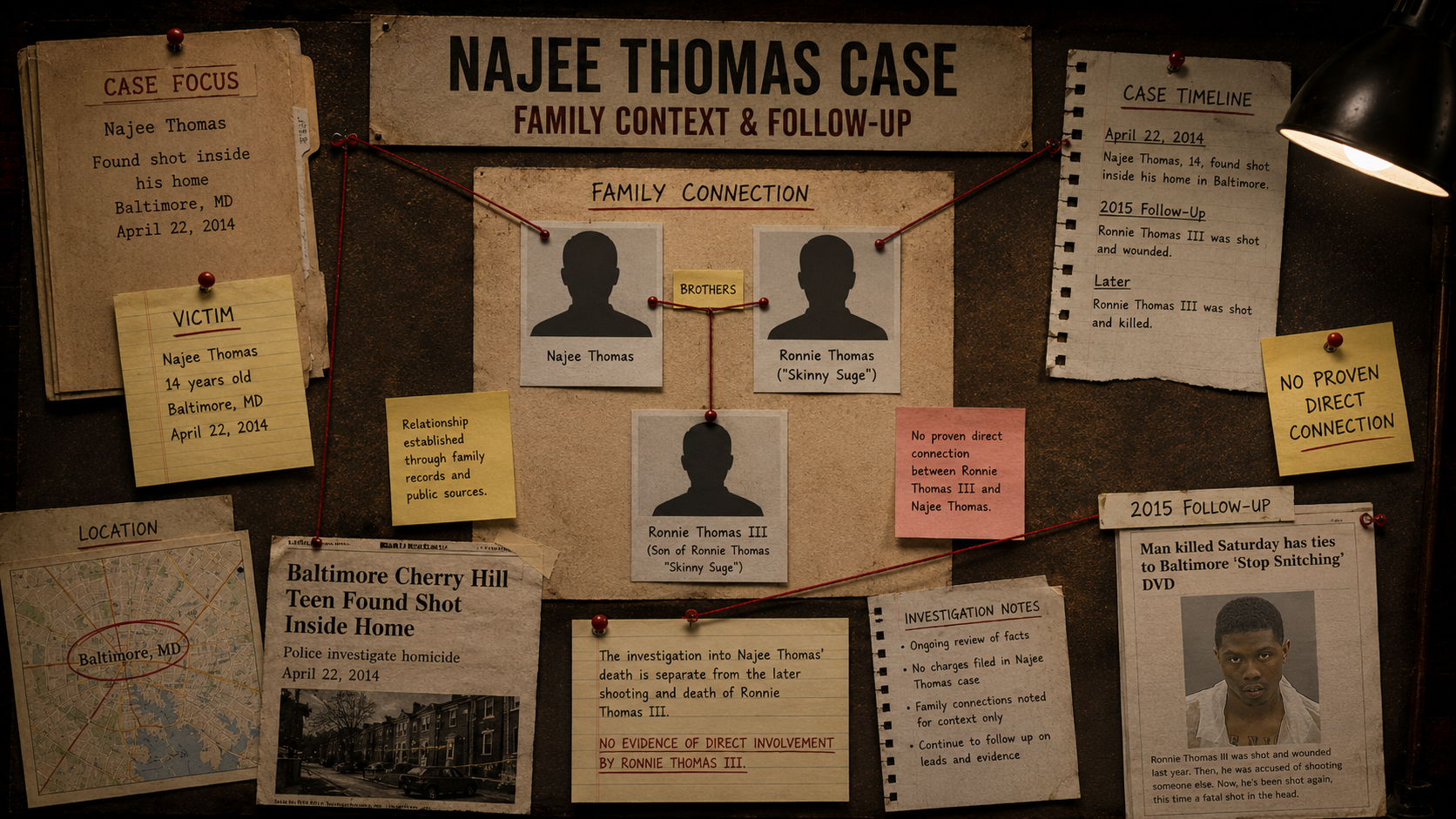
WBAL reported that Ronnie Thomas III, another son of Ronnie Thomas Jr., was killed in a separate Baltimore shooting near Belair Road and Sinclair Lane. He was 22 years old. The article identified him as the son of Ronnie Thomas Jr., also known as Skinny Suge, and described him as the second son of Thomas Jr. killed within 13 months.
That report directly connects Najee Thomas and Ronnie Thomas III through the same father. It also confirms that, as of June 1, 2015, Najee’s murder remained open and no arrests had been made.
But the same article does not prove that the two murders were part of the same investigation, carried the same motive, or involved the same people. WBAL reported that Thomas III’s grandmother said she saw no direct connection between his death and his father, who was serving time in federal prison. She also said Thomas III had been worried about being labeled a snitch after he had been wounded in a previous shooting.
That is the careful way to read the connection. Two sons of the same Baltimore figure were killed within 13 months. Najee’s case remained open at the time of the second report. The family name drew attention because of the “Stop Snitching” history. But the public record does not confirm a single motive tying the killings together.
What The Public Record Confirms
The public record confirms that Najee Thomas was 14 years old and was fatally shot inside a Cherry Hill home on the 600 block of Roundview Road in April 2014. Officers were called around 1:15 a.m. after reports of a shooting, and detectives found Najee inside suffering from a gunshot wound to the head.
WBAL’s I-Team reported that Najee’s mother said she left him on the sofa watching television, returned a little more than an hour later, found the top lock locked, used a key to enter, went upstairs, and found him in a room she described as disturbed. Police said he had been shot once in the head.
The record also confirms that Najee was the son of Ronnie Thomas, also known as Skinny Suge, and that this connection was reported by WBAL and CBS. The FBI’s archived record confirms Ronnie Thomas’s federal racketeering conviction through the Tree Top Piru Bloods case. WBAL later reported that another son, Ronnie Thomas III, was killed in 2015, and that Najee’s case remained open with no arrests at that time.
What Has Not Been Publicly Answered
The public reporting does not answer who killed Najee Thomas. It does not explain how the shooter got inside the home, whether Najee knew the person, whether anything was taken, whether there was forced entry, whether the disturbed room was connected to the motive, or whether the top lock was locked by the offender, someone inside the home, or someone else.
It also does not explain how investigators interpreted the neighbor accounts, what evidence was recovered, whether there was surveillance nearby, whether a weapon was ever found, or whether detectives developed a named suspect after the early reports.
The family connection remains unresolved as well. The public record confirms the father-son relationship and the “Stop Snitching” background. It does not confirm that Najee was killed because of that history.
Official Facts Versus Public Suspicion
The official facts are limited but serious. Najee was 14, found shot inside a Cherry Hill home, and died at the scene. His mother described a locked door and a disturbed room. Police did not publicly name a suspect or motive in the available early reporting, and WBAL later reported that the case remained open with no arrests as of June 2015.
Public suspicion moved toward the father’s name because Ronnie Thomas was already tied to a notorious Baltimore street video and a federal gang case. That suspicion is understandable as public context, but it cannot be written as fact. News reports raised the connection because it was part of Najee’s public identity, not because police announced it as the motive.
The strongest reading of the file is the cleanest one: Najee’s murder had a confirmed family connection to a well-known Baltimore figure, but the case itself remained publicly unresolved.
Final Breakdown
Najee Thomas was killed inside his Cherry Hill home at 14 years old.
The public file does not close with an arrest, a confession, or a courtroom record. It closes with a mother returning to a locked door, entering with a key, finding her room disturbed, and discovering her only child upstairs.
A year later, the story carried another weight when WBAL reported that Ronnie Thomas III, another son of Ronnie Thomas Jr., had also been killed. That made the Thomas family connection even harder to ignore, but it still did not give the public a confirmed answer in Najee’s case.
The headline says a 14-year-old was shot in Cherry Hill. The deeper file shows why the case stayed unsettled: the confirmed facts stop inside that house, at the point where the most important questions begin.


