
Reporting and analysis may discuss allegations and online theories. Allegations are not findings of guilt. Verify important details in the cited public record.
The Case File
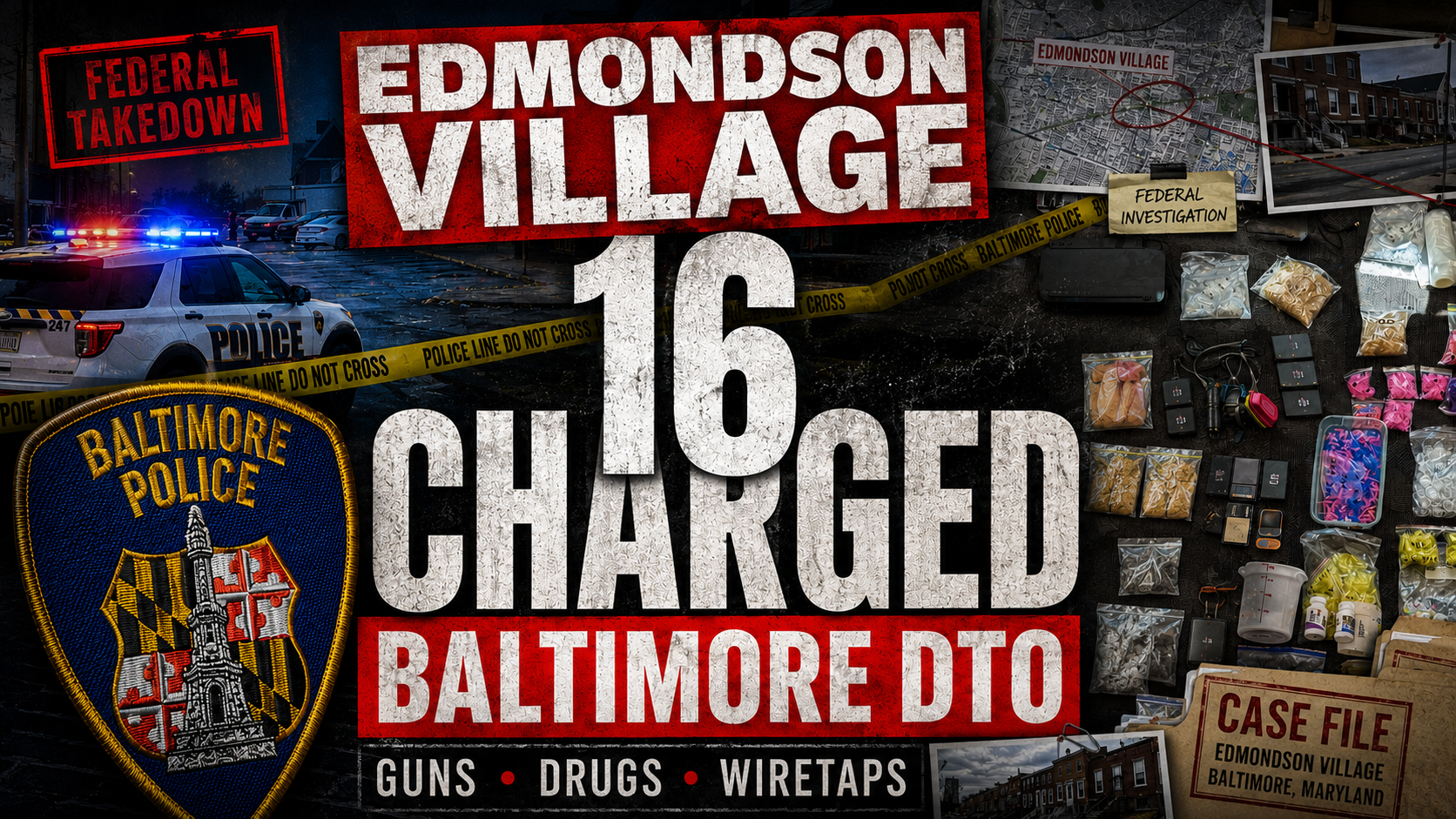
The Edmondson Village federal case was not a simple street-level drug arrest. It was a 16-defendant federal conspiracy file built around heroin, cocaine, crack cocaine, firearms, stash houses, intercepted calls, search warrants, and violence that prosecutors said was tied directly to the protection of a southwest Baltimore drug trafficking operation.
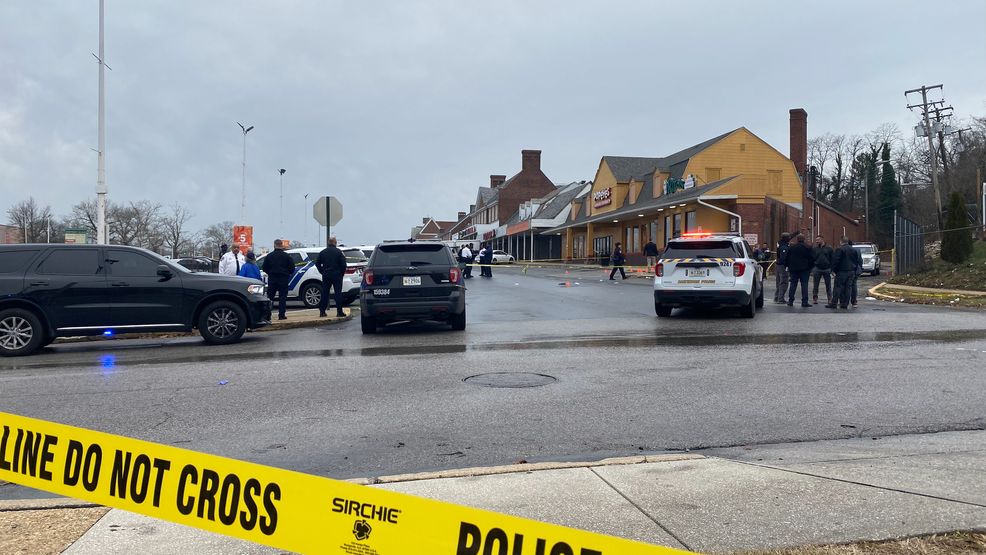
Federal prosecutors said the organization operated in and around Edmondson Village from at least 2018 through June 20, 2019. The case centered on an alleged drug trafficking organization connected to Adam Martin, also known as “Fats,” and Calvin Claxton, also known as “Cal.” According to the government, the group distributed heroin, powder cocaine, and crack cocaine to users and redistributors while using residences around Baltimore to process, cut, package, and store narcotics.
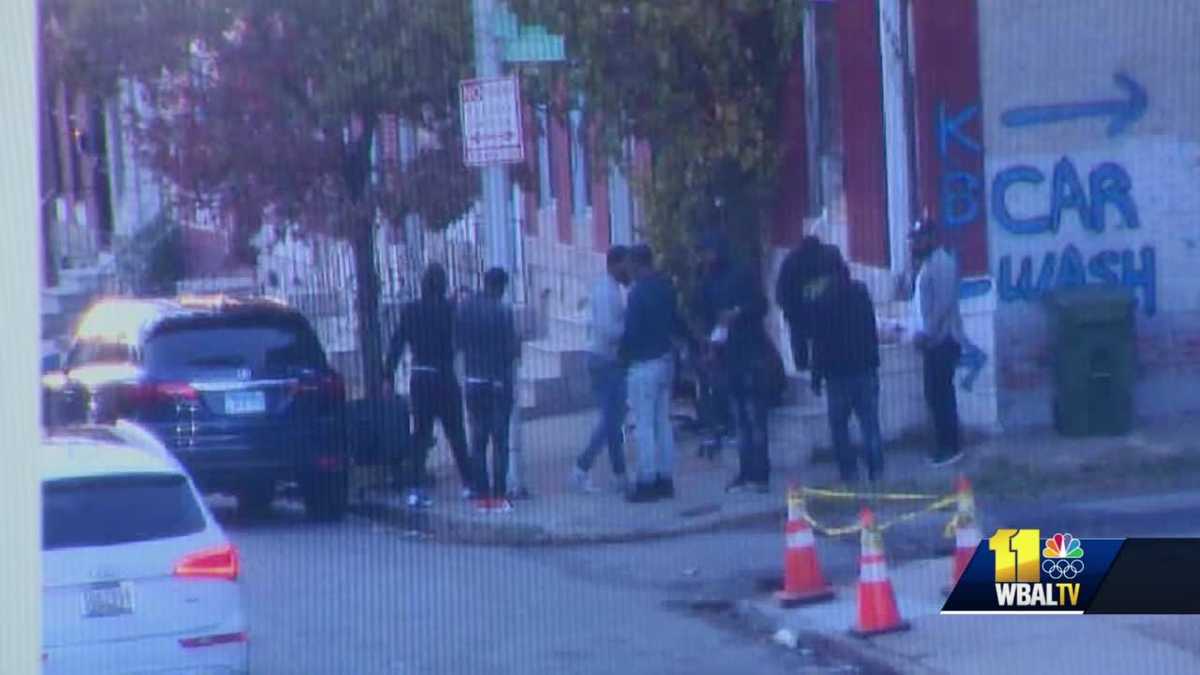
What made the case bigger than a normal drug indictment was the violence attached to it. Federal records tied the organization to a shooting murder, a later shootout where an unarmed bystander was struck, and a planned robbery involving an unlicensed taxi driver. By the time the case moved through court, the government had built a file that connected drugs, weapons, phones, stash houses, surveillance, controlled buys, search warrants, and long federal prison sentences.
The Federal Indictment
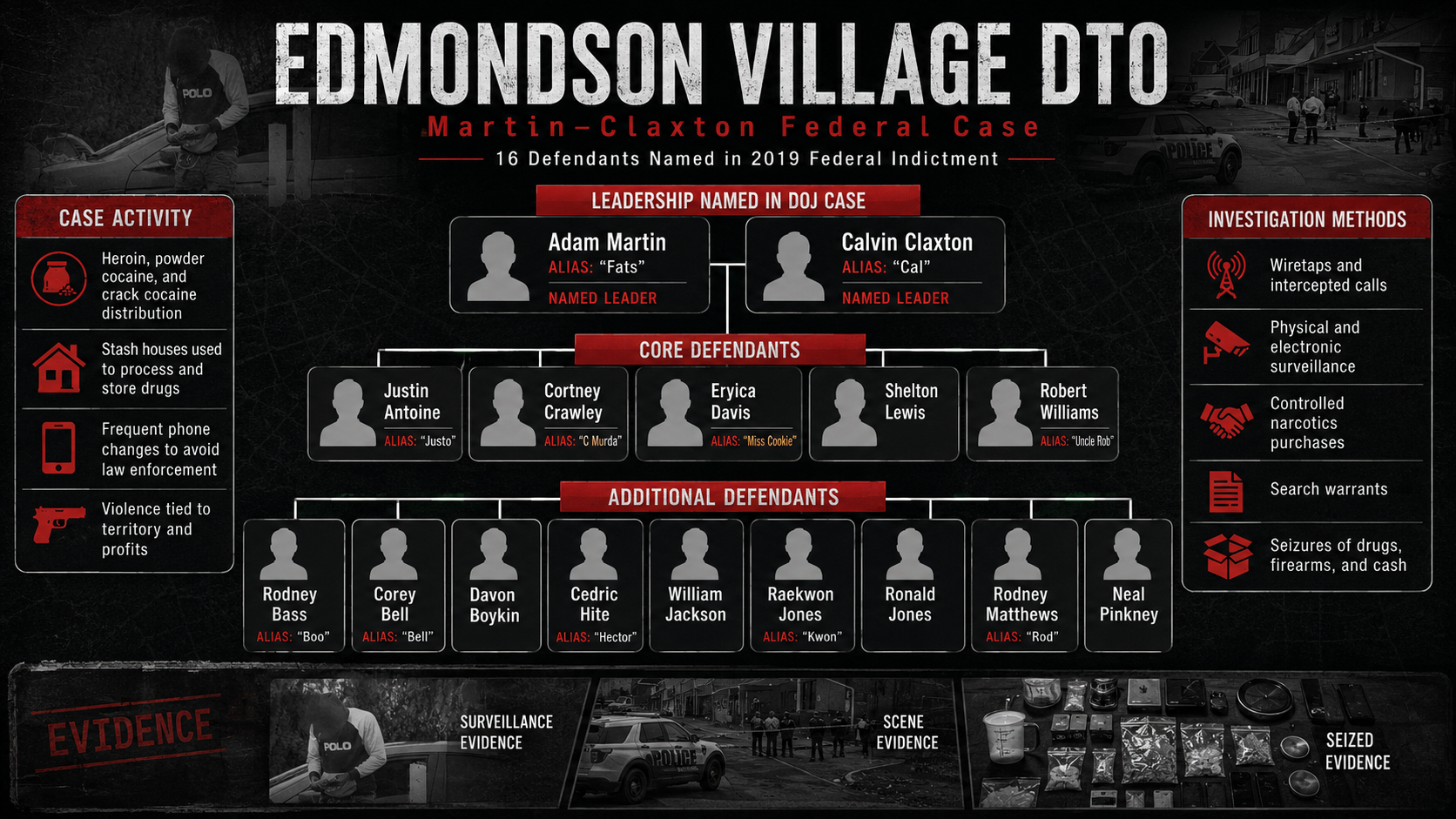
The superseding indictment named 16 Baltimore defendants: Justin Antoine, Rodney Bass, Corey Bell, Davon Boykin, Calvin Claxton, Cortney Crawley, Eryica Davis, Cedric Hite, William Jackson, Raekwon Jones, Ronald Jones, Shelton Lewis, Adam Martin, Rodney Matthews, Neal Pinkney, and Robert Williams. All 16 were listed as Baltimore residents.
At the time the indictment was announced, 14 defendants had already been arrested, 12 had been ordered detained pending trial, and law enforcement was still searching for Davon Boykin and Cedric Hite. The size of the case immediately showed that federal prosecutors were not presenting this as one person selling narcotics independently. They were presenting it as a larger organization with multiple people allegedly playing different roles inside the same Edmondson Village drug market.
The aliases attached to the case gave the file an even clearer identity. Adam Martin was known as “Fats.” Calvin Claxton was known as “Cal.” Justin Antoine was known as “Justo.” Rodney Bass was known as “Boo.” Corey Bell was known as “Bell.” Cortney Crawley was known as “C Murda.” Eryica Davis was known as “Miss Cookie.” Cedric Hite was known as “Hector.” Raekwon Jones was known as “Kwon.” Rodney Matthews was known as “Rod.” Robert Williams was known as “Uncle Rob.”
The Alleged Edmondson Village Operation
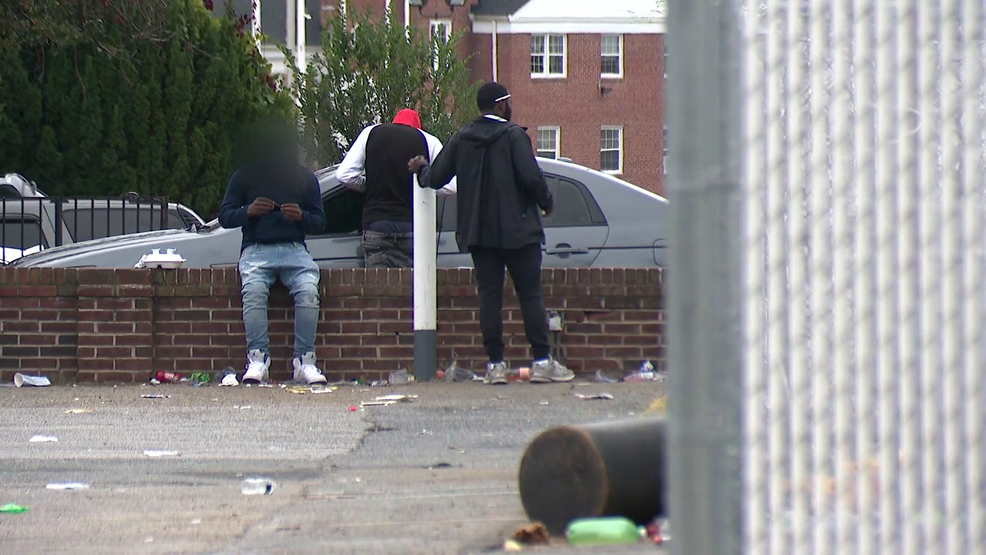
According to federal prosecutors, the Martin Claxton organization distributed heroin, powder cocaine, and crack cocaine in and around Edmondson Village. The indictment said members used residences in Baltimore to process, cut, package, and prepare drugs for street-level distribution.
That detail matters because it shows the government was not only focused on what happened outside on the block. Investigators were focused on the hidden structure behind the market. A drug organization needs supply, storage, packaging, communication, and people who know where product is being held. Prosecutors alleged that this DTO had that structure and that firearms and violence were used to protect the operation from robbery, cheating, and disruption.
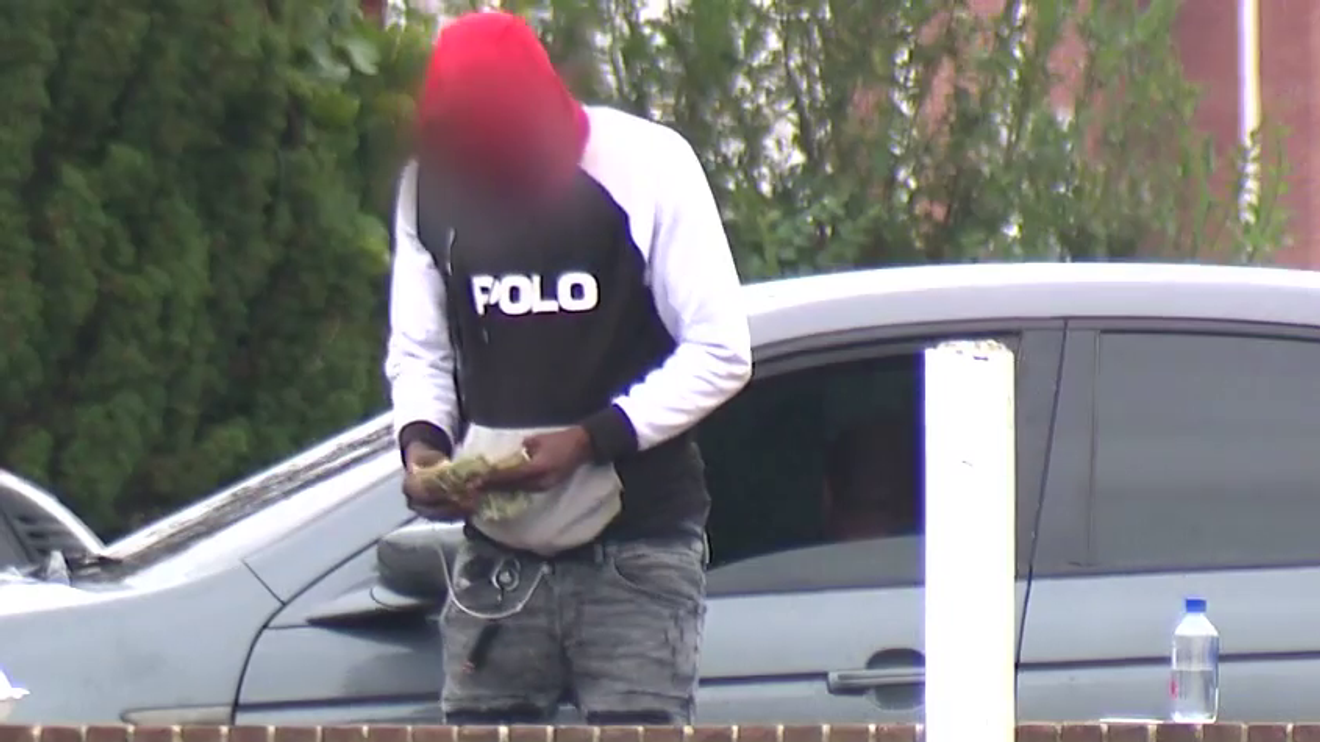
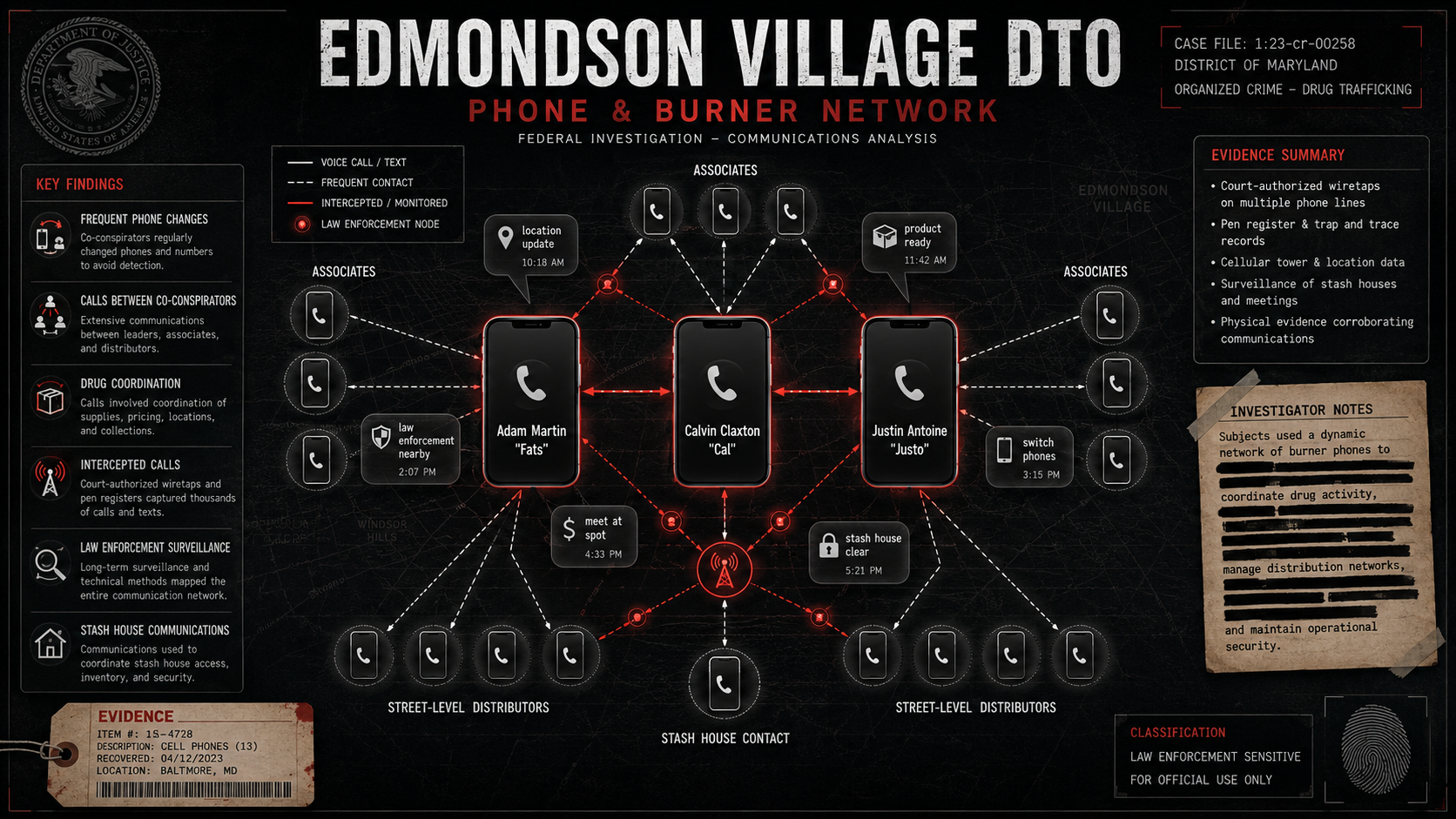
The indictment also alleged that defendants frequently changed cell phones to prevent law enforcement from intercepting their communications. In a federal conspiracy case, that kind of detail becomes part of the larger pattern. Prosecutors were not just saying drugs were being sold. They were saying members were actively trying to keep the operation moving while avoiding detection.
The Federal Investigation
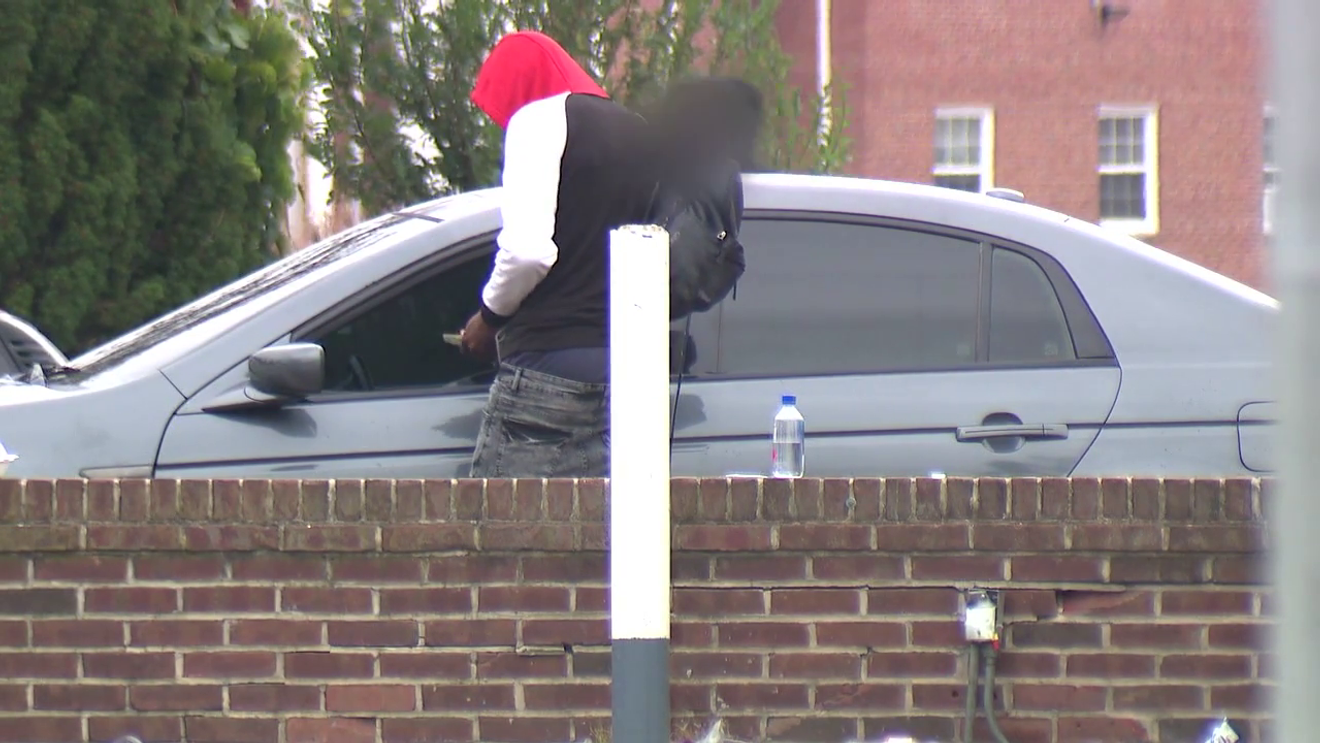
Federal investigators built the case through multiple layers of evidence. Public records describe intercepted phone communications, physical surveillance, electronic surveillance, controlled narcotics purchases, and search warrants. That combination allowed prosecutors to build the case from several directions instead of relying on one arrest or one seizure.
In Adam Martin’s later sentencing record, investigators said intercepted calls from November 2018 to February 2019 captured conversations involving narcotics distribution at a DTO-controlled drug shop. The government also said surveillance showed Martin controlled the cocaine base supply and other narcotics going to street-level distributors.
This is where the case became larger than a neighborhood sweep. The government was not only trying to prove drugs existed. Prosecutors were trying to prove how the alleged organization worked, how people communicated, where drugs were stored, who controlled supply, and how firearms fit into the operation.
The Violence Inside The Case
The original federal indictment described several violent acts connected to the conspiracy. Prosecutors said the organization used violence to retaliate against people who tried to rob, cheat, or interfere with the DTO. The public record described a shooting murder, a later gunfight where a bystander was struck, and a planned robbery of an unlicensed taxi driver.
That violence changed the entire weight of the file. Without those allegations, the case would read like a drug distribution indictment. With them, it becomes a record of how a drug market allegedly turned into murder, public gunfire, and threats against people outside the organization.
The government’s theory was that the violence was not separate from the drug operation. Prosecutors framed it as part of how the organization protected money, drugs, territory, and control.
The Recreation Center Murder
The most serious violent act in the case centered on Justin Antoine, also known as “Justo.” According to later federal plea and sentencing records, Antoine admitted that in early 2018, people in Edmondson Village robbed him of drugs, drug proceeds, and a phone he used to communicate with drug customers. Antoine believed a victim identified by initials as J.D. was involved in those robberies.
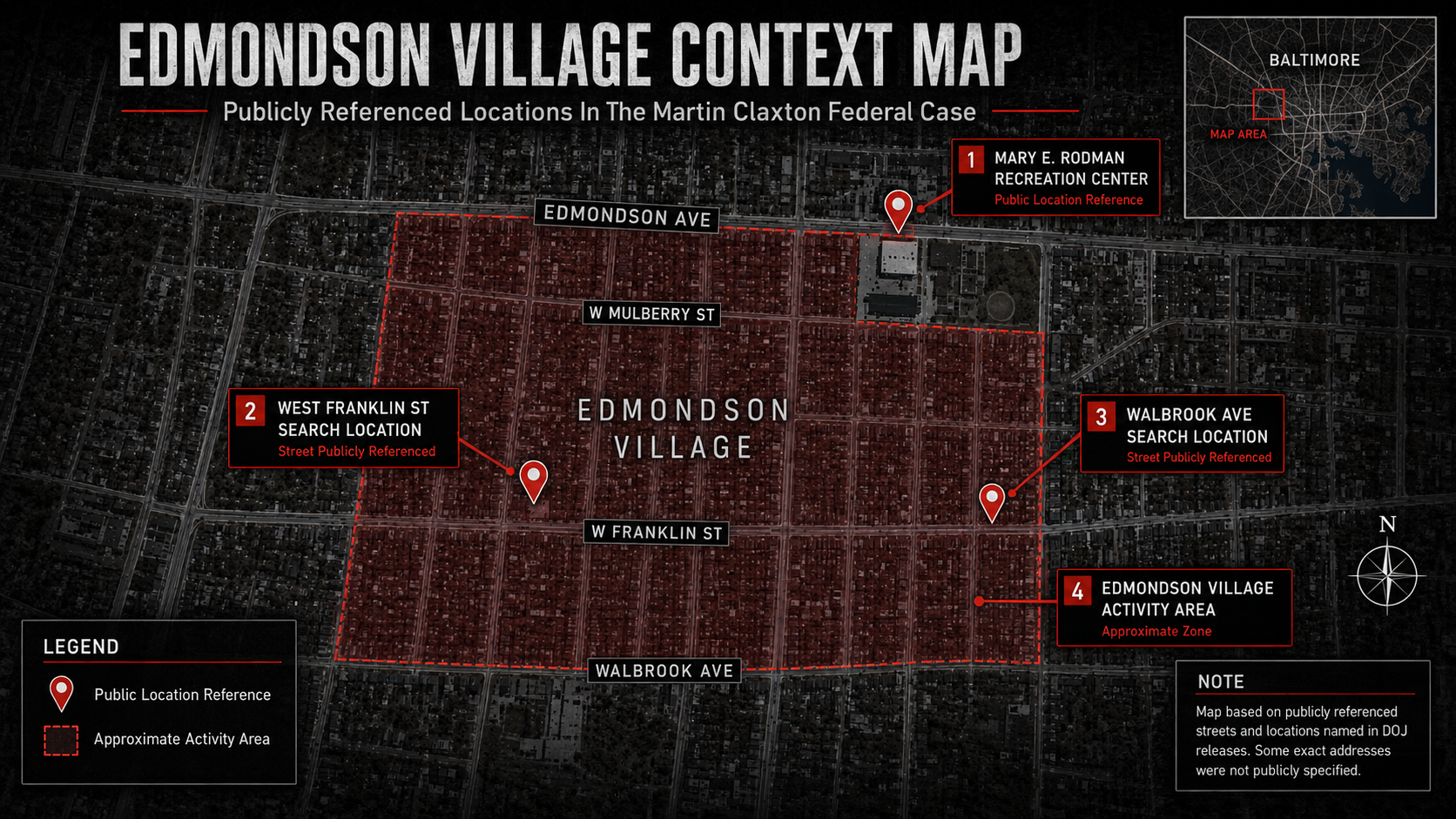
On May 8, 2018, Antoine went to the Mary Rodham Recreation Center armed with a loaded pistol. According to the government, he approached J.D. and shot him twice in the head, killing him. Antoine later admitted that the killing was intentional and that it happened during and in relation to his drug trafficking activity.
There is an important date issue in the public record. The original July 2019 indictment announcement described a shooting murder on May 5, 2018, while Antoine’s later plea and sentencing records described the admitted murder of J.D. as happening on May 8, 2018. The later records give the more detailed account of Antoine’s admitted conduct, but the difference between the public summaries is important enough to note.
The Shootout And The Bystander
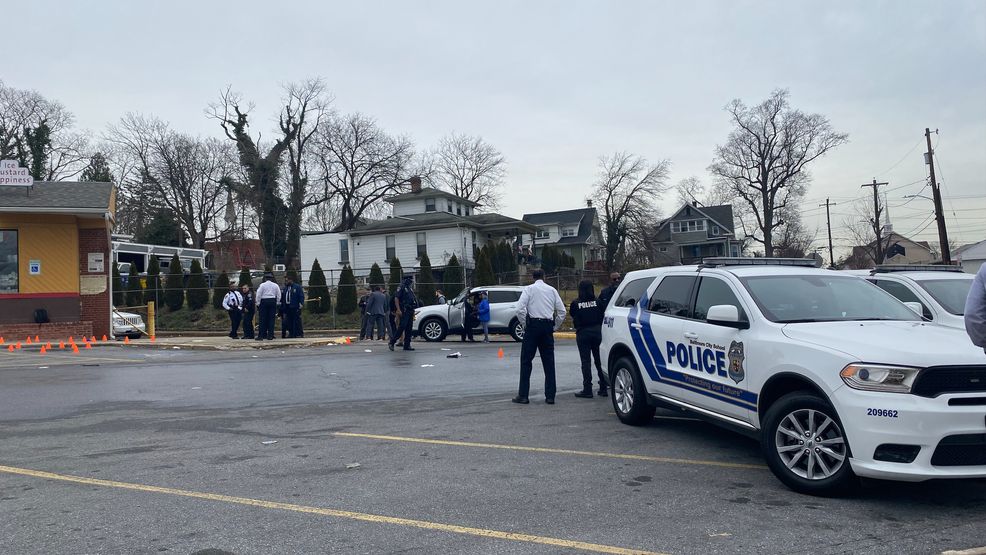
The violence did not stop after the murder of J.D. According to the government, Antoine continued distributing heroin and crack cocaine after the killing. In November 2018, prosecutors said Antoine was standing on a block where he frequently sold drugs when a vehicle operated by friends of J.D. arrived.
At least one person inside that vehicle fired at Antoine. Antoine was armed and fired back. During the exchange of gunfire, an unarmed bystander was struck.
That part of the case showed how the conflict moved beyond the people directly involved. The government used the shootout to show how violence tied to the DTO could spill into public space and hit someone who had nothing to do with the dispute. What started around robberies, drugs, money, and retaliation became open gunfire with a civilian caught in the middle.
The Unlicensed Taxi Driver Plot
The planned robbery of an unlicensed taxi driver became more detailed during Antoine’s sentencing. According to the government’s sentencing presentation, Antoine planned to rob the driver on November 26, 2018 because he believed the driver had refused to return a gun Antoine left inside the driver’s vehicle.
Prosecutors said an intercepted call captured Antoine saying that if the driver gave him any problems during the robbery, he was “splatting that,” which the government interpreted as a threat to kill the driver. Another intercepted call captured Antoine discussing an attempt to illegally buy an assault rifle.
This part of the case showed how federal investigators used wiretap evidence to build intent. The indictment described the planned robbery in broader terms, but the later sentencing record gave more detail about why the driver was allegedly targeted, what Antoine believed the driver had, and how prosecutors interpreted the language captured on the call.
The Stash Houses And Search Warrants
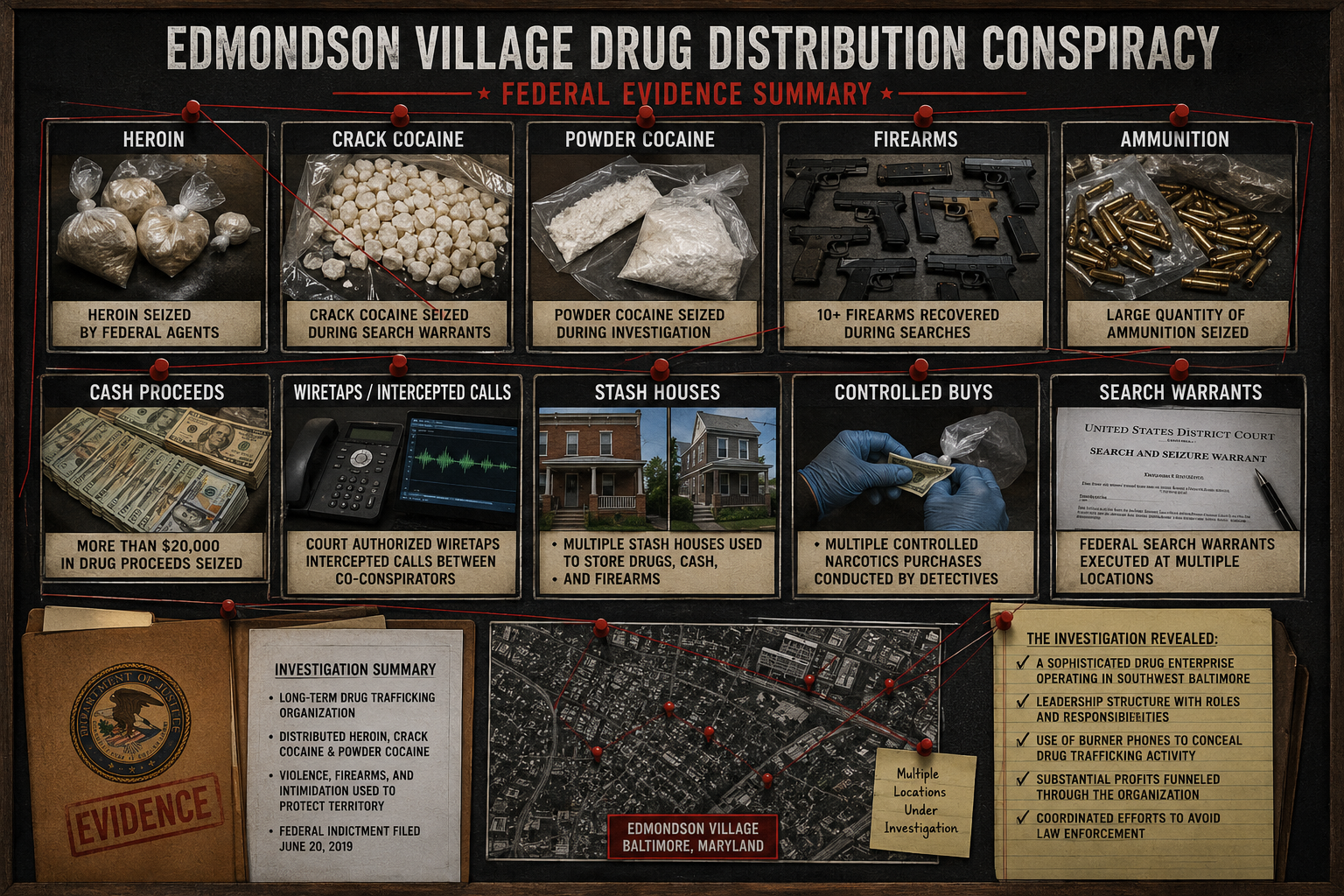
The stash house evidence gave the case a physical foundation. Federal prosecutors alleged that residences in Baltimore were used to process, cut, package, and store narcotics. Later court records tied specific defendants to stash locations and seized drugs.
In Calvin Claxton’s case, the government said he owned and maintained a stash house where heroin and crack cocaine were stored and processed. On April 10, 2019, law enforcement executed a search warrant at that stash house and recovered more than 200 grams of crack cocaine. Claxton admitted that he intended to distribute it, and he agreed that over the course of the conspiracy he distributed more than 280 grams of crack cocaine.
Adam Martin’s sentencing record described searches at a West Franklin Street residence and a Walbrook Avenue residence. At the West Franklin Street location, federal agents recovered four firearms, multiple vials of cocaine base packaged for sale, and other narcotics. At the Walbrook Avenue location, agents recovered a loaded firearm and more than 200 grams of cocaine base. Martin admitted that he possessed narcotics with intent to distribute and possessed firearms in relation to the drug conspiracy.
The Firearms, Drugs, And Money
When the case was announced, federal authorities said law enforcement had seized at least 10 firearms, ammunition, drugs, and more than $20,000 in drug proceeds. Those numbers became a major part of the evidence summary because they showed the government had more than intercepted conversations and allegations. Prosecutors were pointing to physical evidence recovered during the investigation.
The firearms mattered because the government tied weapons to the protection of the drug operation. The money mattered because it was described as proceeds connected to the conspiracy. The drugs mattered because they supported the distribution charges. Together, those seizures helped prosecutors show the alleged DTO through tangible evidence.
The case file should keep those figures clean. The Martin Claxton indictment announcement listed at least 10 firearms and more than $20,000 in drug proceeds. Broader federal updates about Edmondson Village enforcement discussed larger totals across related cases, but those bigger numbers should not be mixed into this file as if they all came from the same evidence pool.
The Edmondson Village Context
The Martin Claxton case came during a larger federal violent crime push in Baltimore. Edmondson Village was one of the areas federal authorities were watching closely because of alleged drug trafficking organizations, firearms, and violent activity connected to open-air drug markets.
That context is important, but it should not be stretched beyond the record. The Martin Claxton DTO should not be written as the same organization as every other Edmondson Village group unless a court document directly proves that connection. The accurate angle is that this case was one documented DTO inside a wider federal crackdown on violent crime and drug trafficking in southwest Baltimore.
The official record is strong enough on its own. The government named the defendants, described the drugs, described the stash houses, described the intercepted calls, described the searches, described the firearms, described the violence, and later secured guilty pleas and sentences for key defendants connected to the case.
Justin Antoine’s Outcome
Justin Antoine became the most serious violent figure in the public record from this case. On December 3, 2020, he pleaded guilty to conspiracy to distribute crack cocaine and to discharging a firearm resulting in death during and in relation to a drug trafficking crime. He admitted involvement in the murder of J.D. and admitted conduct connected to the later shootout where a bystander was struck.
On March 18, 2021, U.S. District Judge Paul W. Grimm sentenced Antoine to 270 months in federal prison, followed by five years of supervised release. That sentence equals 22 and a half years. Antoine’s outcome became one of the defining results of the case because it tied the drug conspiracy directly to a murder-related federal sentence.
Adam Martin’s Outcome
Adam Martin, known as “Fats,” was sentenced on August 24, 2021 to 150 months in federal prison, followed by five years of supervised release. His sentence was for conspiracy to distribute 280 grams or more of cocaine base.
According to the government, Martin participated in the DTO from at least September 2018 through June 2019. Investigators used surveillance and intercepted calls to show that Martin controlled the cocaine base supply and other narcotics going to street-level distributors. Martin’s portion of the case showed the supply side of the conspiracy, while Antoine’s record showed the violence and Claxton’s record showed the stash house and distribution side.
Calvin Claxton’s Outcome
Calvin Claxton, known as “Cal,” pleaded guilty on November 10, 2020 to participating in a drug distribution conspiracy operating in Edmondson Village. The government said Claxton’s DTO sold heroin and cocaine daily in street-level quantities.
Claxton’s plea record tied him to communications about narcotics distribution, the whereabouts of co-conspirators, the presence of law enforcement, and drug availability. Prosecutors also said he owned and maintained a stash house where heroin and crack cocaine were stored and processed. The plea agreement included an agreed sentence of 150 months, but this file does not claim a final imposed sentence without the separate judgment record.
Official Facts Versus Unsupported Claims
The official record gives this case enough weight without adding unsupported details. Federal prosecutors confirmed the 16-defendant indictment, the Edmondson Village drug conspiracy allegations, the stash house claims, the phone-changing allegations, the firearms seizures, the drug seizures, the money seizures, the murder-related conduct, the shootout involving a bystander, and the planned robbery of an unlicensed taxi driver.
What should not be added are details that the public record does not prove. This case file should not claim there are unredacted FBI surveillance logs unless those records are actually available. It should not claim encrypted burner text logs unless a document specifically says that. It should not present every defendant as convicted without checking each individual court outcome. It should not claim the Martin Claxton DTO was officially the same as every other Edmondson Village organization unless the evidence directly proves it.
The clean version of the case is stronger because it stays inside the record. This was a federal drug trafficking conspiracy case with documented violence, documented search warrants, documented seized evidence, and documented outcomes for key defendants.
The Unanswered Questions
The first unanswered question is the date issue around the murder. The original indictment announcement referred to a shooting murder on May 5, 2018, while later Antoine plea and sentencing records described the admitted murder of J.D. as happening on May 8, 2018. The later records give the fuller account of Antoine’s admitted conduct, but the difference between the public summaries should still be acknowledged for accuracy.
The second unanswered question is the full outcome for every defendant named in the indictment. The public records clearly show later outcomes for Justin Antoine, Adam Martin, and Calvin Claxton, but a complete defendant-by-defendant closing sheet would require checking each court judgment. For this file, the strongest approach is to explain the indictment, break down the evidence, and spotlight the outcomes that are clearly verified.
The third unanswered question is how much of the wider Edmondson Village drug market overlapped with other federal cases in the area. The Martin Claxton DTO was part of a broader enforcement environment, but the records should not be stretched beyond what they prove. The accurate takeaway is that federal prosecutors were looking at Edmondson Village as a violent crime and narcotics priority area, with this DTO becoming one of the major cases inside that push.
Final Breakdown
The Edmondson Village federal case was not just about narcotics moving through southwest Baltimore. It was about how prosecutors said a drug trafficking organization used stash houses, changing phones, firearms, and violence to protect its operation. The case moved from street-level distribution into a deeper federal file because investigators connected drugs, guns, intercepted calls, controlled purchases, search warrants, cash, and violent acts into one conspiracy.
The most serious part of the case came through Justin Antoine, who admitted to murder-related conduct tied to the drug trade and received 270 months in federal prison. Adam Martin’s sentence showed the supply side of the conspiracy. Calvin Claxton’s plea showed the stash house and distribution side. Together, the public record shows how federal investigators turned a neighborhood drug operation into a long-term federal case with prison sentences, evidence seizures, and a documented trail of violence.
This is why the Martin Claxton case stands out. It was not built around one arrest or one police stop. It was built around an alleged organization, a murder, a shootout, a robbery plot, stash houses, firearms, intercepted communications, and the federal government’s effort to dismantle a DTO operating in Edmondson Village.
Unlock More Full Case Files
This Edmondson Village breakdown was released as a full free case file so readers could see the level of detail inside the TopTrendReportTV archive. Most case files on the site are public previews first, with the deeper files saved for members who want the full timelines, court records, surveillance breakdowns, evidence summaries, and unanswered questions behind each case.
Unlock the full archive to read more complete case files like this.


