
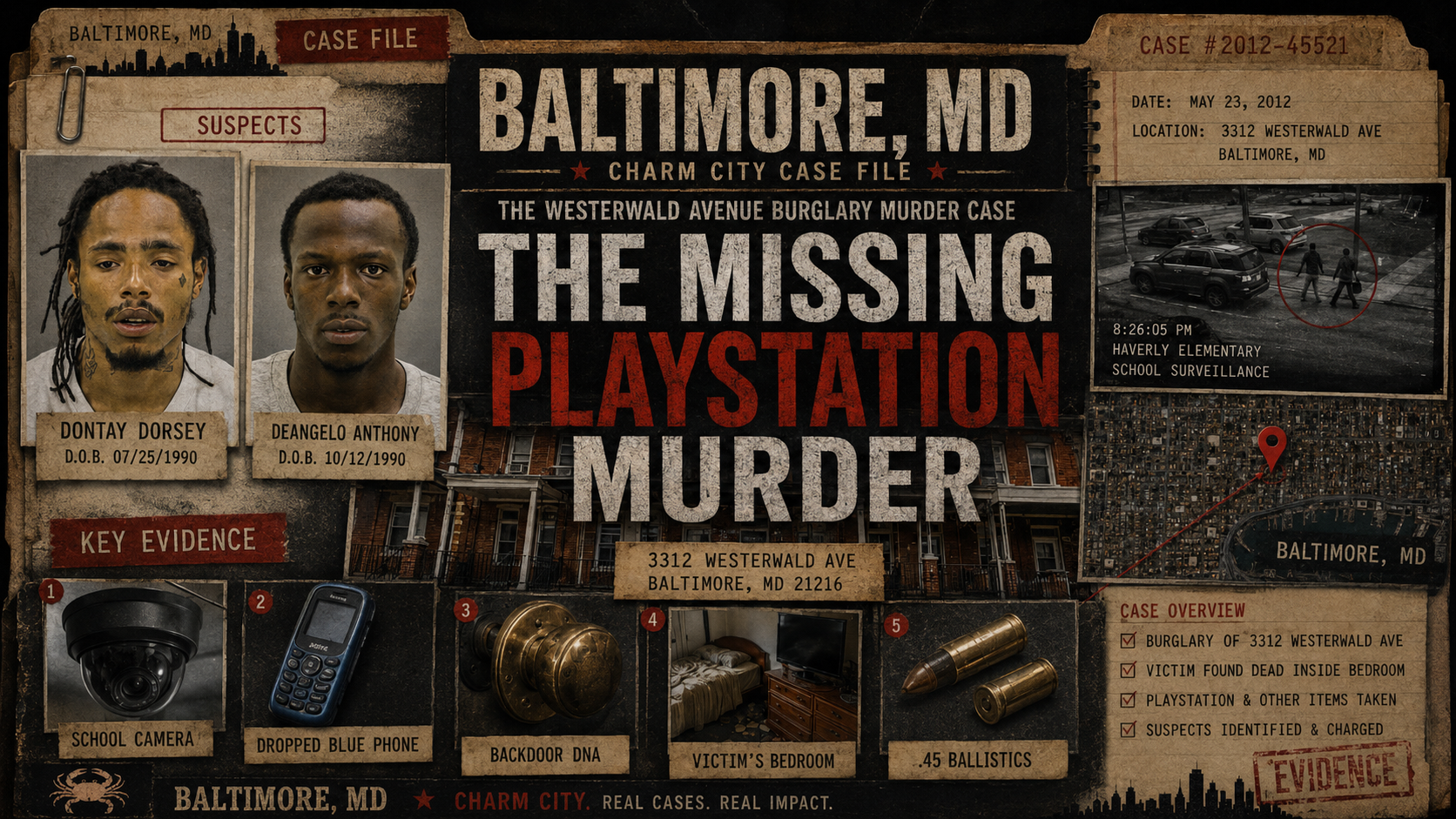
Reporting and analysis may discuss allegations and online theories. Allegations are not findings of guilt. Verify important details in the cited public record.
The Case File
On May 23, 2012, Tavon Fredrick was found dead inside his home at 3312 Westerwald Avenue in north Baltimore. The first public version of the case was simple: two men were later convicted and sentenced for a burglary murder. But the court record shows a deeper chain of evidence, built through a school surveillance camera, a neighbor watching the alley, a backdoor print, a missing PlayStation, a blue Sanyo phone, and DNA found under Fredrick’s fingernails. The Maryland appellate opinion spells the victim’s name as Tavon Fredrick, while some news reports used the spelling Frederick.
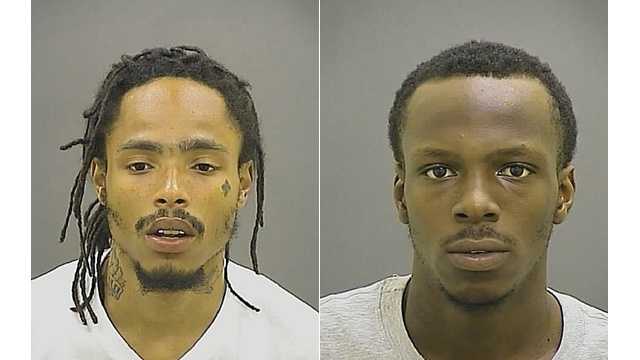
This file follows the evidence prosecutors used against Dontay Dorsey and DeAngelo Anthony. It separates the State’s theory, the witness testimony, the physical evidence, Anthony’s defense version, and the court’s final ruling. The case was not solved by one single piece of proof. It was built through a sequence of details that started outside the house, moved through the backdoor, and ended inside the second-floor bedroom.
The Night On Westerwald Avenue
The timeline began before police ever arrived. According to the appellate court record, Chasity Stanfield and Tavon Fredrick had two daughters together. On the evening of May 23, 2012, Stanfield and the children left Fredrick’s home to have dinner at a local restaurant. Before they left, Fredrick gave them $30 for dinner, and Stanfield later testified that he still had money on him after giving her the cash.
A little before 9:00 p.m., Stanfield and her daughters returned to the house. The eldest daughter went inside first. Moments later, she came back outside screaming that her father was on the floor. Stanfield ran into the house, found Fredrick unresponsive, and called 911. Officer Phillip Tabron responded to 3312 Westerwald Avenue, entered the home, went upstairs to the second-floor master bedroom, and confirmed Fredrick was deceased.
The home was no longer just a residence. By the time police entered, it had become a burglary scene, a homicide scene, and a physical evidence trail.
The State’s Theory
Prosecutors argued that the killing was connected to a robbery. The State’s theory was that Kecco Stern, Dontre Mitchell, Dontay Dorsey, and DeAngelo Anthony knew Fredrick sold marijuana, planned to rob him of drugs and cash, and that Fredrick was murdered during the course of that robbery. The jury later convicted Dorsey and Anthony of murder, burglary, robbery with a dangerous weapon, firearm-related charges, and handgun charges, but the jury did not find them guilty of conspiracy.
That difference matters. The State argued a group robbery plan. The jury convicted on the murder, robbery, burglary, and weapon counts. But the court record does not allow the conspiracy allegation to be treated as a proven conviction.
The People Inside The Timeline
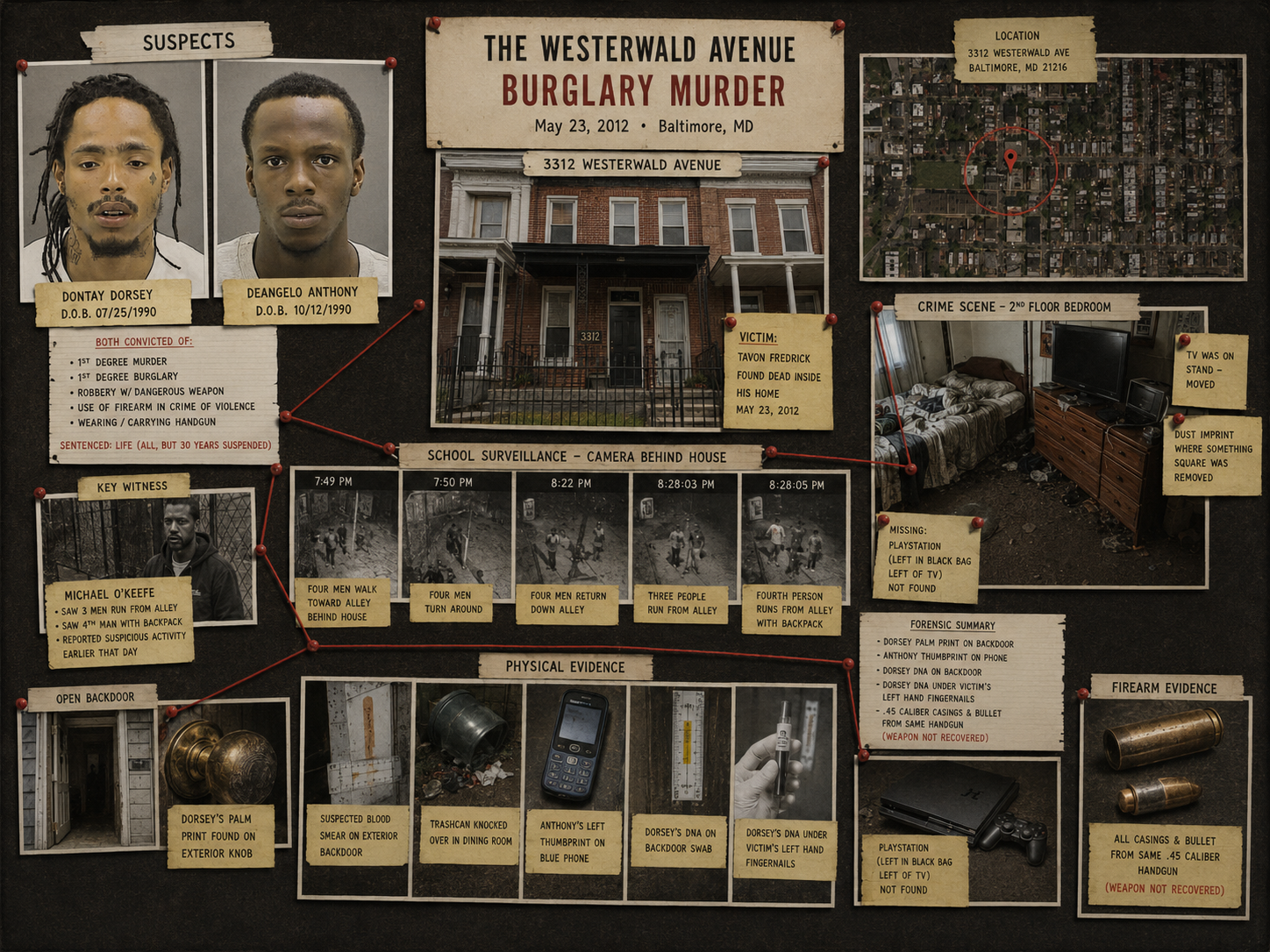
The court record names several people who helped establish what Fredrick had in the house, how the house was normally used, and what was missing after the killing.
Gregory Hopkins, a longtime friend of Fredrick, testified that he went to Fredrick’s home around 3:00 p.m. that day and left about 20 minutes later. Hopkins said Fredrick’s PlayStation was normally hooked up to the left side of the TV and described Fredrick as an avid gamer. Hopkins also testified that Fredrick sold marijuana only from his home and only to friends or people he knew.
Michael McNeill, another longtime friend, gave the PlayStation evidence more weight. McNeill testified that he arrived at Fredrick’s home as Stanfield and the children were leaving for dinner. He said Fredrick was left-handed and kept the PlayStation to the left of the TV in a black bag. McNeill said he saw the PlayStation that night. He also described the backdoor as a door no one used, except when Fredrick took out the trash.
Those details became important later. The PlayStation was not found in the house after the murder. The backdoor was open. The trashcan near that backdoor was knocked over. And Dorsey’s palm print was found on the exterior doorknob.
The School Camera Timeline
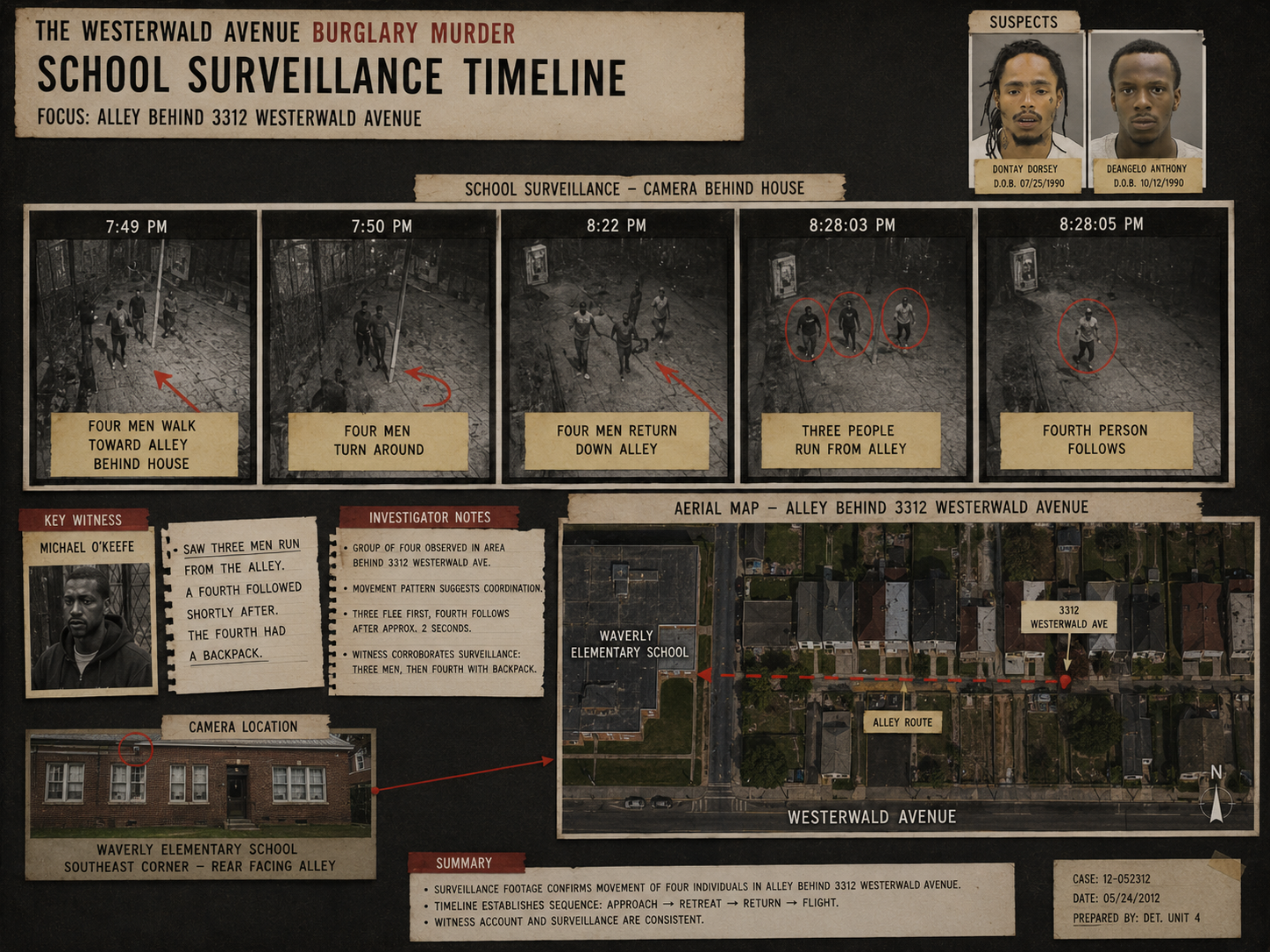
The strongest movement timeline came from Waverly Elementary and Middle School. Brian Hoffman, a technology specialist at the school, pulled surveillance footage from the night of the murder. One camera monitored the alley bordering the backyard of Fredrick’s home.
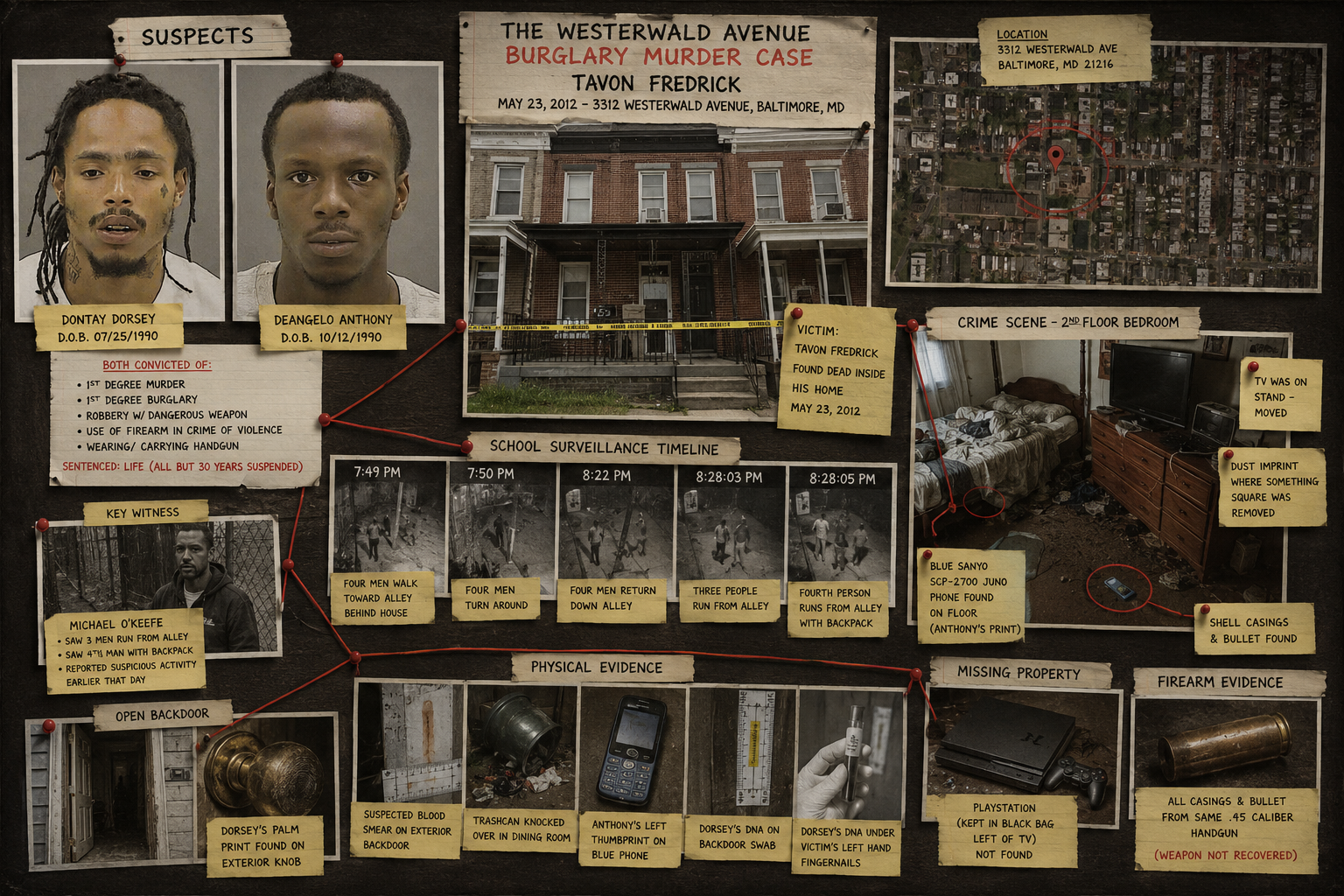
At 7:49 p.m., the camera captured four men walking toward the alley behind Fredrick’s house. At 7:50 p.m., they turned around. At 8:22 p.m., the same four men were captured walking down the alley behind the house. According to the State, the men then jumped the fence into Fredrick’s yard. At 8:28:03 p.m., three people reappeared in the alley, running toward the main road. Two seconds later, at 8:28:05 p.m., a fourth person appeared behind them, also moving toward the main road.
The camera did not need to show every detail inside the home. It gave the State a narrow window: the men behind the house, the movement toward the yard, the short gap, and the run back out of the alley.
The Neighbor In The Alley
Michael O’Keefe, Fredrick’s neighbor, added a ground-level view to the school camera timeline. He testified that he was outside looking for his cat when he saw three men run from the back alley behind Fredrick’s house. He said they ran fast through the alley. Moments later, he saw a fourth man exit the alley with a backpack.
O’Keefe also said he had seen the same four men earlier that day walking suspiciously around the neighborhood and had reported them to police. He could only identify Anthony as one of the four men. That identification did not place Anthony alone at the center of the case. Instead, it placed him inside the same group the State said appeared on the school surveillance footage.
The backpack detail became one of the most important facts in the robbery theory. McNeill had testified that Fredrick kept his PlayStation in a black bag. The PlayStation was missing after the murder. O’Keefe saw one of the men leave with a backpack. The court later found that a rational jury could infer Fredrick’s PlayStation was taken that night.
The Crime Scene
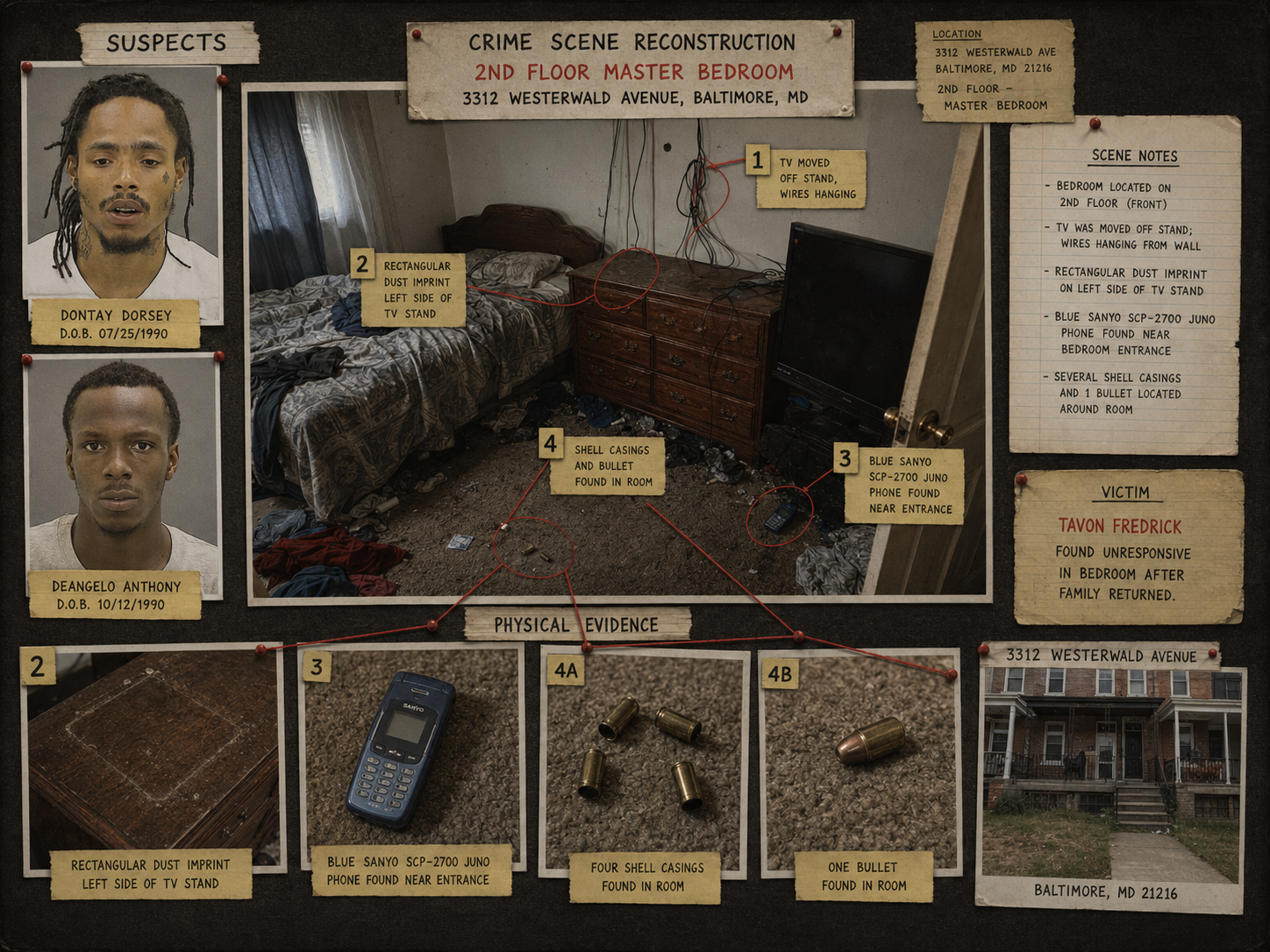
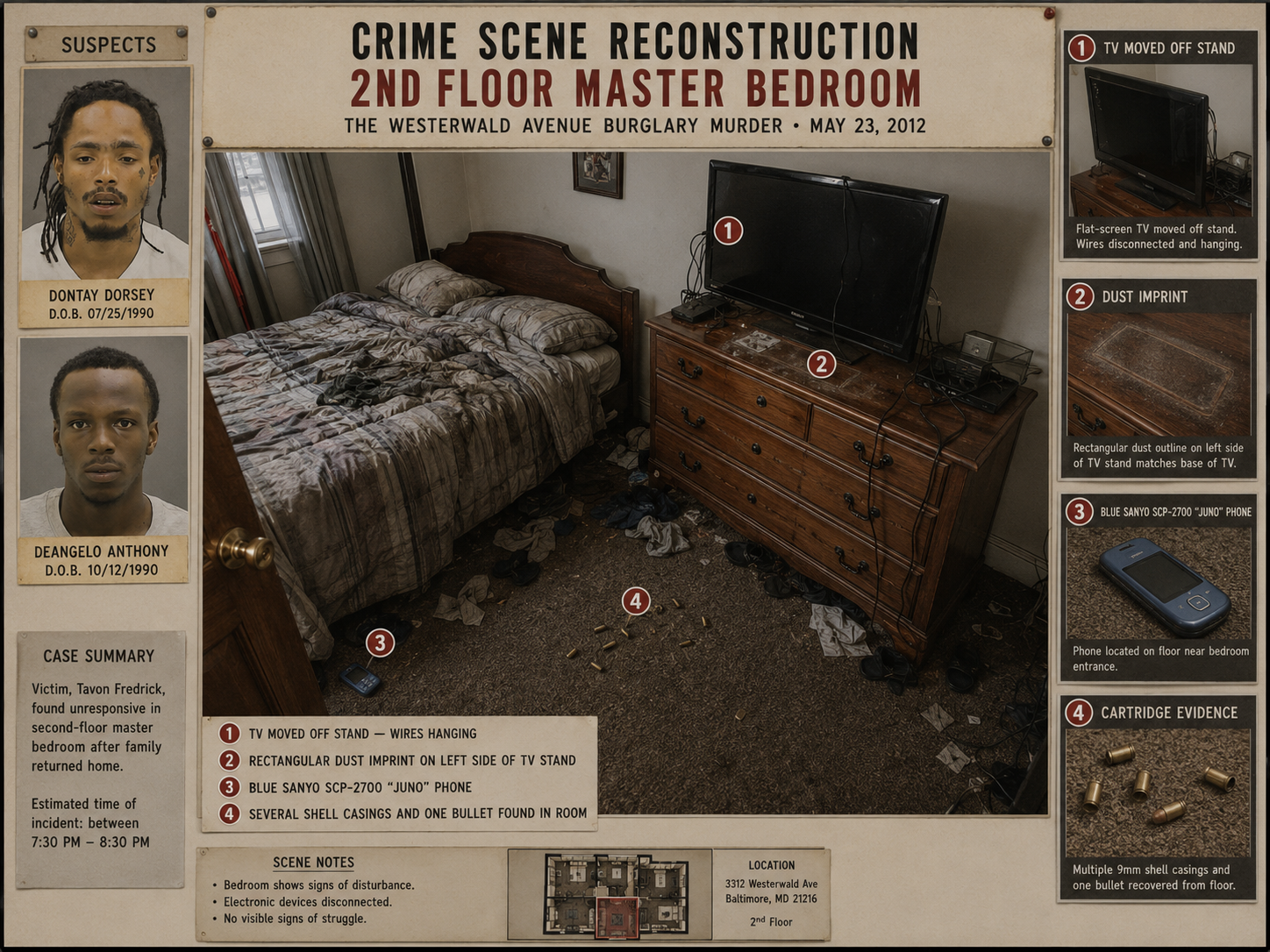
Inside the home, investigators found a scene that supported more than a simple shooting. Crime lab technicians documented the first floor and second floor. The first level showed an open backdoor leading into the dining room. A filled trashcan had been knocked over in the dining room, and the exterior of the backdoor showed what a crime lab technician suspected was a blood smear.
The second-floor master bedroom carried the main evidence. The TV was no longer on its stand. Wires were dangling from the back of it. The TV stand showed a dust imprint where the television had been, and another rectangular dust imprint sat on the far left side of the stand. Several shell casings and one bullet were found throughout the room. Investigators also found three cellphones, including a blue Sanyo SCP-2700 Juno lying near the bedroom entrance.
The room told investigators what had changed. The TV had been moved. Something square appeared to be missing from the left side of the TV stand. The PlayStation that witnesses placed there earlier was gone. The blue phone on the floor would later become one of the clearest physical links to Anthony.
The Missing PlayStation
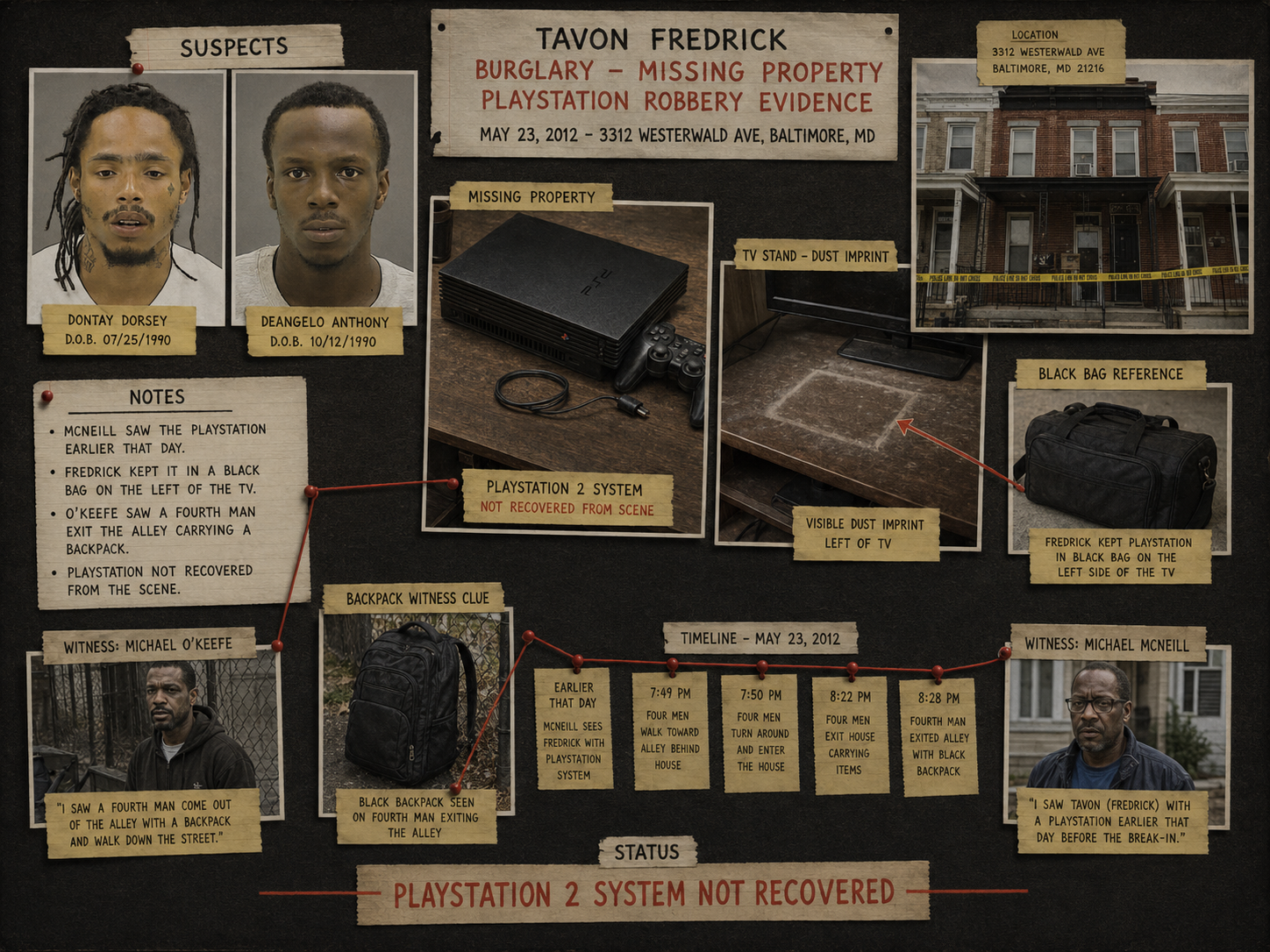
The missing PlayStation became the piece of property that tied the robbery charge together. The defense argued that the State had not proven any marijuana, money, or PlayStation was stolen. But the appellate court focused on the PlayStation evidence.
McNeill testified that he saw the PlayStation in Fredrick’s home on the day of the murder and said Fredrick kept it in a black bag. O’Keefe testified that he saw one of the four men leave the alley carrying a backpack. Crime scene photos showed a dust imprint to the left of the TV stand where something square had rested. McNeill had placed the PlayStation on that side of the TV because Fredrick was left-handed. When police searched the house, they did not find the PlayStation.
The court did not need to prove every item prosecutors believed was taken. It ruled that the PlayStation evidence alone was enough for a rational jury to infer that the item had been stolen from Fredrick on the night of the murder.
That is why this case works as more than a sentencing article. The theft was not proven through one witness saying, “I saw him steal it.” It was built through placement, absence, a dust imprint, and a man leaving the alley with a bag.
The Phone Left Behind
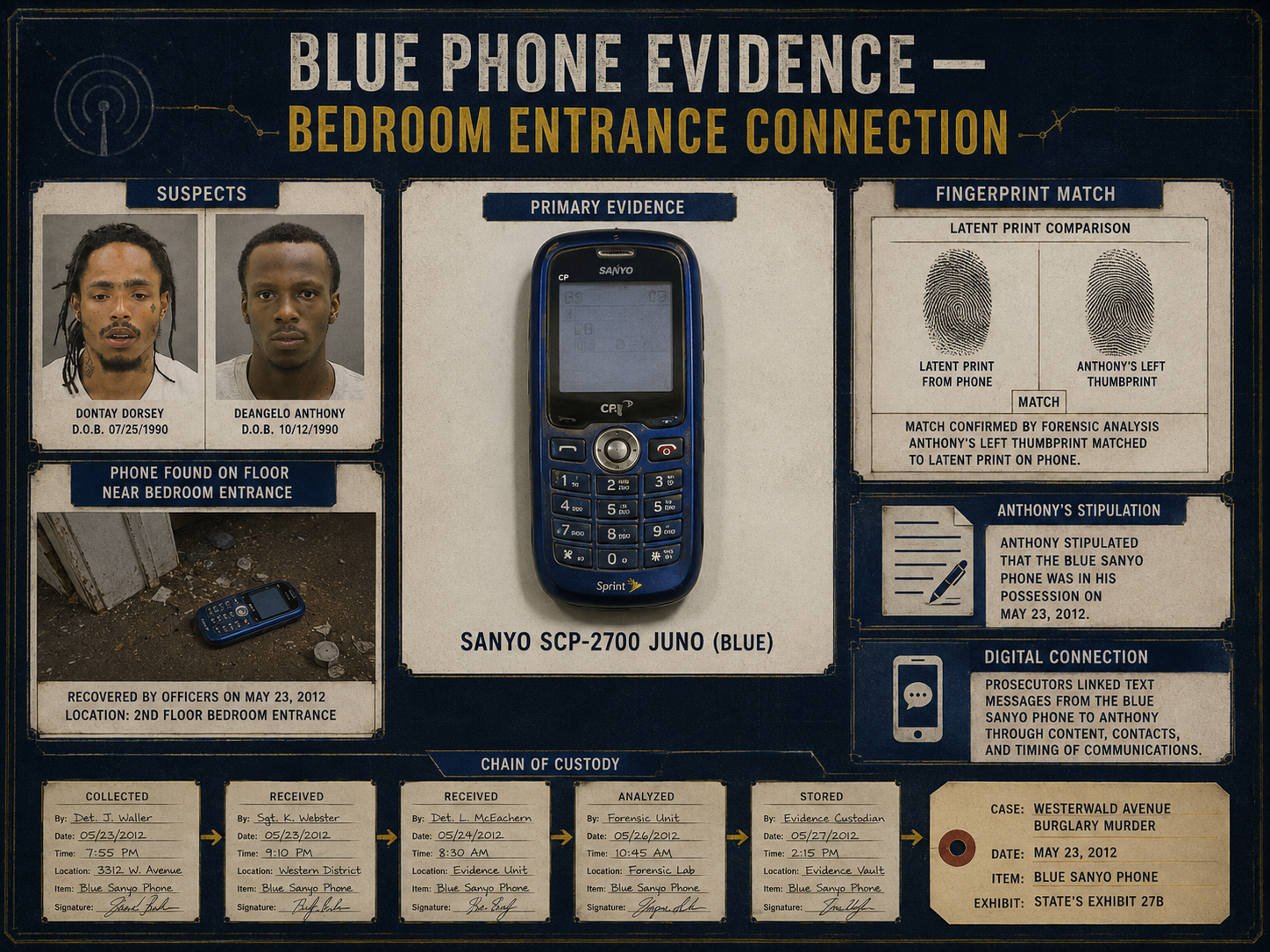
The blue Sanyo phone became Anthony’s physical connection to the bedroom. Crime lab technicians collected fingerprints from the phone and from the exterior of the open backdoor. A latent fingerprint examiner testified that Anthony’s left thumbprint was identified on the blue Sanyo SCP-2700 Juno. The appellate opinion also notes that Anthony later stipulated the blue Sanyo phone was in his possession on May 23, 2012.
WBAL reported that prosecutors said a cellphone was dropped inside the house and contained text messages to and from Anthony. CBS Baltimore also reported that a cell phone found at the scene revealed texts to and from Anthony, according to prosecutors.
The phone mattered because it did not sit outside in the alley. It was found near the bedroom entrance, inside the room where Fredrick was killed.
The Backdoor Evidence
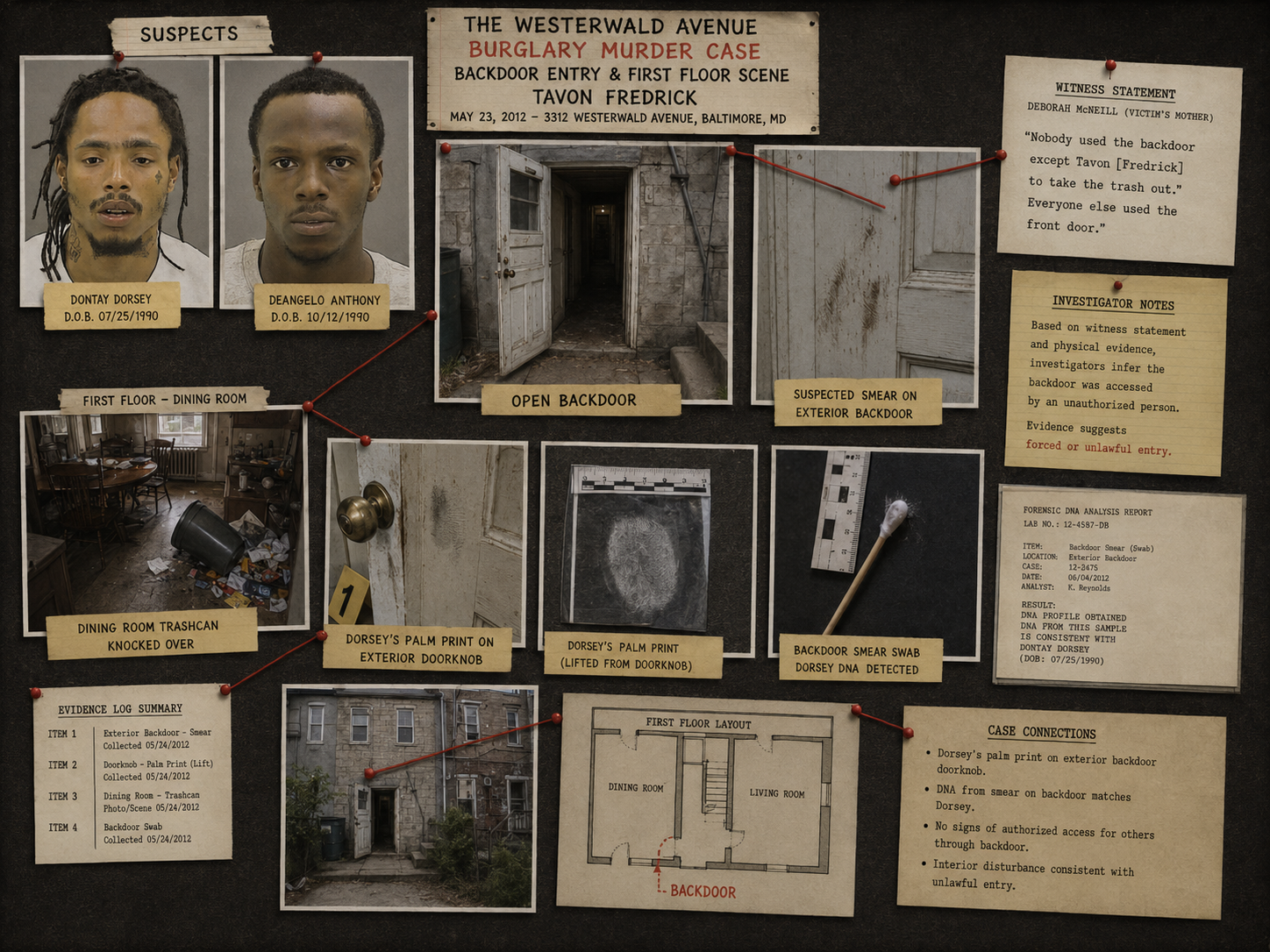
The backdoor was one of the most contested parts of the burglary conviction. The defense argued the State had not proven an actual or constructive breaking. The appellate court rejected that argument.
The State pointed to several details. Dorsey’s palm print was found on the exterior doorknob of the backdoor. McNeill testified that nobody used that backdoor except Fredrick when he took out the trash. The trashcan appeared to have been knocked into the dining room when someone opened the door. The bedroom was in disarray. Taken together, the court ruled that a rational jury could infer an actual breaking occurred.
That backdoor was not just an entry point. It became the physical answer to how the State placed Dorsey at the house and how the court upheld the burglary conviction.
DNA, Prints, And The Evidence Chain
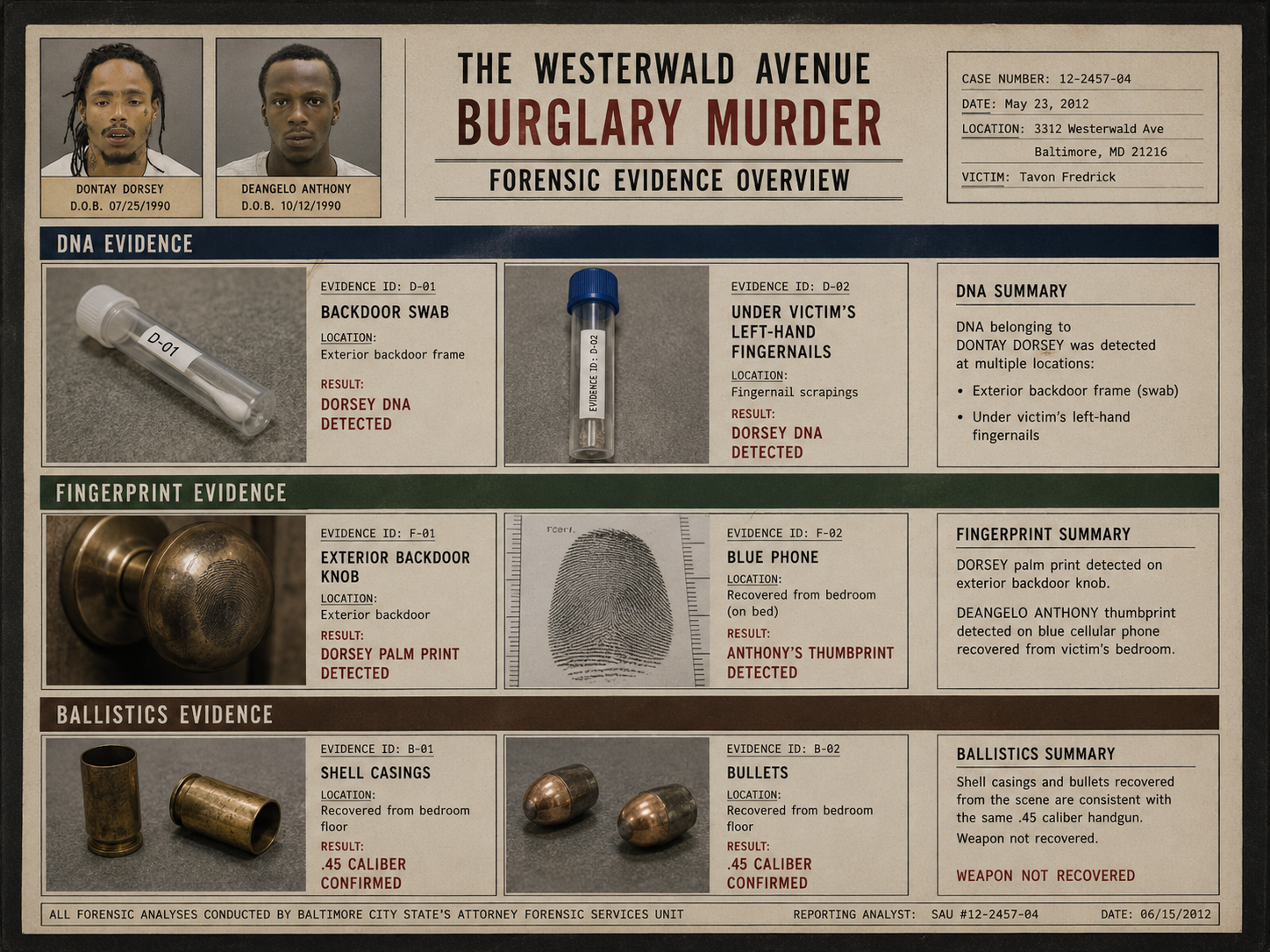
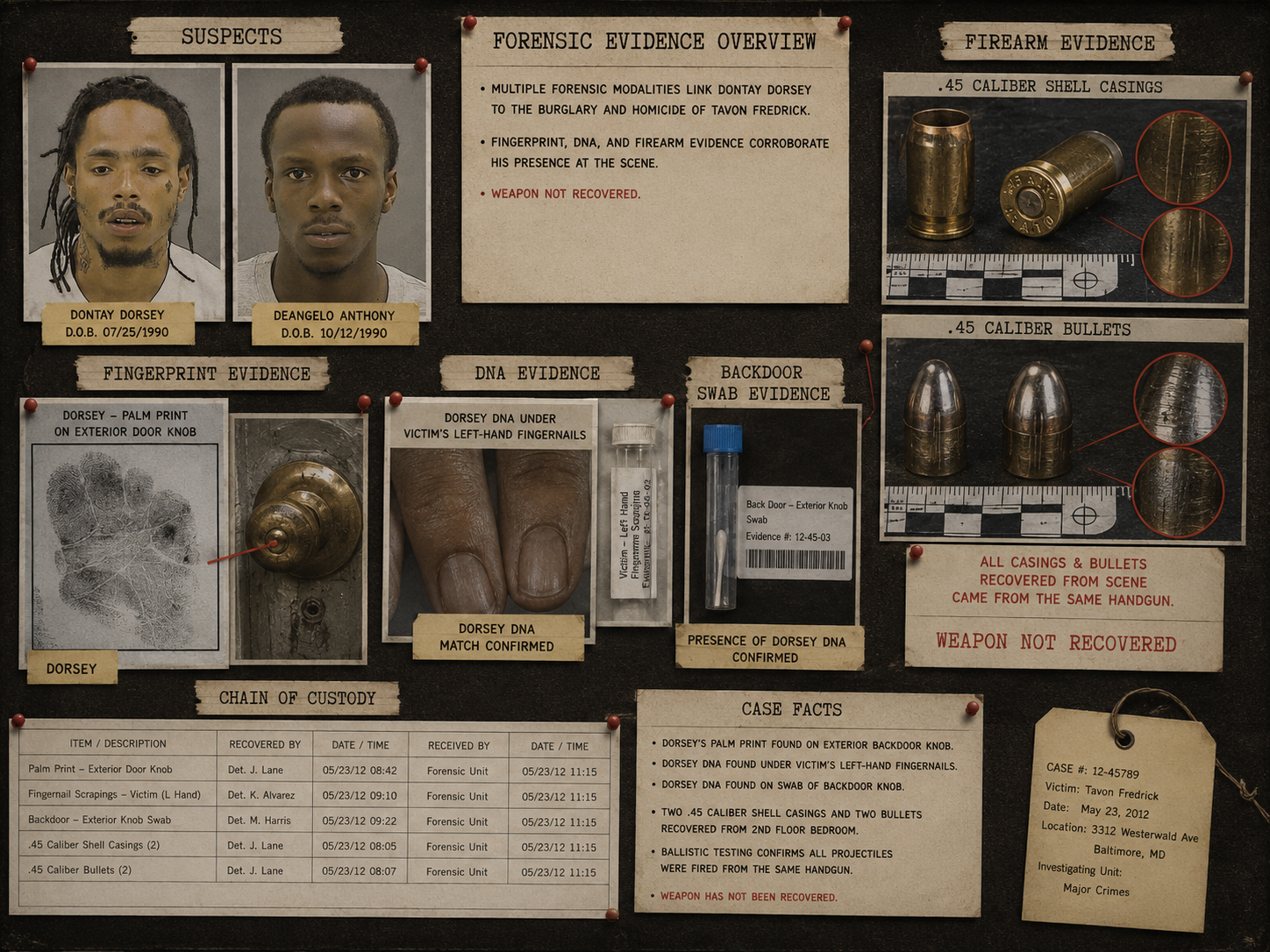
The physical evidence placed Dorsey and Anthony in different parts of the same scene. Dorsey’s right palm print was identified on the exterior backdoor knob. Anthony’s left thumbprint was identified on the blue Sanyo phone found near the bedroom entrance. DNA testing found a mixture of Fredrick and Dorsey’s DNA on a swab collected from the backdoor. Testing of Fredrick’s left-hand fingernail clippings also found Dorsey’s DNA.
The firearm evidence gave investigators the weapon type, but not the weapon itself. A firearms examiner determined that the shell casings and bullets recovered from the autopsy and from the bedroom came from the same .45 caliber handgun. The .45 caliber handgun was never recovered, and database searches did not reveal any matches.
The court record did not say police recovered the murder weapon. It says the opposite. The weapon disappeared. What remained were casings, bullets, prints, DNA, the phone, the backdoor, the school camera, and witness testimony.
The Autopsy Findings
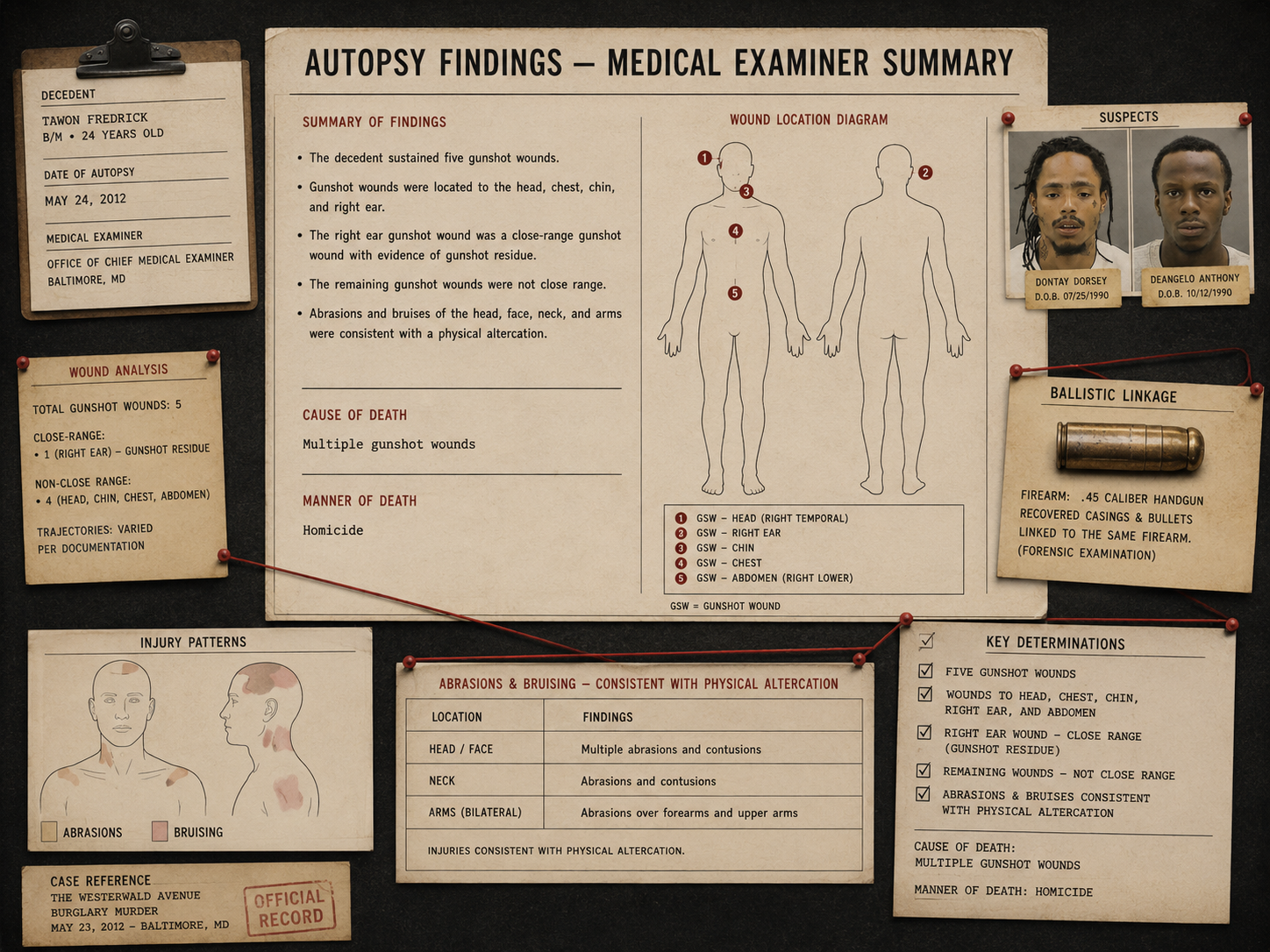
Assistant Medical Examiner James Locke testified that Fredrick sustained five gunshot wounds. The court record described wounds to the head, chest, chin, and right ear. Locke testified that most of the wounds were not fired at close range, but the wound to the right ear was close range because of residue near the wound. He also testified that Fredrick had abrasions and bruises that could be consistent with a physical altercation. The cause of death was multiple gunshot wounds, and the manner of death was homicide.
News reports summarized the shooting as four shots, including shots to the head and chest. The appellate opinion gives the fuller medical testimony, including the graze wound and the close-range finding.
Anthony’s Testimony
Anthony took the stand in his own defense after the State rested. His version was different from the State’s theory.
Anthony testified that he and Dontre Mitchell were close friends, that he also knew Dorsey and Stern, and that all four men had been at the viewing of a recently deceased friend earlier that day. He said he and Mitchell arranged to buy marijuana from Fredrick, and that they met Dorsey and Stern on the way. According to Anthony, the four men walked around the school while waiting for Fredrick’s children to leave. He said Fredrick called Mitchell after the children left.
Anthony claimed they went to the backdoor, Fredrick greeted them, and they went upstairs after Fredrick offered them high-grade marijuana. Anthony said he went to use the bathroom, heard commotion, and heard Fredrick asking where his money was. He testified that when he came out, Fredrick had a gun, Dorsey tried to grab it, there was a struggle, the gun fell, Stern picked it up, Fredrick moved toward Stern, and Anthony heard a shot before running.
That was Anthony’s testimony. The jury was not required to accept it. On cross-examination, Anthony admitted that the four men shown on the school surveillance video were Dorsey, Mitchell, Stern, and himself. He also said that when they went upstairs, Fredrick laid marijuana out on the bed and it had a strong smell.
The Court’s View Of The Defense Version
The appellate court did not retry the case. It reviewed whether the evidence was legally sufficient for the convictions. That meant the evidence had to be viewed in the light most favorable to the prosecution, and the court did not reweigh witness credibility.
The court accepted that a jury could reject Anthony’s claim that the men entered with Fredrick’s consent. The backdoor evidence, the trashcan, the disarray in the bedroom, the school camera, and the physical evidence gave the jury enough to infer that the entry was not innocent and that the burglary happened in furtherance of the robbery.
v
The court also ruled that the evidence supported the robbery conviction because the PlayStation was seen before the murder, was missing afterward, and was connected to the backpack detail and the dust imprint near the TV.
The Convictions
On March 19, 2015, the jury found Dorsey and Anthony guilty of first-degree murder, first-degree burglary, robbery with a dangerous weapon, two counts of use of a firearm in the commission of a crime of violence, and two counts of wearing, carrying, or transporting a handgun. Dorsey was also found guilty of possession of a regulated firearm after a disqualifying conviction and another handgun count. The jury did not convict either man of conspiracy.
On May 1, 2015, both men were sentenced to life imprisonment with all but 30 years suspended for felony murder. The other convictions were either merged for sentencing or given concurrent sentences. They also received five years of probation upon release. WBAL and CBS both reported the life sentence with all but 30 years suspended.
The Appeal
Dorsey and Anthony challenged whether the evidence was sufficient to sustain the convictions. The appeal focused on whether the State had proven the robbery, burglary, weapons counts, and felony murder. The Court of Special Appeals of Maryland upheld the convictions and affirmed the judgments of the Circuit Court for Baltimore City.
The ruling did not erase the defense version from the record. It showed why the jury had enough evidence to reject it.
Official Facts Versus Prosecutor Claims
The official court record proves that Fredrick was found dead inside the second-floor master bedroom at 3312 Westerwald Avenue, that the school camera captured four men near the alley behind the house, that a neighbor saw men run from the alley, that one man carried a backpack, that Fredrick’s PlayStation was missing, that Dorsey’s palm print was found on the exterior backdoor knob, that Anthony’s thumbprint was found on the blue Sanyo phone, and that Dorsey’s DNA was found on the backdoor and under Fredrick’s fingernails.
The State’s theory was that the men knew Fredrick sold marijuana and planned to rob him of drugs and cash. That was the prosecution’s theory. The jury convicted on murder, robbery, burglary, and weapon charges, but not conspiracy.
News reports said prosecutors claimed Dorsey and Anthony stole Fredrick’s PlayStation, money, and marijuana. The appellate court’s robbery analysis focused on the PlayStation because it found the PlayStation evidence sufficient without needing to decide whether the State also proved cash or marijuana was taken.
The Final Breakdown
The Westerwald Avenue case did not turn on one dramatic confession or one perfect video. It turned on pieces that matched each other.
A school camera placed four men behind the house. A neighbor saw men run from the alley and saw one leave with a backpack. A friend placed the PlayStation in a black bag beside the TV before the murder. Crime scene photos showed a square dust imprint where something had been. Police did not find the PlayStation. Dorsey’s palm print was on the backdoor. Anthony’s thumbprint was on a phone inside the bedroom. Dorsey’s DNA was found on the backdoor and under Fredrick’s fingernails. The same .45 caliber handgun connected the bullets and casings, but the gun itself was never recovered.
The headline was that two men were sentenced. The deeper file is how the case survived appeal: not because every unanswered question disappeared, but because the evidence gave the jury enough to connect the alley, the backdoor, the bedroom, the missing PlayStation, the phone, and the DNA into one burglary-murder chain.


