Reporting and analysis may discuss allegations and online theories. Allegations are not findings of guilt. Verify important details in the cited public record.
THE FEDERAL CASE THAT HIT TWO CITIES AT ONCE
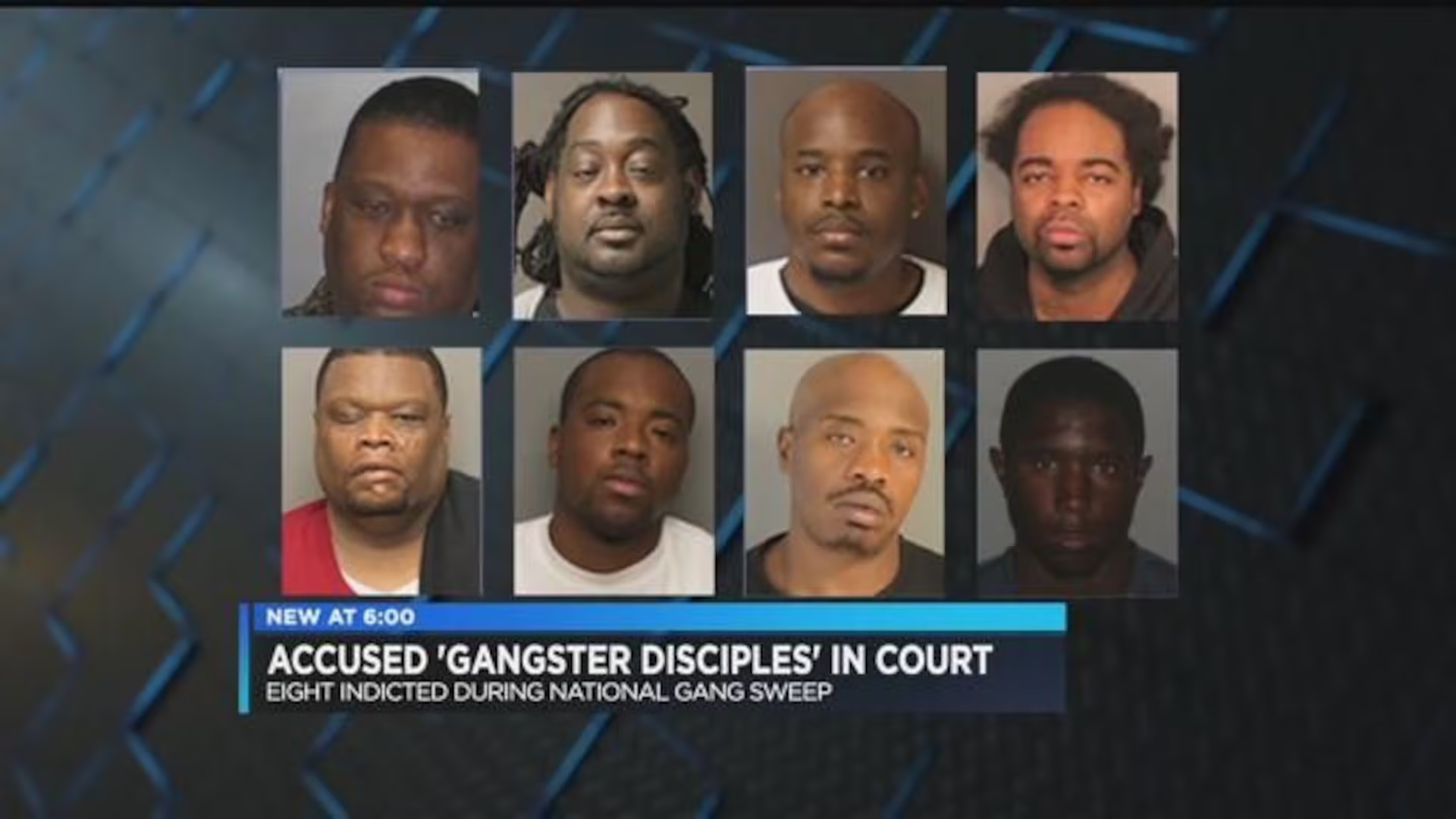
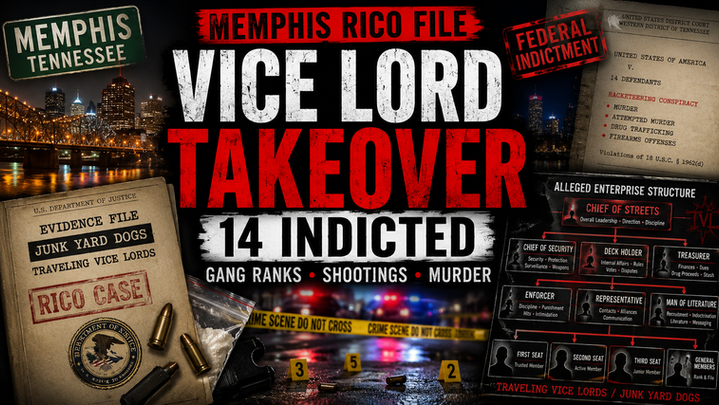
In May 2016, federal prosecutors unsealed one of the largest Gangster Disciples racketeering cases ever brought in the Southeast. The case stretched across Memphis, Atlanta, Chicago, Tennessee, Georgia, Alabama, Kansas, Colorado, Michigan, Wisconsin, and multiple other states. According to the Department of Justice, the Gangster Disciples were operating as a nationwide criminal organization with governors, chief enforcers, security teams, ranking systems, disciplinary crews, and violent punishment orders that included shootings, beatings, kidnappings, and murder.
OPERATION .38 SPECIAL IN MEMPHIS
The Memphis portion of the case became known as Operation .38 Special. Federal prosecutors charged 16 alleged Gangster Disciples members in West Tennessee. At the center of the case was Byron Montrail Purdy, also known as “Lil B” and “Ghetto,” who prosecutors identified as the Governor of Tennessee for the Gangster Disciples. The indictment claimed Purdy coordinated gang activity throughout Tennessee while supervising subordinate members and enforcing Gangster Disciple rules.
THE TENNESSEE STRUCTURE
The paperwork described the Tennessee structure as divided by area codes, including Memphis as “901,” Nashville as “615,” Jackson as “731,” Chattanooga as “423,” Knoxville as “865,” and Columbia as “931.” Federal prosecutors alleged that each section had its own hierarchy while still answering to higher-ranking GD leadership.
THE KEY MEMPHIS FIGURES
Another major figure named in the paperwork was Derrick Kennedy Crumpton, also known as “38.” Prosecutors identified Crumpton as either the Governor or Assistant Governor at different times and accused him of supervising violent retaliation attacks and directing lower-ranking members. Demarcus Crawford, also known as “Trip,” was later identified by prosecutors as the Tennessee Chief Enforcer. According to federal authorities, the Chief Enforcer role involved carrying out violent discipline, retaliation, and attacks against rivals or disloyal members.
DRUG TRAFFICKING AND MONEY
The indictment alleged that the organization made money through large-scale drug trafficking involving cocaine, crack cocaine, heroin, marijuana, and prescription pills. Prosecutors claimed members also committed robberies, assaults, witness intimidation, fraud schemes, and weapons offenses to generate income and maintain power. But the most disturbing parts of the paperwork involved the violence allegedly used to maintain rank and discipline inside the organization.
THE MEMPHIS SHOOTING AND TORTURE ALLEGATIONS
One section of the indictment alleged that on June 23, 2010, Byron Purdy used a firearm to shoot and attempt to kill a rival gang member in Tennessee. Another section alleged that on June 24, 2012, Tommy Champion Jr., also known as “Duct Tape,” kidnapped and tortured an individual believed to be associated with a rival gang. Federal prosecutors claimed that violence was often used as a method of punishment or intimidation against rivals and suspected informants.
THE 2013 MURDER ORDERS
The 2013 allegations became even darker. Prosecutors alleged that Derrick Crumpton ordered subordinate Gangster Disciple members to murder a rival gang member. Around that same period, the indictment alleged that multiple GD members conspired to locate and kill rival “Grip” gang members. According to the paperwork, retaliation and violence were viewed as necessary for members to maintain respect, power, and rank within the organization.
THE FEBRUARY 2015 WITNESS RETALIATION ALLEGATION
One of the strongest sections of the federal paperwork involved events from February 2015. Prosecutors alleged that Byron Purdy and Daniel Cole gathered subordinate members together and ordered them to kill an individual who refused to recant statements previously made to law enforcement. The indictment claimed the target was believed to be cooperating with authorities or providing information harmful to the gang. Federal prosecutors further alleged that on the same day, Purdy used a firearm to shoot at multiple people inside a fleeing vehicle because the Gangster Disciples believed the occupants had reported gang activity to police.
THE CHICAGO CONFRONTATION ANGLE
Another detail buried inside the paperwork connected Memphis directly back to Chicago. According to the indictment, on April 24, 2015, Purdy and Crawford allegedly ordered armed subordinate members to travel from Tennessee to Chicago to confront Gangster Disciple leadership there. That allegation became one of the most talked-about portions of the case because it suggested tensions, disputes, or power struggles involving leadership between Tennessee and Chicago factions of the organization.
THE MEMPHIS SENTENCES
Federal authorities eventually secured major prison sentences against key defendants. Byron Purdy was sentenced to 360 months in federal prison. Prosecutors described him as the Tennessee Governor responsible for overseeing criminal activity throughout the state. Demarcus Crawford later received a 300-month sentence after prosecutors stated he admitted to ordering retaliatory shootings against rival gang members in order to maintain his position and authority inside the Gangster Disciples.
THE ATLANTA RICO INDICTMENT
At the same time the Memphis case was unfolding, federal prosecutors in Atlanta unsealed an even larger Gangster Disciples indictment. The Atlanta indictment charged 32 alleged members and associates under federal RICO laws. According to the Department of Justice, the Georgia indictment involved allegations tied to 10 murders, 12 attempted murders, robberies, extortion schemes, fraud operations, drug trafficking, and firearms offenses. Prosecutors alleged the gang generated more than $450,000 through fraud schemes while simultaneously operating violent street-level enforcement crews.
THE HATE COMMITTEE AND BLACC TEAM
The Atlanta paperwork described Gangster Disciple leadership structures involving governors, boards, enforcers, and disciplinary units. One of the most infamous details involved enforcement groups allegedly called the “HATE Committee” and the “BLACC Team.” According to federal prosecutors, these groups were allegedly responsible for enforcing rules, punishing violations, assaulting members, and carrying out violent retaliation. The indictment described “greenlights” being issued against individuals who violated gang rules or threatened the organization.
VIOLENCE USED TO BUILD RANK
Federal prosecutors alleged that members who disobeyed orders could be fined, beaten, stabbed, or murdered. The indictment also claimed members were expected to “put in work” to earn status and maintain rank. Prosecutors argued that violent acts increased respect and influence inside the organization, while failure to retaliate could result in punishment.
THE ATLANTA MURDER ALLEGATIONS
One of the murder allegations inside the Atlanta indictment involved the July 2, 2011 killing of Derek George Gray Jr. Prosecutors alleged Gray was shot and killed after a robbery attempt connected to a drug transaction escalated into violence. Another section of the indictment focused on July 1, 2015, when prosecutors alleged Donald Glass encouraged another Gangster Disciple member associated with the HATE Committee to shoot a rival Bloods member following an earlier confrontation. According to the indictment, DeMarco Franklin was later shot and killed because GD members believed he was connected to rival Bloods activity.
THE STONE MOUNTAIN INN SHOOTING
Another violent incident allegedly occurred on July 3, 2015, at the Stone Mountain Inn in Georgia. Prosecutors alleged multiple Gangster Disciple members planned to rob a drug dealer staying at the hotel. According to the indictment, the suspects returned to the hotel, opened fire, killed Edward Chadmon, and wounded another individual during the robbery attempt.
THE RAP INDUSTRY EXTORTION ANGLE
The Atlanta indictment also contained a rap-industry angle that attracted attention online. Federal prosecutors alleged that Gangster Disciple members threatened a rapper with violence unless he paid money for using Gangster Disciple names, symbols, and references in his music. That detail fueled online discussions about how deeply organized gangs were allegedly influencing street music, branding, and image culture at the time.
THE NATIONWIDE GANG STRUCTURE
Federal authorities described the Gangster Disciples as operating across numerous states including Georgia, Tennessee, Illinois, Michigan, Alabama, Colorado, Wisconsin, Kansas, and California. Prosecutors claimed the organization maintained communication through meetings, coded language, discipline structures, and coordinated criminal activity extending beyond one city or state. The simultaneous indictments in Memphis and Atlanta became one of the clearest examples of federal prosecutors treating a modern street gang like a nationwide organized-crime network.
REDDIT AND ONLINE DISCUSSION ANGLES
Online discussions surrounding the indictment focused heavily on how structured the Gangster Disciples allegedly appeared in federal paperwork. Some Reddit users compared the hierarchy and enforcement structure to organized crime syndicates rather than local neighborhood gangs. Others focused on the allegations involving governors, enforcers, disciplinary committees, and interstate travel orders connected to gang business. A recurring topic in discussions was the allegation that Tennessee members were sent toward Chicago to confront higher-ranking leadership, which fueled theories about internal power struggles and leadership disputes within the organization.
THE STRONGEST CASE FILE ANGLE
The strongest angle for this case file is that the indictment did not read like a normal gang roundup. It read like the federal government was mapping out a street organization with corporate-style ranks, violent promotion systems, enforcement teams, interstate leadership disputes, and murder allegations tied directly to status. The Memphis side gives the case its Tennessee street-war structure. The Atlanta side gives it the RICO murder count, the HATE Committee, the BLACC Team, and the rap extortion angle. Together, they create a case file that connects Memphis, Atlanta, and Chicago through one nationwide Gangster Disciple investigation.