Reporting and analysis may discuss allegations and online theories. Allegations are not findings of guilt. Verify important details in the cited public record.
The Case File
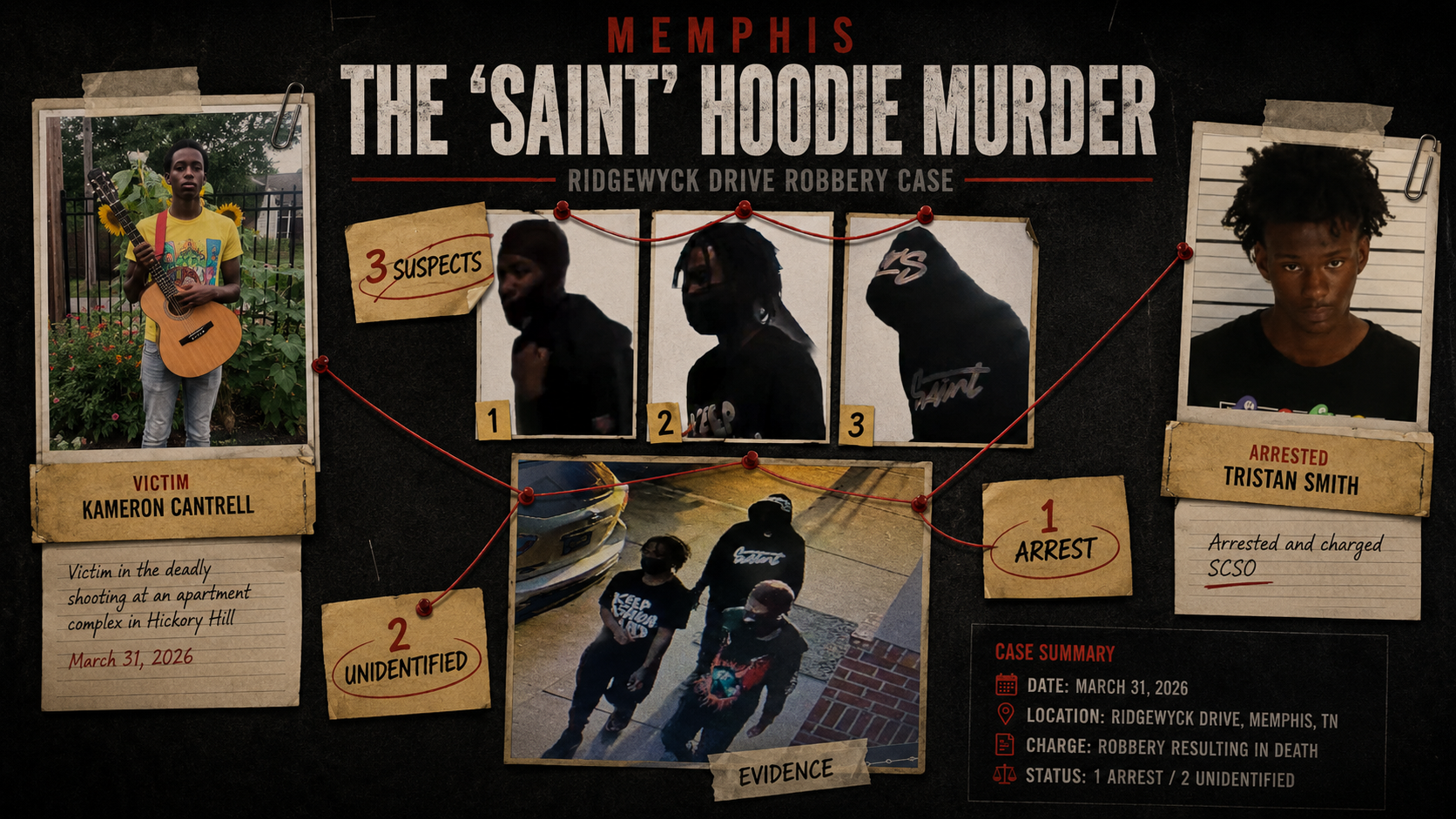
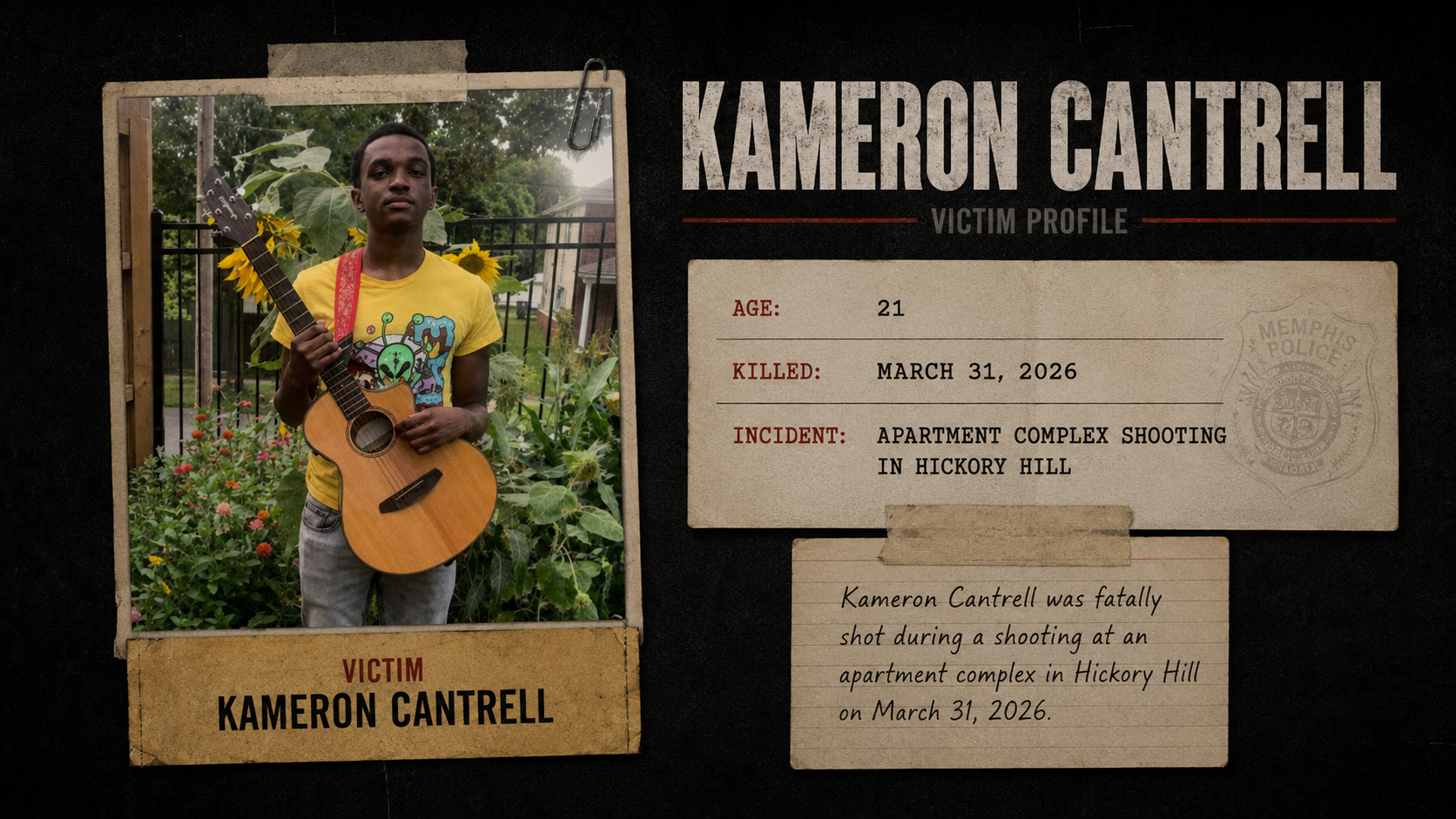
On March 31, 2026, Memphis Police were sent to the 6100 block of Ridgewyck Drive for a shooting call. The official case number attached to the department’s public release was 2603030502ME. When officers arrived, the victim was identified as Kameron Cantrell, a 21-year-old man who had been shot at an apartment complex in the Hickory Hill area of Memphis. Police later said investigators found video footage from the area and identified three individuals as persons of interest.
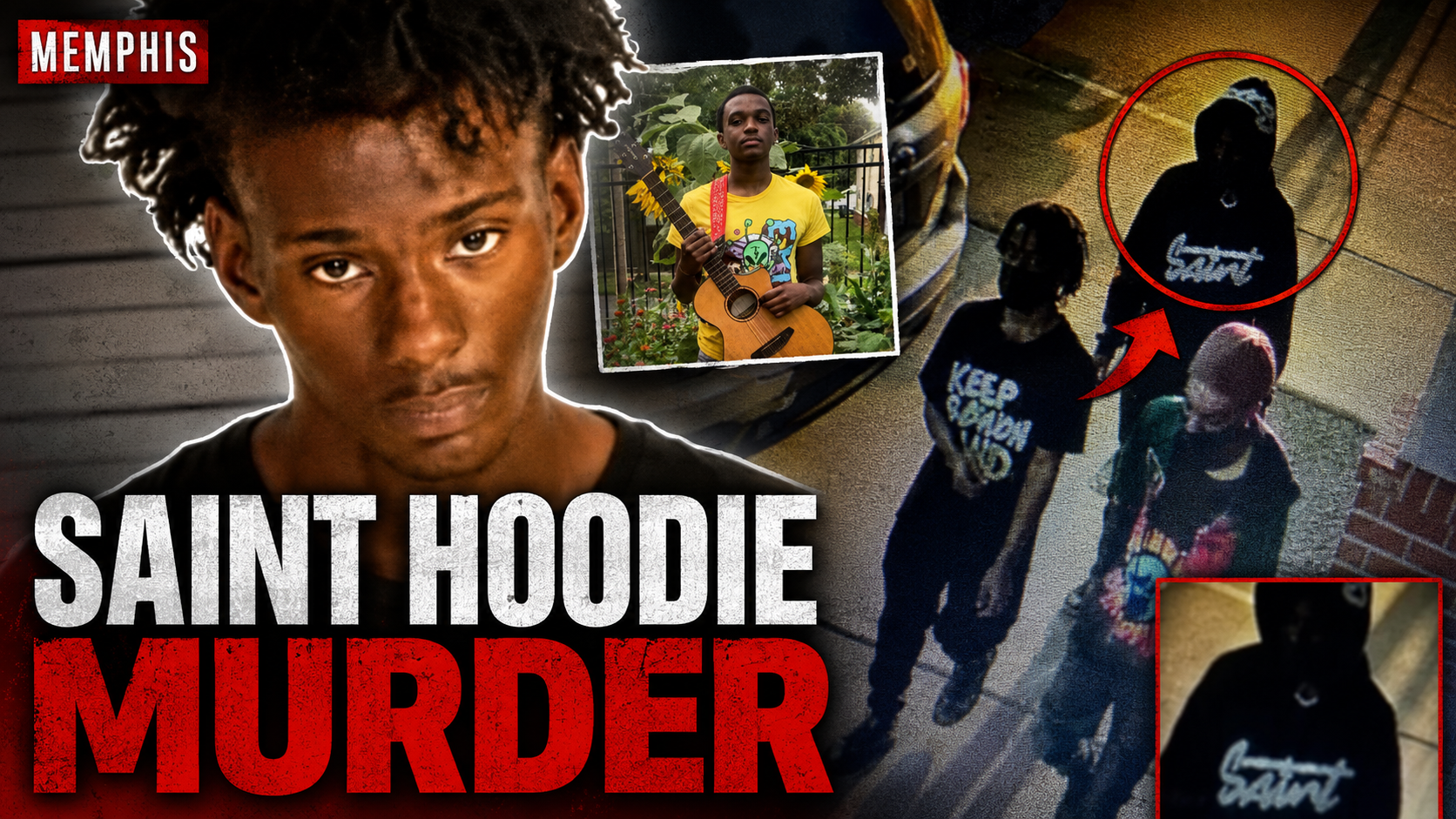
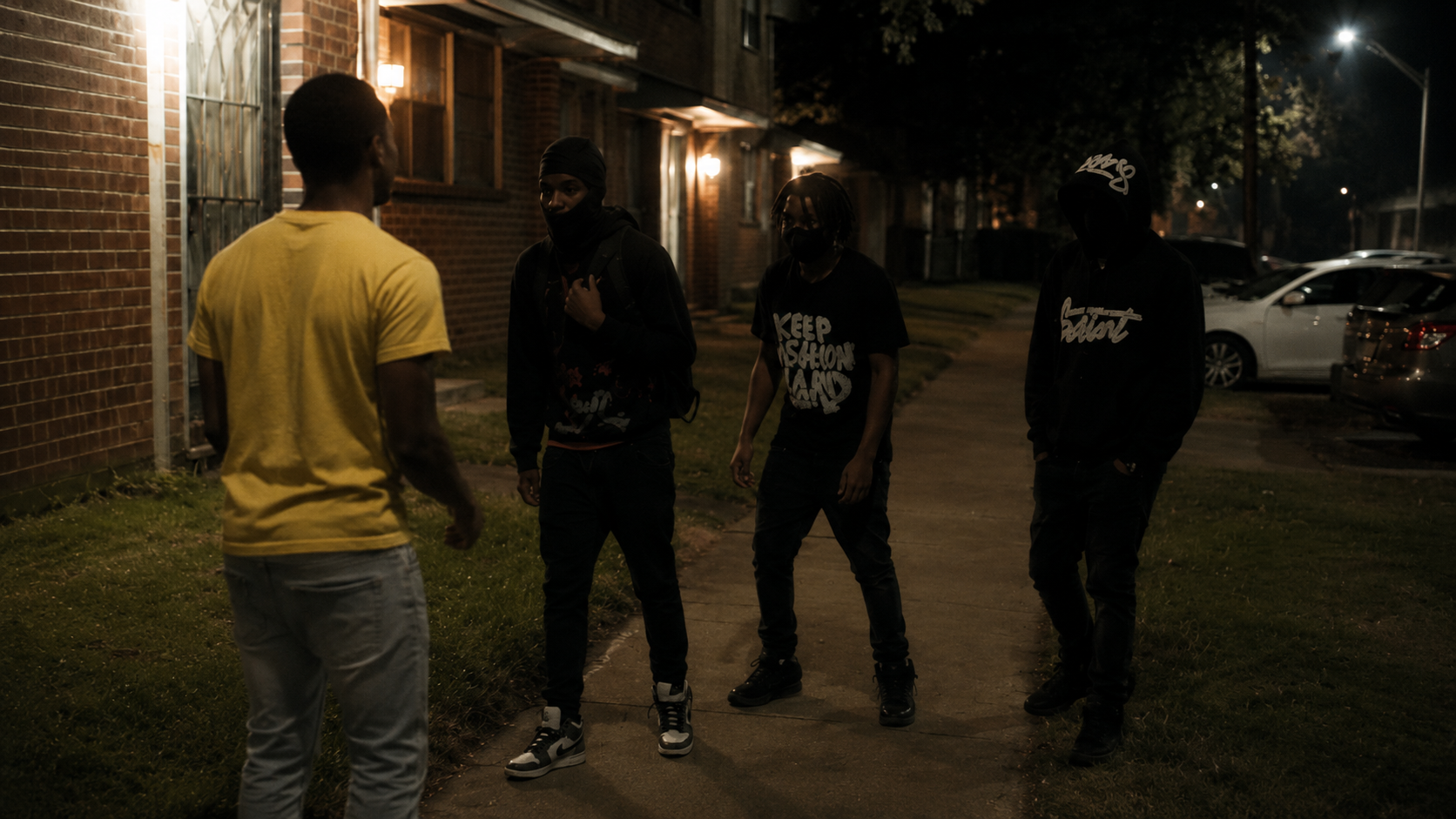
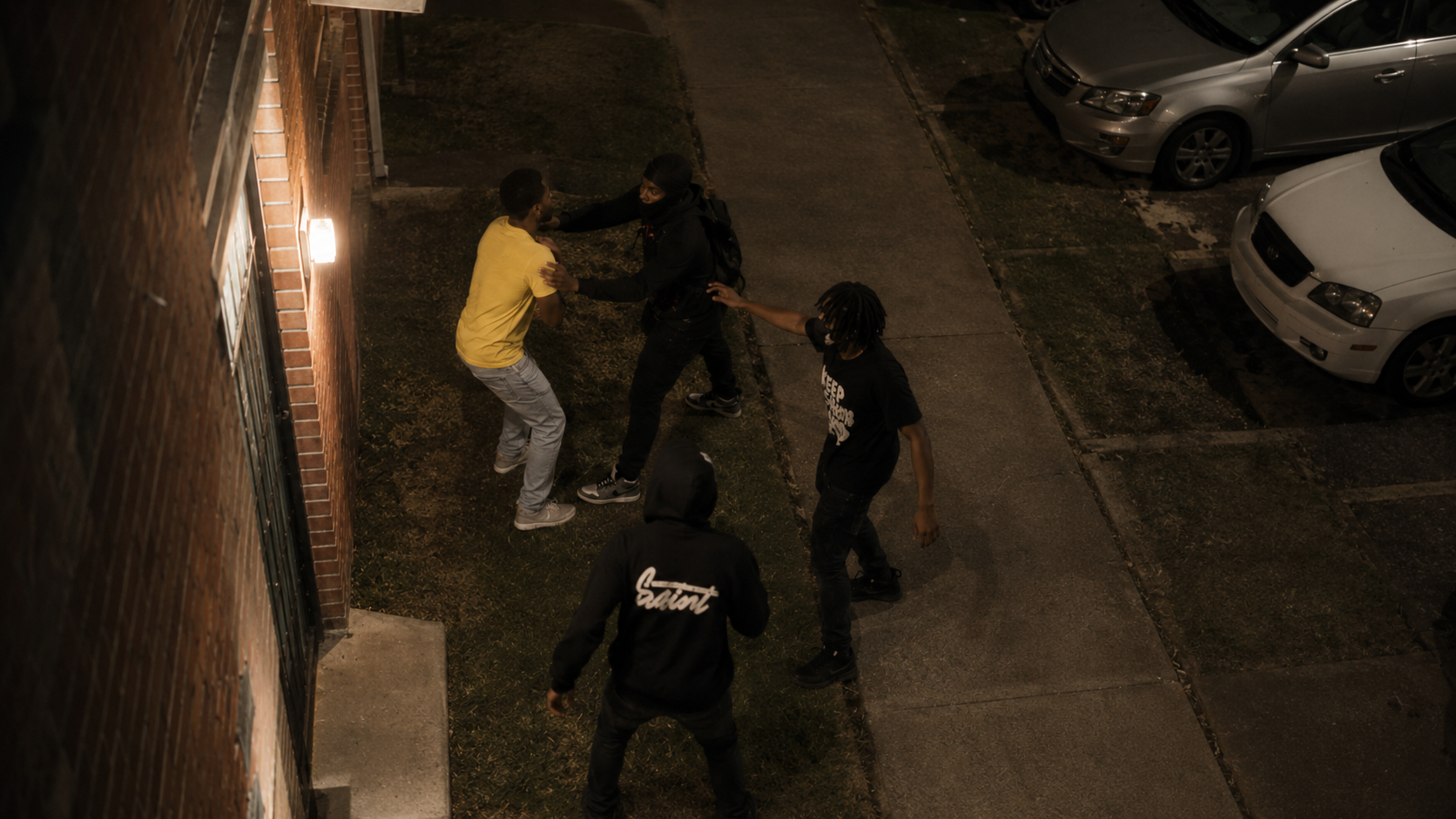
The case did not open as a mystery built only on witness statements. It opened through footage. According to reporting that cited the affidavit, the video showed three suspects, a physical struggle that appeared to be a strong-arm robbery, shots being fired, and the suspects leaving Cantrell on the ground. One of those suspects, police said, would later be identified by a black hoodie with the word “Saint” on it.
That single detail became the hinge of the investigation. Not a license plate. Not a confession. Not a recovered murder weapon in the public reporting. A hoodie.
The Incident
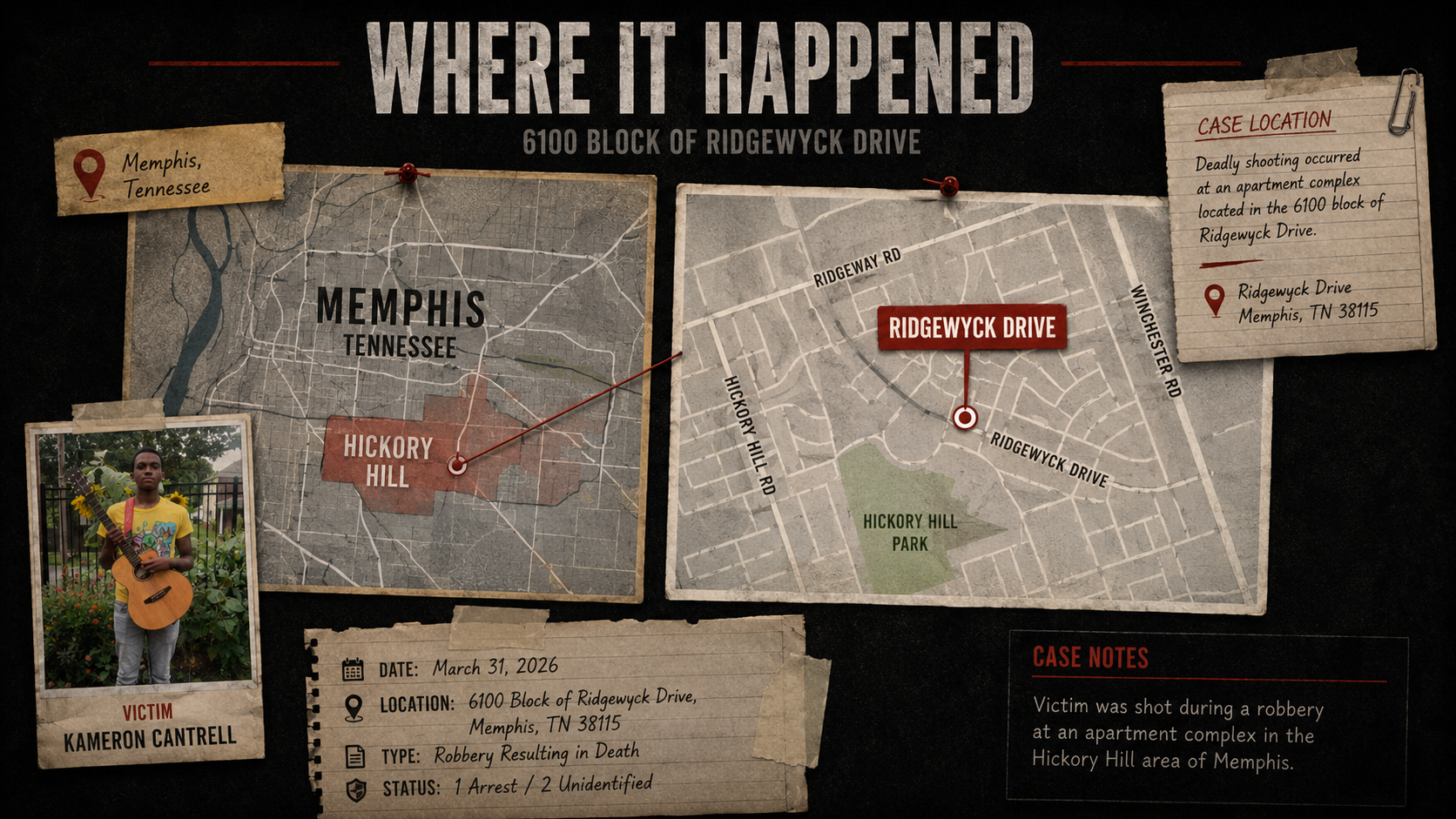
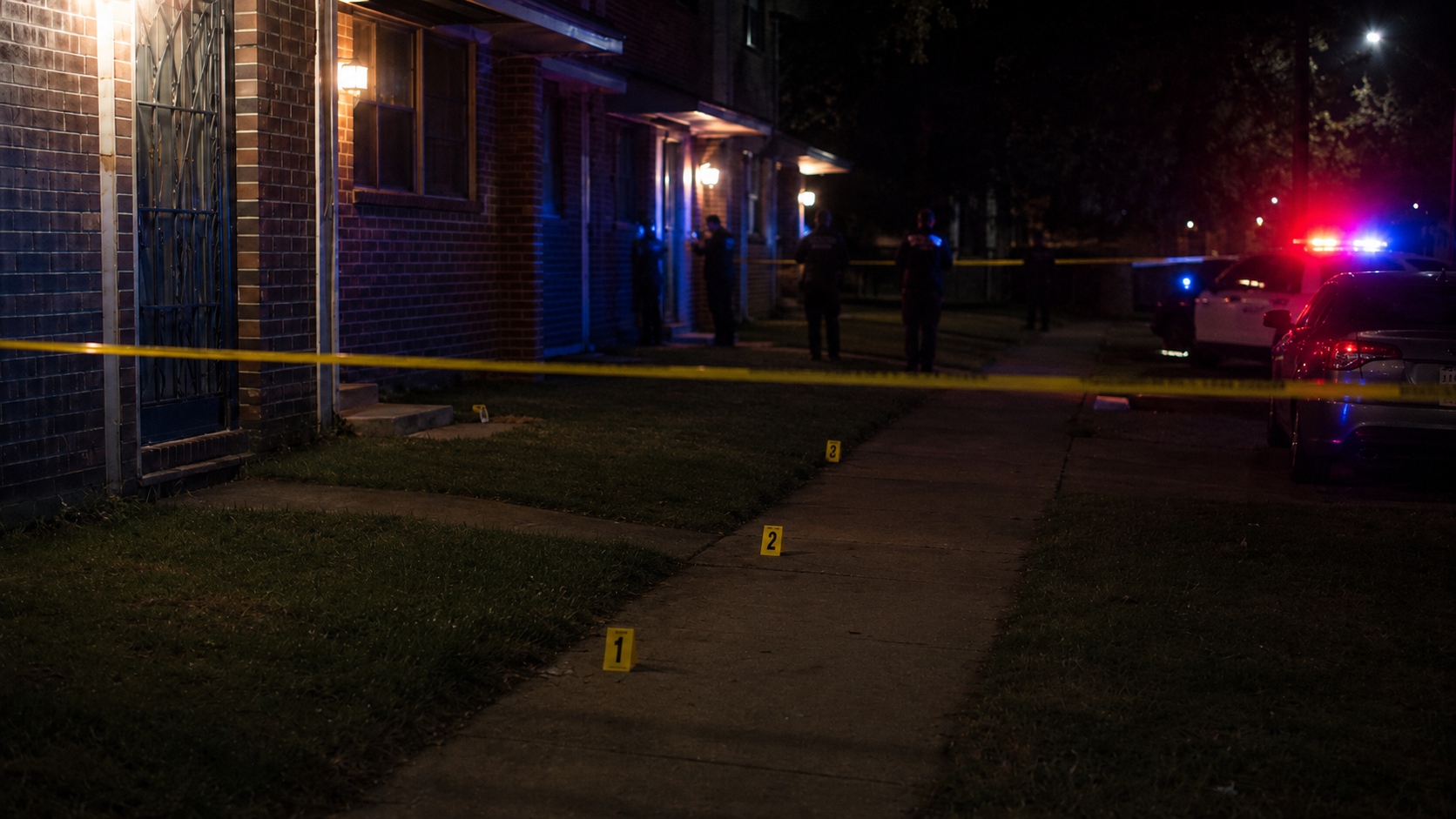
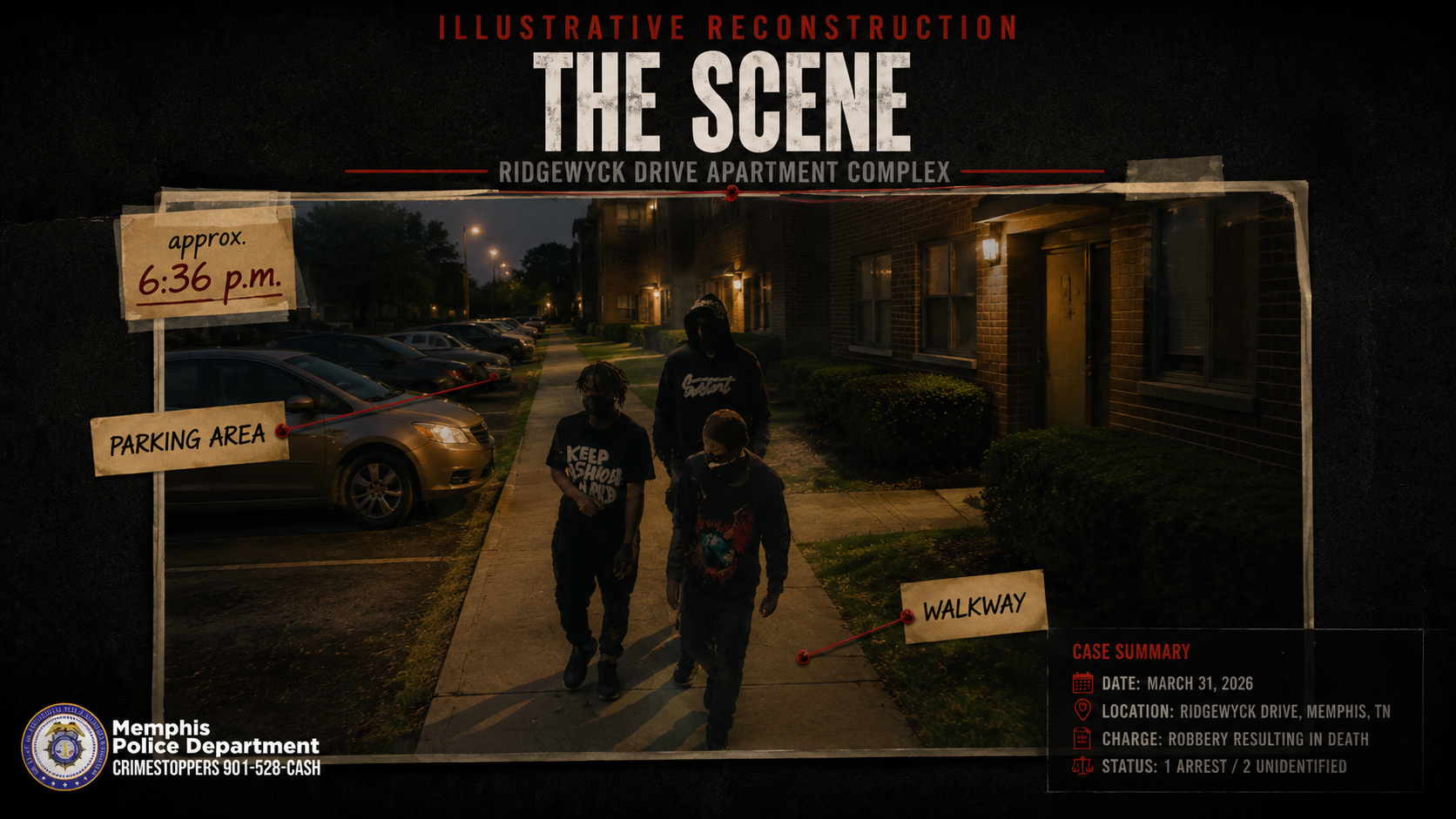
The shooting happened in the early evening, at approximately 6:36 p.m., in the 6100 block of Ridgewyck Drive. Memphis Police described the location only as the block of the shooting, while local reporting identified the scene as an apartment complex in Hickory Hill. The victim, Kameron Cantrell, was found suffering from multiple gunshot wounds and was pronounced dead at the scene.
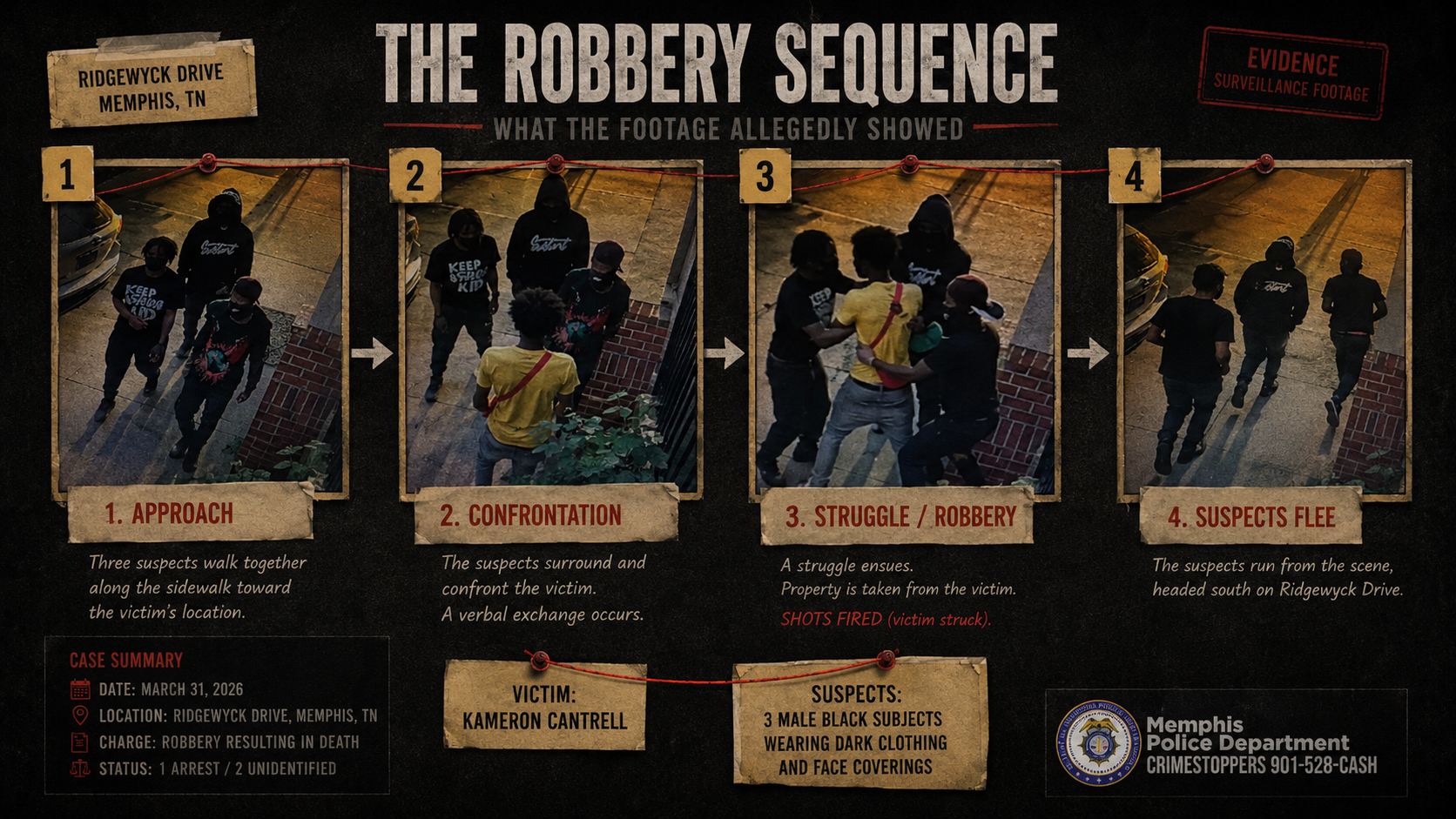
The public record does not describe a long-running feud, a gang motive, or a known argument before the shooting. What it does describe is tighter and colder: three suspects on video, one victim, a struggle, and an apparent robbery that turned fatal. The affidavit detail reported by Action News 5 said one of the three struggled with Cantrell in what appeared to be a strong-arm robbery before shots were fired. After the gunfire, the suspects fled, leaving Cantrell on the ground.
That makes the case different from a random apartment complex shooting with no public trail. Investigators had a sequence. They had movement. They had three figures. They had clothing. And they had one suspect whose outfit allegedly stayed important after he left the scene.
The Timeline
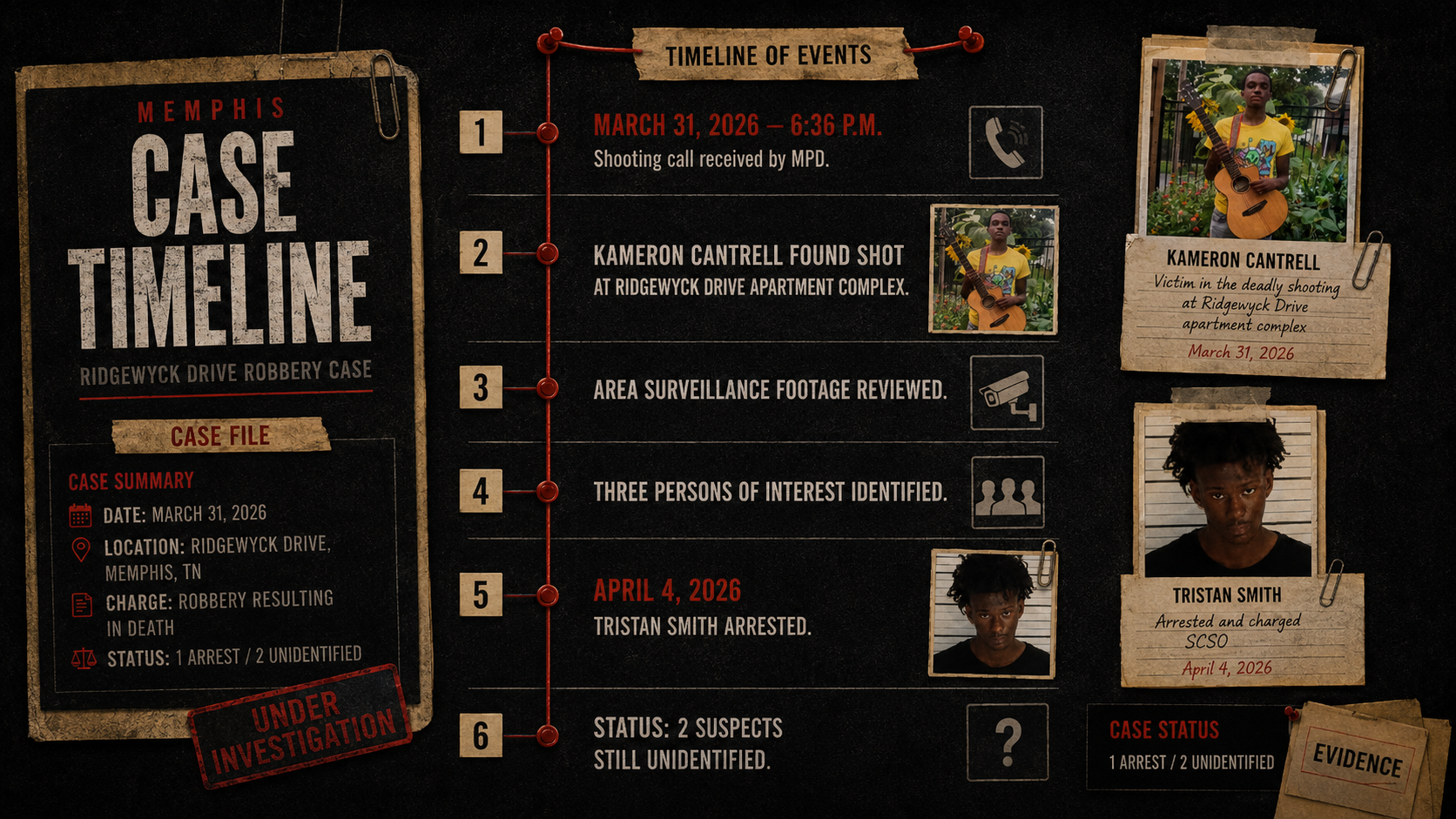
On March 31, 2026, at 6:36 p.m., officers responded to the shooting call on Ridgewyck Drive. Kameron Cantrell was identified as the male victim. Investigators located area footage and began trying to identify three individuals connected to the case.
In the days after the shooting, Memphis Police released images tied to the investigation. The stills showed three suspects together and also isolated images of individuals wearing dark clothing, including one figure in a black hoodie marked with the word “Saint.” The footage stills were not just public-alert images; they became part of how the case moved from unknown suspects to an arrest.
On April 4, 2026, Memphis Police located Tristan Smith, 18, in the 3000 block of Kirby Downs Cove. Police said he was taken into custody without incident and identified as the male in the black “Saint” hoodie.
On April 7, 2026, local reporting identified Smith as the arrested suspect and added the affidavit detail that officers found a discarded hoodie in his trash can, allegedly the same hoodie worn on the night of the shooting. Smith was charged with first-degree murder in the perpetration of aggravated robbery, tampering with or fabricating evidence, and unlawful possession of a weapon during the commission of a violent felony.
The Surveillance Footage
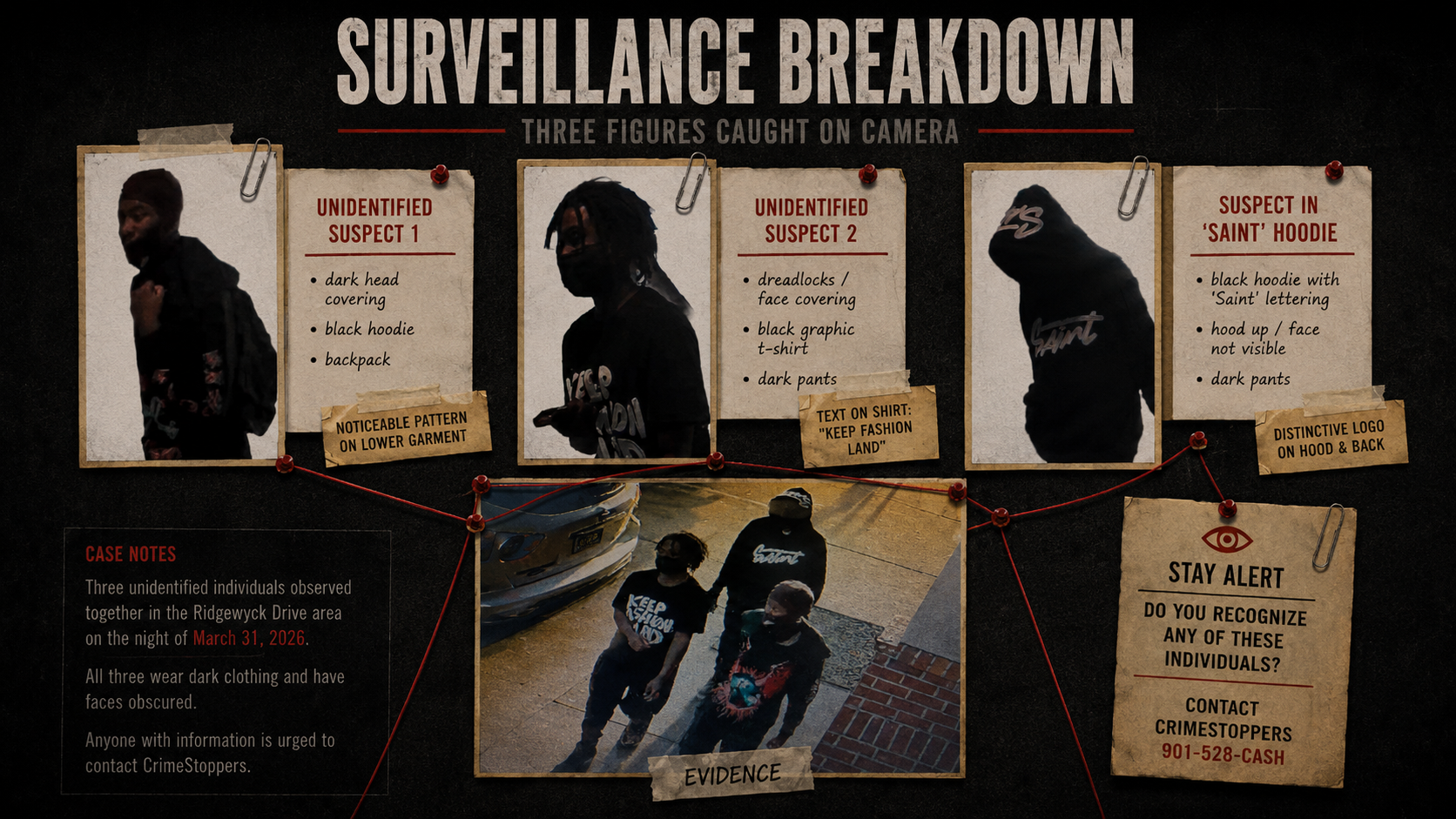
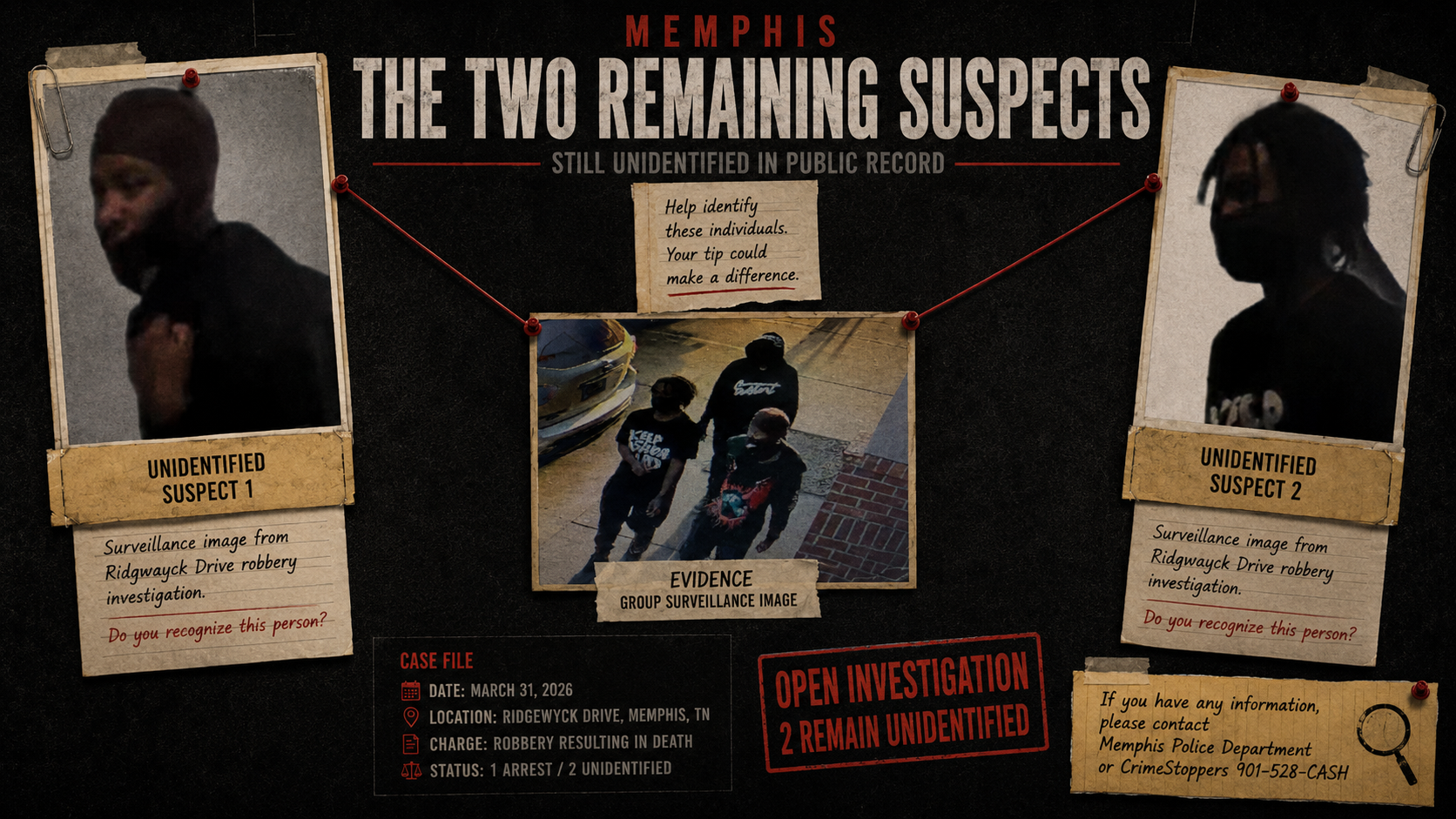
The strongest public evidence in the case is the video trail. Memphis Police said investigators located video footage in the area and identified three individuals as persons of interest. The department’s public release included multiple images: photos of Kameron Cantrell, video stills of suspects, a group still showing three figures together, and an arrest graphic naming Tristan Smith.
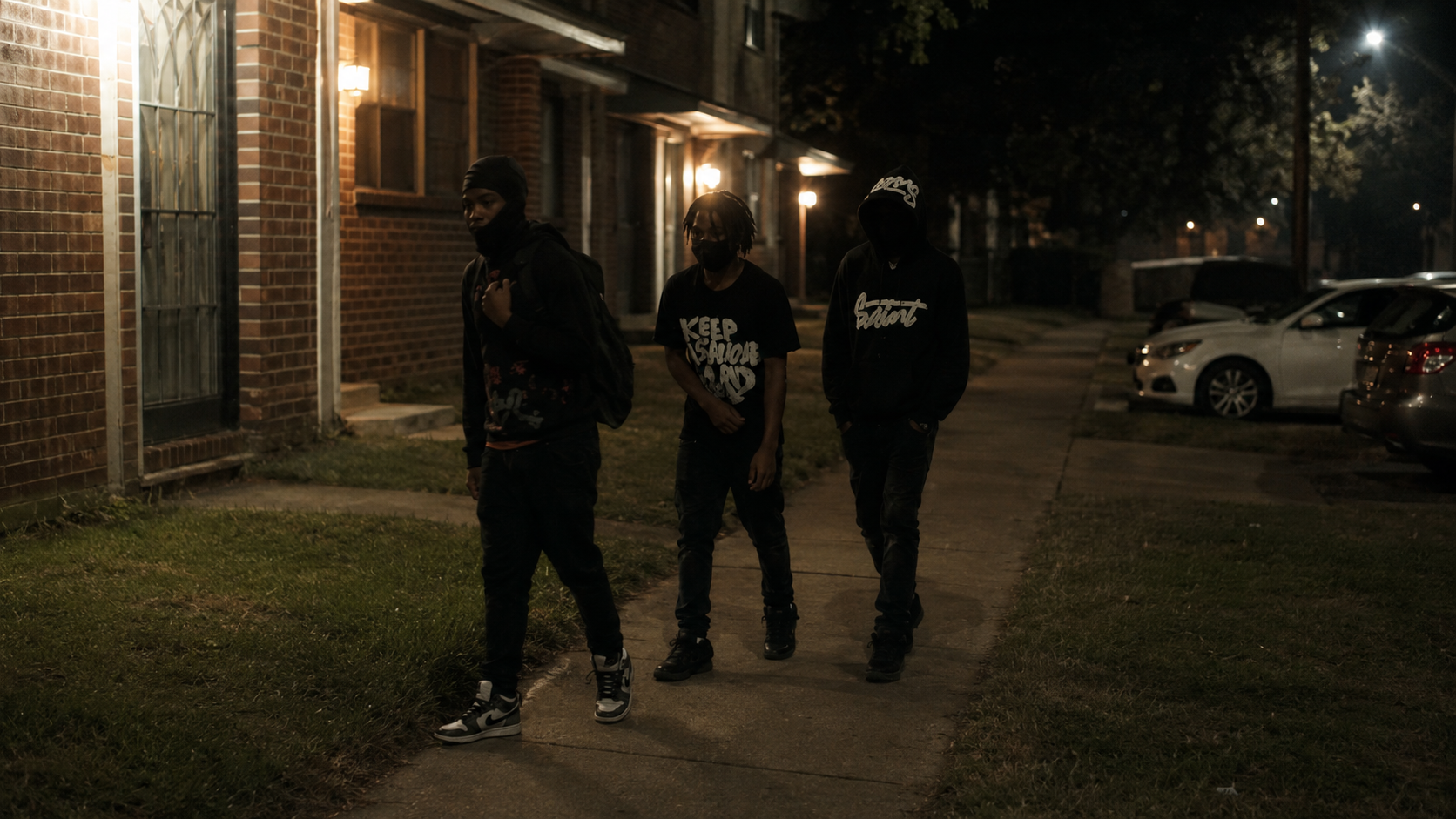
The most important still shows three individuals standing together near vehicles and a brick walkway. All three appear to be dressed mostly in dark clothing. One suspect appears in a black hoodie with the word “Saint” written across it. Another still isolates a masked figure in black clothing. Another shows a person wearing a black shirt with white lettering. The footage stills do not show the full shooting in the public release, but they give investigators the visual identifiers they needed to ask the public for help and later connect Smith to the case.
The affidavit reporting fills in what the public stills do not fully show. According to Action News 5, footage showed three suspects and captured one of them struggling with Cantrell in what appeared to be a strong-arm robbery. Shots were fired after that struggle, and the suspects fled the scene.
The footage does not publicly answer every question. It does not identify all three suspects by name in the public record. It does not publicly confirm who fired which shot. It does not publicly reveal whether one weapon or multiple weapons were used. But it does establish the basic architecture of the case: three suspects were seen, a confrontation occurred, gunfire followed, and Cantrell was left behind.
The Evidence
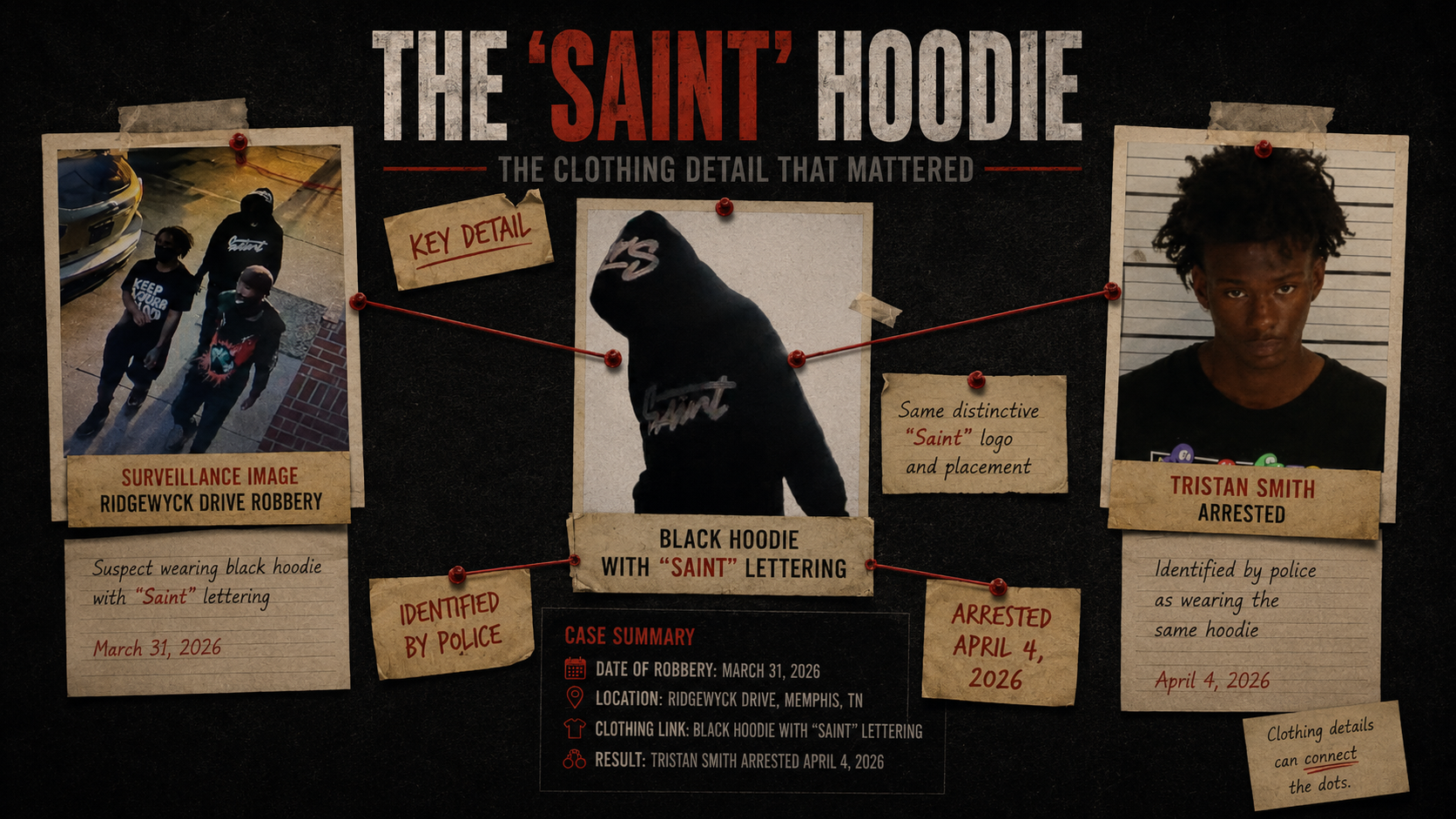
The public evidence begins with the area footage. Without that video, the case would have looked different: a young man shot at an apartment complex, three suspects gone, and investigators searching for names. The footage gave police clothing, positioning, and a visual timeline.
The second major evidence point is the black “Saint” hoodie. Memphis Police officially said Smith was identified as the male in that hoodie. Local reporting later added that officers found a discarded hoodie in Smith’s trash can after his arrest, and that the hoodie was allegedly worn on the night of the shooting.
That detail matters because it points to more than simple identification. If the hoodie recovered from the trash is the same one from the footage, prosecutors can argue the clothing links Smith to the scene and that discarding it shows consciousness of guilt. That is likely why the tampering or fabricating evidence charge appears beside the murder and firearm charges. The public reporting does not say whether the hoodie was tested for DNA, gunshot residue, blood, fibers, or other forensic evidence, so that part cannot be claimed without court records or a full police report.
The third evidence layer is the charge itself. Smith was not only charged with homicide. He was charged with first-degree murder in the perpetration of aggravated robbery, meaning the state’s theory is not simply that a shooting happened. The charge frames the killing as occurring during the commission of an alleged robbery.
The Suspect Identified
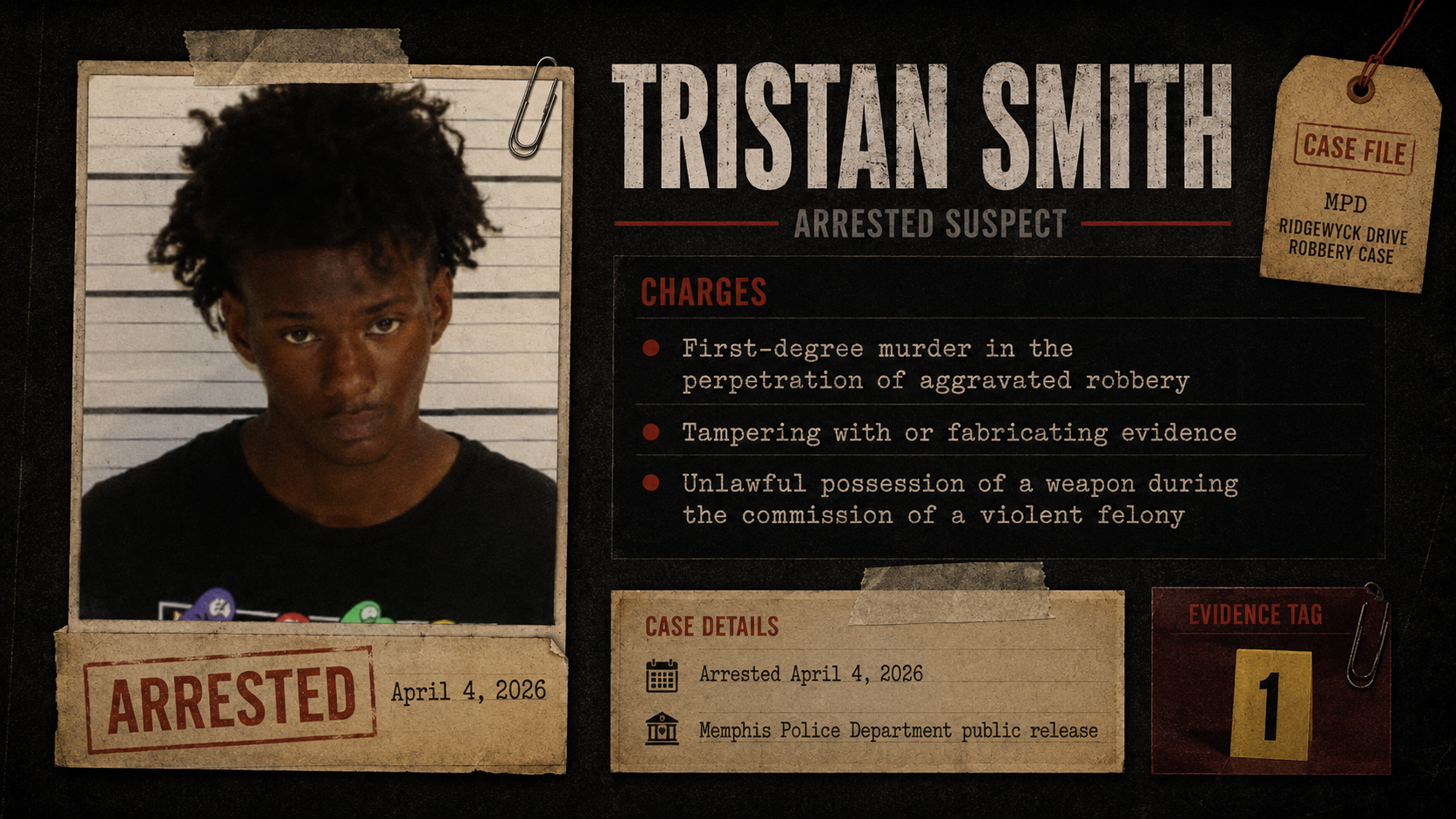
Police identified the arrested suspect as Tristan Smith, 18. According to the Memphis Police Department, Smith was located on April 4, 2026, in the 3000 block of Kirby Downs Cove and taken into custody without incident. Police said he was the male in the black hoodie with “Saint” on it.
Smith was charged with first-degree murder in the perpetration of aggravated robbery, tampering with or fabricating evidence, and unlawful carrying or possession of a weapon during the commission of a violent felony. The arrest did not close the case. Memphis Police said investigators were still working to identify the two remaining suspects.
That leaves the public file in a split position. One suspect has been named and charged. Two others remain unnamed in the public release. The footage, according to police and affidavit reporting, shows three suspects. Unless the remaining two are identified, charged, or cleared, the case still has open ends.
The Two Remaining Suspects
The public release makes clear that investigators believed three individuals were connected to the case. After Smith’s arrest, Memphis Police said investigators were continuing their work to identify the two remaining suspects.
That detail is important because it means the official theory did not end with one arrest. Police were not describing Smith as the only person present. They were describing him as one of three. The affidavit reporting also says footage showed three suspects and that one of the three struggled with Cantrell before shots were fired.
The public record does not currently identify the other two suspects by name. It also does not say whether investigators believe all three were armed, whether all three participated in the robbery, or which person fired the fatal shots. Those details may exist in the sealed or unreleased case file, but they are not confirmed in the public sources currently available.
The Murder Charge
The charge against Smith is built around felony murder: first-degree murder in the perpetration of aggravated robbery. In plain terms, that charge does not require the public record to say the killing was planned days ahead of time. It ties the homicide to the alleged robbery. If a death occurs during the commission of certain violent felonies, prosecutors can pursue a first-degree murder theory based on the underlying felony.
That is why the robbery detail matters so much. The footage, as described in the affidavit reporting, allegedly showed one suspect struggling with Cantrell in what appeared to be a strong-arm robbery before the shots were fired. That struggle becomes the bridge between the robbery allegation and the murder charge.
The firearm charge adds another layer. Smith was charged with unlawful possession of a weapon during the commission of a violent felony. The public reporting does not state whether a gun was recovered from Smith, whether shell casings were recovered at the scene, or whether ballistic testing has connected any weapon to the shooting. Those details remain unavailable from the public reporting.
What The Public File Does Not Show
The public record confirms the date, time, location block, victim name, suspect name, charges, footage, hoodie identification, and the continuing search for two other suspects. It does not provide a full autopsy report, a medical examiner report, a ballistic report, a shell-casing count, a recovered weapon, a full witness statement, or a complete police narrative.
The available sources say Cantrell suffered multiple gunshot wounds and died at the scene. They do not publicly list the number of wounds, wound locations, trajectory, toxicology, recovered projectiles, or manner and cause language from the medical examiner beyond the homicide context. Any deeper medical breakdown would require an official death investigation record, autopsy record, or court filing.
The public file also does not explain why Cantrell was targeted. The state’s available theory points toward aggravated robbery, but the sources do not say whether the suspects knew Cantrell, whether the robbery was planned, whether property was taken, or whether the encounter began as something else before becoming violent.
Official Facts Versus Online Claims
The official facts are narrow. Kameron Cantrell was killed on March 31, 2026, in the 6100 block of Ridgewyck Drive. Memphis Police located video footage and identified three persons of interest. Tristan Smith was arrested on April 4, 2026, and police identified him as the male in the black “Saint” hoodie. He was charged with first-degree murder in the perpetration of aggravated robbery, tampering with or fabricating evidence, and unlawful possession of a weapon during the commission of a violent felony. Police continued searching for two remaining suspects.
The affidavit reporting adds that Cantrell was found with multiple gunshot wounds, that footage showed three suspects, that one suspect struggled with Cantrell in what appeared to be a strong-arm robbery, and that a hoodie allegedly worn on the night of the shooting was found discarded in Smith’s trash can.
Anything beyond that has to be treated carefully. No confirmed public source currently proves a gang motive, a personal dispute, a setup, or a specific reason why Cantrell became the target. The strongest case file is not built by forcing a motive into the story. It is built by showing how one visible piece of clothing, one robbery sequence, and one set of video stills pushed the investigation toward an arrest while two other suspects remained publicly unidentified.
Unanswered Questions
The first unanswered question is whether investigators have identified the two remaining suspects. Memphis Police said the investigation was continuing after Smith’s arrest, but the public release did not name the other two individuals.
The second question is who fired the fatal shot or shots. The public reporting says shots were fired after the apparent robbery struggle, but it does not say whether Smith is accused of being the shooter, whether multiple suspects fired, or whether prosecutors are relying on felony murder because of the robbery allegation even if the fatal shot came from someone else.
The third question is what forensic testing showed. The hoodie is one of the most important public evidence points, but the available reporting does not say whether it was tested or what, if anything, forensic analysts found on it.
The fourth question is what property, if any, was taken during the alleged robbery. The charge points toward aggravated robbery, and the affidavit reporting describes what appeared to be a strong-arm robbery, but the public sources do not list a phone, money, bag, firearm, jewelry, or any other item taken from Cantrell.
Final Breakdown
The Ridgewyck Drive case is not a giant indictment or a crowded mass-shooting file. It is smaller, sharper, and easier to follow: one apartment complex, three suspects on footage, one robbery struggle, one fatal shooting, and one piece of clothing that allegedly followed the suspect from the scene to a trash can.
The public record does not yet give the whole murder file. It gives the first frame and the first arrest. Kameron Cantrell was left dead on Ridgewyck Drive, Tristan Smith was later identified through the black “Saint” hoodie, and two other figures from the footage remained the unfinished part of the case.